Montreal municipal taxes: properties see 12.2% increase in assessments

Posted September 10, 2025 12:17 pm.
Last Updated October 13, 2025 4:23 pm.
Montreal’s residential buildings, industrial properties and shopping centres are all seeing an increase in their assessments for property tax.
The overall increase across the island of Montreal is 12.2 per cent, with most property types seeing increases. Only office buildings suffered a decline, due to vacancy rates.
That’s all according to the latest new three-year valuation roll – for 2026-2027-2028 – shared by the City of Montreal on Wednesday.
Those assessments, which were calculated based off the properties’ hypothetical sales value as of July 2024, are then used to calculate property taxes for the next three years. The rolls will be in effect as of Jan. 1, 2026.
“It is important to remember that it is not possible to determine the amount of taxes to be paid at the time a new tax roll is filed. Since a municipality’s budget is established based on the cost of services and the needs of the population, it is when the next municipal budgets are filed that we will be able to know the true impact of the new tax roll on property owners’ property taxes,” explained Benoit Dorais, vice-president of the executive committee responsible for finance and property valuation, housing, real estate strategy and legal affairs.
The 12.2 per cent overall increase is significantly lower than the 32.4 per cent for the 2023-2024-2025 triennial property assessment roll, with the city describing this latest assessment as “reflecting moderate growth.”
The biggest increase this time around was industrial properties, with growth of 39 per cent, with the city saying that’s an indication of “the sector’s resilience despite economic uncertainties.” Commercial arteries, the city adds, grew by 17 per cent, while shopping centres grew by 4.4 per cent.
In the residential sector, the value of buildings with five or fewer units increased by an average of 9.6 per cent, while buildings with six or more units increased by 10.9 per cent.
“As someone who’s been living here in Montreal for three years now, I feel like the living expenses has increased during the past three years and rent value as well, and also like property is going up, but our salary is not keeping up with that,” said a Montreal resident. “So this is something that makes me feel kind of like unsafe and insecure financially and yeah I would love that to be not this way.”
Office buildings depreciate
Office buildings were the only category to counter the trend, with a decline of 8.2 per cent. Offices in Montreal’s Ville-Marie have been hit the hardest, depreciating by around 10 per cent.
“We are working from home a lot post-pandemic,” said France Mousseau, the director of property assessment for the City of Montreal. “So, when negotiating their leases, companies will reduce their floor space.”
Mayoral candidate and leader of Projet Montréal Luc Rabouin agrees high rates of remote work are keeping downtown quiet, but he remains optimistic.
“I’m sure that in three years, the situation will have improved because people are coming back to office,” Rabouin said.
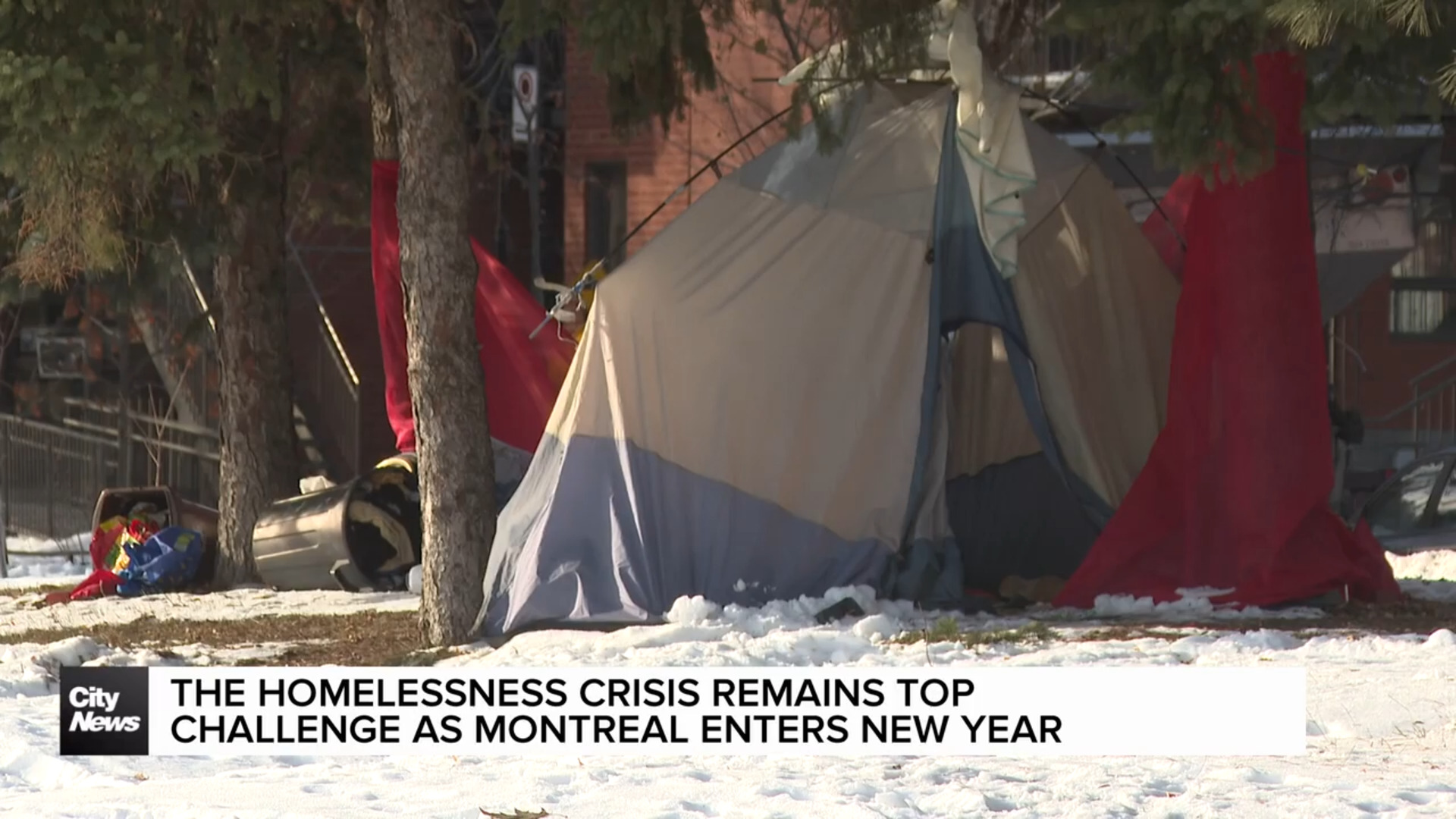
In contrast, leader of the Opposition Soraya Martinez Ferrada sounded the alarm, saying Montreal needs to address problems related to homelessness and security, and that the culprit behind downtown’s slow growth comes from residents avoiding the area altogether.
“Yes maybe we can put that a bit on the remote work. But mostly it’s because people don’t find the downtown being attractive again.”
East End, West Island see biggest jumps
The areas on the island registering the biggest increases in property value are Anjou (22.2 per cent), Rivière-des-Prairies–Pointe-aux-Trembles (21.3 per cent), Senneville and Baie-D’Urfé (20 per cent), and Sainte-Anne-de-Bellevue and Dorval (15 per cent).
West Island resident François Vaqué, a property owner for the last 25 years, said “it’s crazy” that property values — and taxes — are rising so significantly.
“Because we’ve got very limited services,” Vaqué told CityNews. “Public transportation, the REM is going to go there eventually one day, we don’t know when. Very poor services. And the evolution of the house lasts for three years. It’s a very long-term tax. It really hurts us.
“It’s a huge tax. It’s a lot of money that we have to pay at one shot. We never know until the last minute what the rate is going to be on the municipal tax either. So it’s always a bad surprise. Let’s put it that way.”
The smallest increases, the city says, are seen in Westmount, Mount Royal, Côte-Saint-Luc, Hampstead, Montreal West, Beaconsfield and Dollard-des-Ormeaux. “This moderation in the evolution of values is partly explained by the fact that several of these cities already have high property values,” the city explained.
Westmount resident Julia, an owner for the last four decades, says she is “fed up” with property tax increases.
“Especially since the services seem to be actually getting worse. So yeah, it’s not a good thing,” she said.
“Ours are already very high so I think that has something to do with why they can’t raise them that much more. But yeah, I think it’s very hard on, especially young families who just manage to scrape enough to get a house payment down and then they’re hit with all these taxes. So yeah, it’s brutal.”
Julia says if she were trying to buy a home today, as a young person, it would not be achievable.
“If I were in the same age as I was back then trying to buy a house, we would have to delay it by at least five to 10 years. And I was already in my 30s. So yeah, I think it’s very hard on couples or individuals who are trying to get into the house market and faced with, on top of rising prices of the actual houses, on top of it, their taxes become prohibitive. It’s really very rough.”