Polytechnique Montréal student union and administration at odds over increased internship fees
Posted September 16, 2025 5:28 pm.
Last Updated September 16, 2025 7:25 pm.
The student association representing over 7,000 engineering students at Polytechnique Montréal plans to go on strike next week after the university announced its plans to phase out grants aimed at offsetting education costs.
Offered since 2014, these grants aim to help students pay for mandatory internships, though the school said it would stop offering them by the 2027 winter semester. For Canadian students outside of Quebec, their fees are expected to more than double.
“It’s a population that doesn’t have a lot of money. It’s a population that can’t afford paying these increased fees, and there’s no reason that Polytechnique comes out and increases the fee,” said Gabriel Comby, the president of the Polytechnique Student Association (AEP).
“The impacts are tremendous. It’s a lot of money for students. We know it. Students have a tough time right now. The economical situation in Canada is rough for everyone.”
Comby says the two-day strike could happen on September 25 and 26, in which students are expected to boycott classes and block student entrances. He explains that hundreds of students participated in their last strike vote, which saw 93 per cent in favour.
“For sure, we will strike for as long as we have the support of the community,” said Comby.
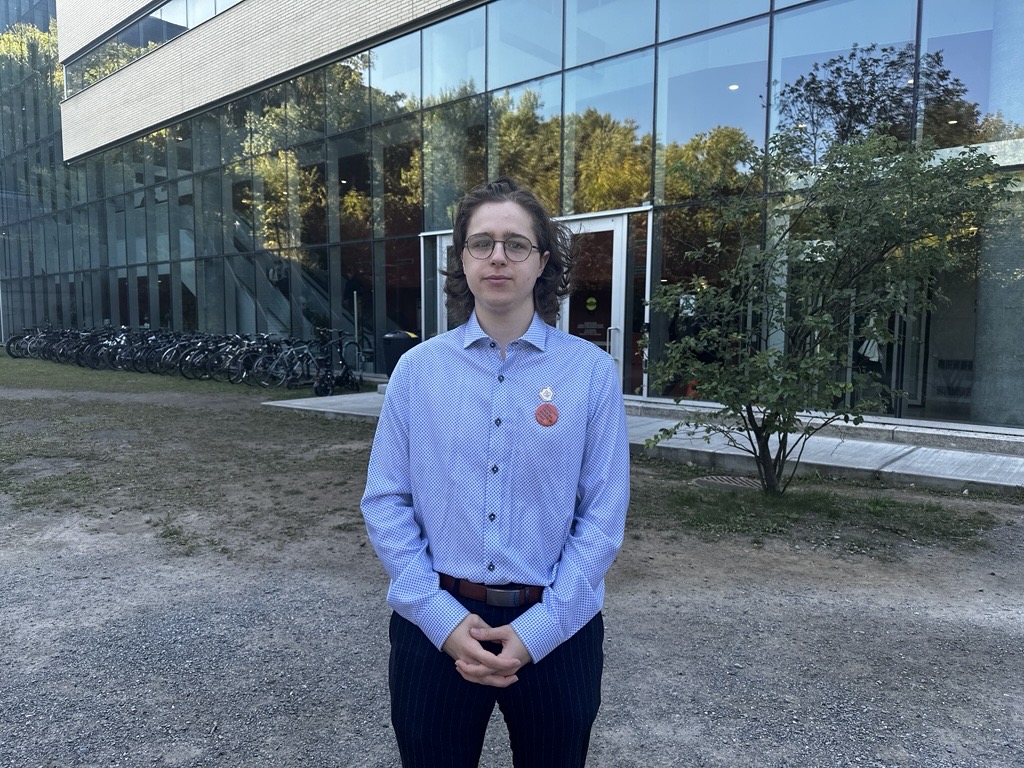
“What is sure for us is that it’s not up to students to foot the bill, and it’s not students who need to compensate for the bad decisions that Quebec makes and that Polytechnique makes. Quebec should give more money to universities, but Polytechnique decides that the bill will go on the back of students, and it’s not okay.”
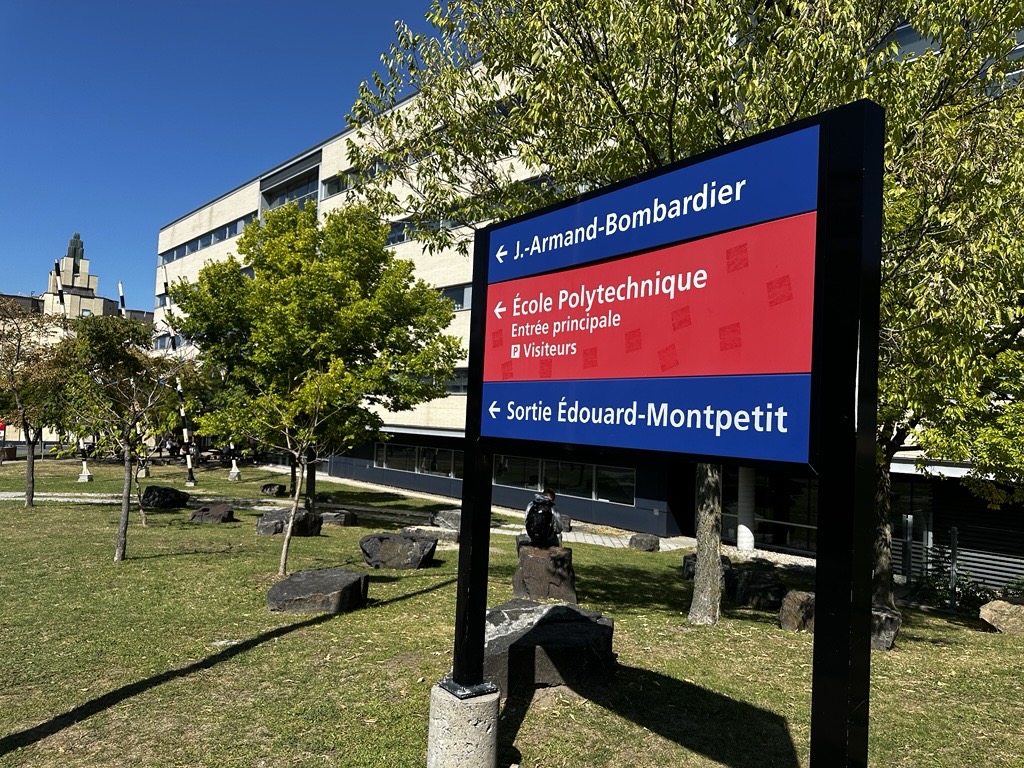
Comby went on to criticize the university’s most recent investments in rebranding, new signage, and advertising.
Payment increase on the horizon
Currently, Quebec residents pay $670, while out-of-province or international students whose country has an agreement on school fees with Quebec — such as France or Belgium pay $1,300.
Starting January 2026, those figures jump to $1,300 for Quebec residents and $3,300 for out-of-province students or ones from an agreeing country.
Comby claims the union’s calculations represent a rise of 105 per cent for Quebec residents and 151 per cent for out-of-province students.
Polytechnique Vice-President of Academic Affairs and Student Experience, Pierre Langlois, says discussions with the association have been ongoing for over 18 months and clarifies that international students from regions such as Iran or North Africa will see their fees significantly reduced.

“If we were to apply the same rules to international students, they would pay an amount that we’re not willing to charge,” Langlois said. “It would be outside of what we consider reasonable. We also recognize that there is precarity in our population, and we know that it is mainly concentrated with international students.”
He adds that the total amount paid for mandatory internships for international students will be brought to the same level as that for Canadian students not residing in Quebec.
Langlois explained that internships represent an essential step in overall training and provide a key role in preparing students for professional life. He details that the compensatory scholarships were created in 2013 and intended to offset the increased costs associated with the increase from three to nine credits for engineering internships.
“12 years later, the situation has changed dramatically for the budget-wise and cost-wise, and we can no longer afford these bursaries,” he explained.
According to a press release, supporting measures are being put in place to help ‘mitigate’ financial impact on the student community. They explain that the “withdrawal of the compensatory scholarship will be spread over two years, resulting in an equivalent increase in tuition fees for three credits in January 2026 and a similar increase in January 2027.”
Mandatory credits
Comby claims the mandatory internship’s nine credits do not count toward the 120 credits required for the bachelor’s degree. Langlois refutes this by reminding us that the total requirement is actually 129 credits.
“You cannot get a diploma from Polytechnique if you don’t do your nine credits of obligatory internship,” Langlois said.
“Ours is a 129-credit program. 120 credits of courses plus nine credits of obligatory paid internship.”
Conversely, Comby claims in an email that the nine credits associated with the mandatory internship do not count toward the 120 credits required for the bachelor’s degree, and the Canadian Engineering Accreditation Board (CEAB) “does not require an internship in order to obtain the diploma.”
He alleges that “In practice, this means that Polytechnique obliges students to complete an internship—which in itself can be a valuable experience—yet uses this requirement to impose additional fees on students. It is this practice that appears particularly unfair and predatory.”
Paid internships
For the engineering programs, the average pay rate for a student intern fetches $25 an hour, totaling $15,000 per internship — much more than the province’s minimum wage, which reached $16.10. Langlois mentions that the average starting salary for engineering graduates is $76,304.
“We are really aware that we have this privilege of being paid for internships. However, it doesn’t mean that Polytechnique students are not subject to precarity,” Comby said.
“I don’t think that because we are paid, it’s a good enough argument to say, well, they’re paid so we can take more money from them,” he added.
While proposing an example to Langlois, the question arose that if a student were to acquire three internships, would they have to pay three times?
He answered no.
“More than half of our students do more than one internship, and many do three. So during their studies, they have the potential to up to $45,000 and more on average,” Langlois explained.
“That’s beyond anything that’s comparable with what other faculties can offer their students.”
Additionally, Langlois says if a student finds an internship on their own instead of going through the university’s job board, the fees will be reduced by as much as half. He also reiterated that all the fees collected are redistributed through the campus and go directly into student services.
Increased presence of students at food banks
Comby claims that despite payments, many students have resorted to lining up for food banks to fill up their fridge while also struggling to make their monthly rent.
“We have seen a dramatic increase of food banks of students going,” he said. “I’ve been there and I’ve seen the cues that is there and it’s really enormous,” he alleges.
In fall 2024, more Montrealers were turning to food banks for help with nearly a million requests per month, which included many students. Students accounted for 14 per cent of food bank clients as food bank use by post-secondary students increased by 540 per cent between 2011 and 2023.
Langlois explains that there are existing programs and services for students who find themselves in a crisis like this.
“I know there are people suffering. I know there must be a few single-parent students who are going to suffer. I know that and that’s for a fact,” he said.
“I don’t want to diminish any way the difficulty that they’re going through.”
As for the potential strike, the Polytechnique board of directors is set to vote on the increase on September 24. If it’s a yes vote, the strike would begin the next day.
“We’re always open to discussion, but our position is pretty clear, and we’re hoping that the board of directors hears it, hears the community, and decides to listen to what they have to say,” said Comby.