Montreal launches tactical intervention group to address homelessness
Posted February 17, 2026 9:52 am.
Last Updated February 17, 2026 10:15 pm.
Montreal is getting a new tactical intervention group (GITI) to address the homelessness crisis.
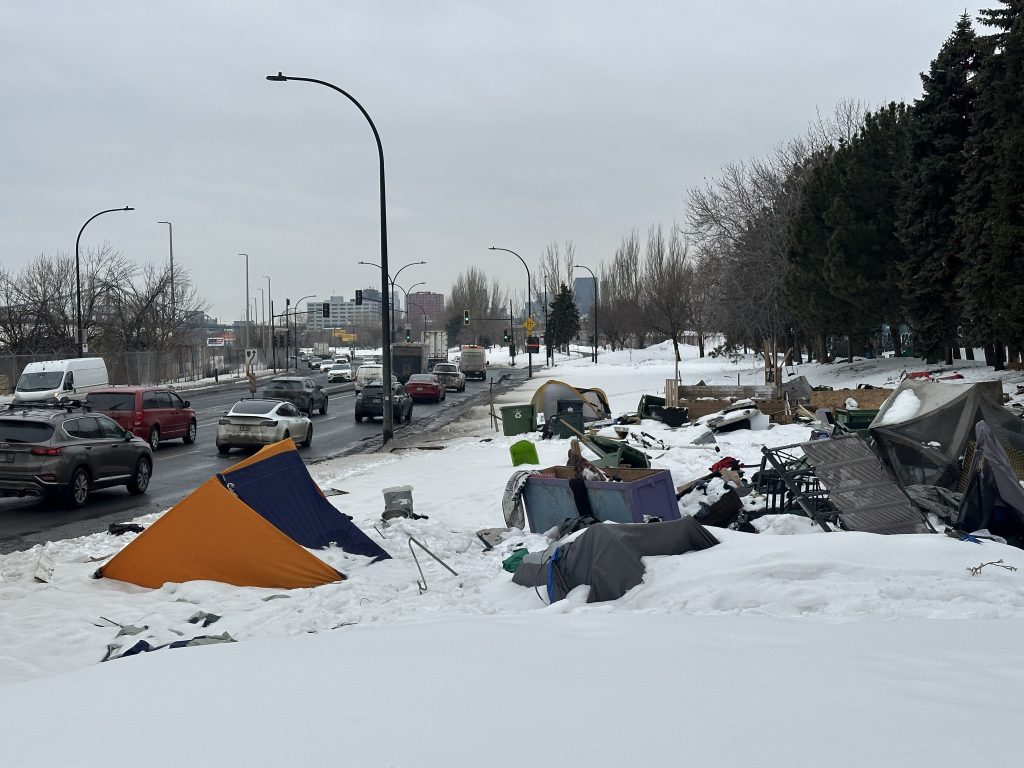
It aims to bring together elected municipal and provincial officials as well as community and institutional partners to better collaborate when trying to find solutions to existing issues related to homelessness, such as encampments, cohabitation and prevention.
“We want to prevent, rather than react,” said Claude Pinard, chairman of the executive committee of the City of Montreal and responsible for homelessness. “Prevention will be at the heart of the GITI’s mission. It is the principle that will guide all of our work.”
The body takes over from the crisis unit established in December 2025.
“It is a will from our administration to fill that leadership gap on the question of homelessness,” Pinard said.
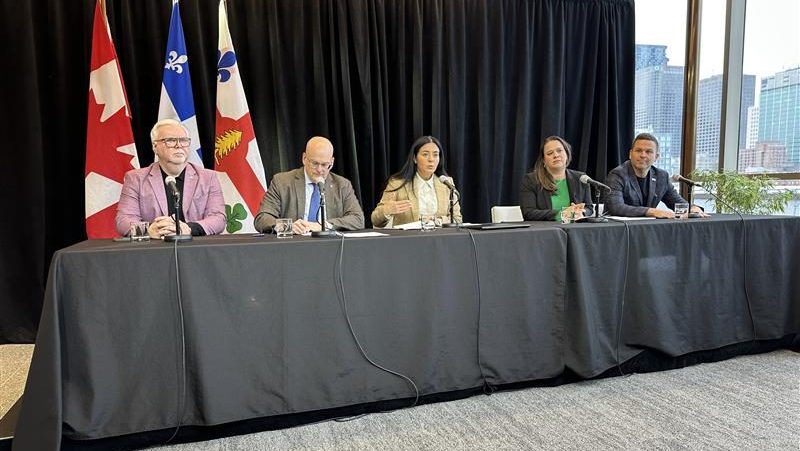
The GITI, which will meet for the first time next week, will be chaired by Pinard and composed of 12 permanent members.
“Getting people out of encampments, getting people out of refuges, because they need a home,” said Montreal Mayor Soraya Martinez Ferrada. “So we need to address the transition homes with the social net that they need to have in their lives and depending where they are, that might be different from one person to the other.”
The intervention group will meet every two weeks to improve the coherence, agility, and effectiveness of interventions in the region. It will also be tasked with identifying operational obstacles and opportunities, optimizing resource utilization, and ensuring proactive risk management, particularly during seasonal situations.
To strengthen its capacity for action, the group will also present several tools in the coming months, including a metropolitan map of roaming services, seasonal planning, a key performance indicator dashboard, and an integrated roaming action plan.
“You got to look at all aspects in order to make sure that what’s out there is fitted with what the needs are and it’s very different across the 19 boroughs and the 15 demerged cities,” said Montreal city councillor Benoit Langevin, one of the group’s 12 permanent members.
“The GITI is there to bring about this coherence, and sometimes to unlock challenges, to find levers that may not be within our reach at present, in the current structure of government funding for example,” added fellow member Mylène Drouin, Montreal’s regional director of public health.
Also part of the group is Sam Watts, the CEO and executive director of Welcome Hall Mission. He says it’s possible to end homelessness in Montreal and that it can start by providing permanent homes that aren’t currently being used in the city.
“We do have a lot of housing that’s out there,” Watts said. “We have, I think, at the last count, 900 units of housing that’s affordable, that’s boarded up in this city. Well let’s renovate those. Let’s make them operational, let’s make them available.
“We can actually solve this thing in Montreal. In many other cities where there aren’t the similar kinds of housing available and they’ve got to go build a whole lot of housing, well that’s a different story. They’re looking at three- to five-year plans. We can actually get this done in one-and-a-half to three.”
The GITI will also produce an annual report outlining results, progress made, and recommendations for improving policies and investments.
“The leadership void on this issue in the past years was abysmal,” Pinard said. “It was absolutely crazy. So we said we need to change that game and we’ve got the influence, power to bring people around the table. So that’s what we did.”
The permanent members of GITI:
- Soraya Martinez Ferrada, Mayor of Montreal;
- Claude Pinard, chairman of the executive committee of the City of Montreal and responsible for homelessness;
- Benoit Langevin, responsible for social cohabitation on the executive committee of the City of Montreal;
- Sonia Bélanger, Minister of Health and Social Services;
- Chantal Rouleau, Minister responsible for the metropolis and the Montreal region;
- Caroline Dusablon, Director General – Network Management and Partnerships, Santé Québec;
- Mylène Drouin, Montreal’s regional director of public health;
- Nadia Bastien, Deputy Director General of the City of Montreal;
- Julien David-Pelletier, Commissioner for People Experiencing Homelessness at the City of Montreal;
- Nathalie Charbonneau, Associate Executive Director of the CIUSSS du Centre-Sud-de-l’Île-de-Montréal;
- Samuel Watts, President and CEO of the Welcome Mission;
- Annie Savage, director of RAPSIM.