5 years after Joyce Echaquan’s death, Innu surgeon sees progress in Quebec health network
Posted September 22, 2025 6:47 am.
Last Updated September 22, 2025 9:29 am.
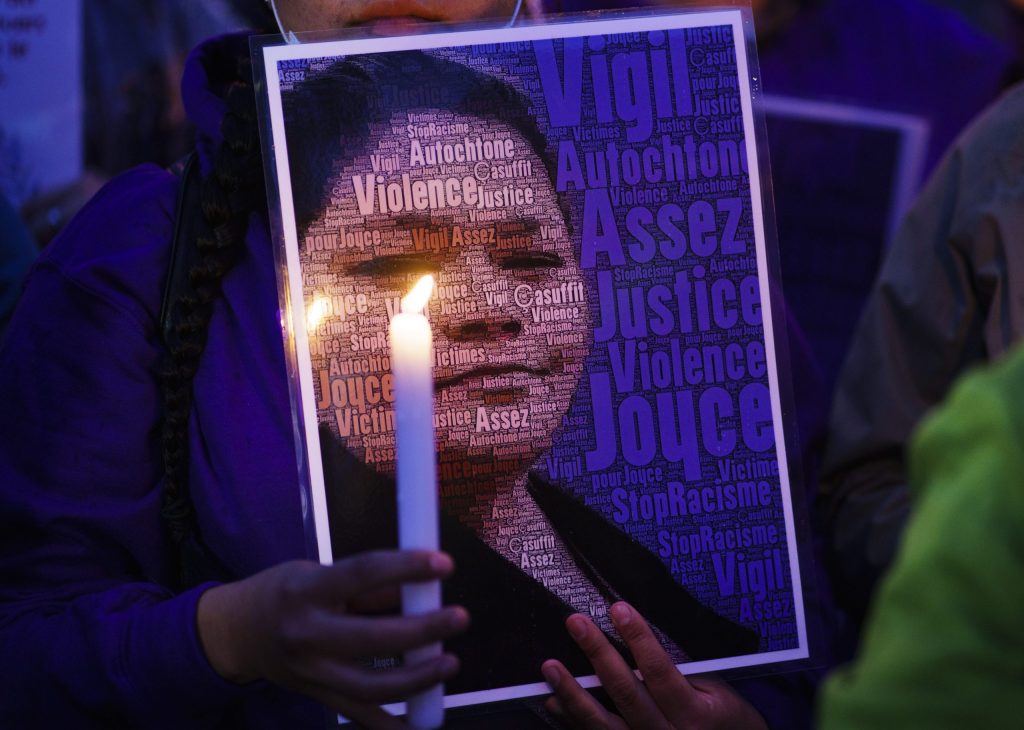
It’s been five years since the Sept. 28, 2020, death of Joyce Echaquan, an Atikamekw mother of seven.
Echaquan died at a Quebec hospital in Joliette, north of Montreal, where just moments before her death, she livestreamed as hospital staff said derogatory and racist remarks at her.
Dr. Stanley Vollant, an Innu surgeon based in Montreal, says he’s seeing progress when it comes to the cultural safety of the Indigenous population accessing the healthcare network.
“I’m in the healthcare system for 35 years and I feel since the death of Joyce, people are more aware people want to do something,” said Dr. Vollant.
“Her death made the changes happen. I would have preferred that Joyce is still with us today with her seven children, but I see changes are done.”
Dr. Vollant is the chief medical officer for the First Nations of Quebec and Labrador Health and Social Services Commission and also sits on the Board of Directors for Santé Québec.
He says he’s seen health care workers become more sensitized to Indigenous health, with changes he’s never witnessed implemented at the Chicoutimi hospital, five hours north of Montreal.
“When I entered the emergency, there was a sign in Atikamekw and also another sign in Innu explaining what are the processes to make a complaint or to ask somebody to accompany the people,” said Dr. Vollant.

Last December, Quebec passed Bill 32, requiring health and social services to adopt a safer, welcoming, and inclusive approach when interacting with Indigenous people, including mandatory training on Indigenous cultural and historical realities.
“This is the first step. It’s not the perfect step. It was maybe not done in co-construction first with Indigenous people. But I think it is the first step that we have to do and we have to do other steps after that.”
Yet Dr. Vollant says many are still reluctant.
“People don’t trust the healthcare system, they are afraid of the healthcare system, that they won’t be treated equally than the rest of the population,” he explained.
“They are afraid of consequences. ‘If I complain, maybe I won’t have the healthcare I need.’ So there’s a lot of training to do, learning to be able to give good health care.”
Dr. Vollant says remembering how and why Echaquan died is equally important in the path to moving forward and making sure racism and discrimination aren’t present in healthcare.
“What I saw for the last five years made me optimistic but we have to be careful and to continue in that path and to don’t stop. If we stop today, we will miss the boat. There are several steps to be accomplished in the next years but I’m sure one day, me or my kids are going to be able to see a healthcare system that is respectful, equal and inclusive.”