Union calls STM ‘inflexible’ after counter-offer rejected, say more strikes could be coming
Posted September 29, 2025 9:19 am.
Last Updated September 29, 2025 4:23 pm.
Maintenance workers at the Société de transport de Montréal (STM) remained on strike Monday after the transit agency rejected a proposal from the union that could have resolved several outstanding issues.
The union, representing nearly 2,400 mechanics and maintenance workers across STM’s bus and metro systems, said its offer, tabled Saturday, addressed non-monetary demands and could have ended the strike early. Instead, they say, the STM dismissed the proposal outright.
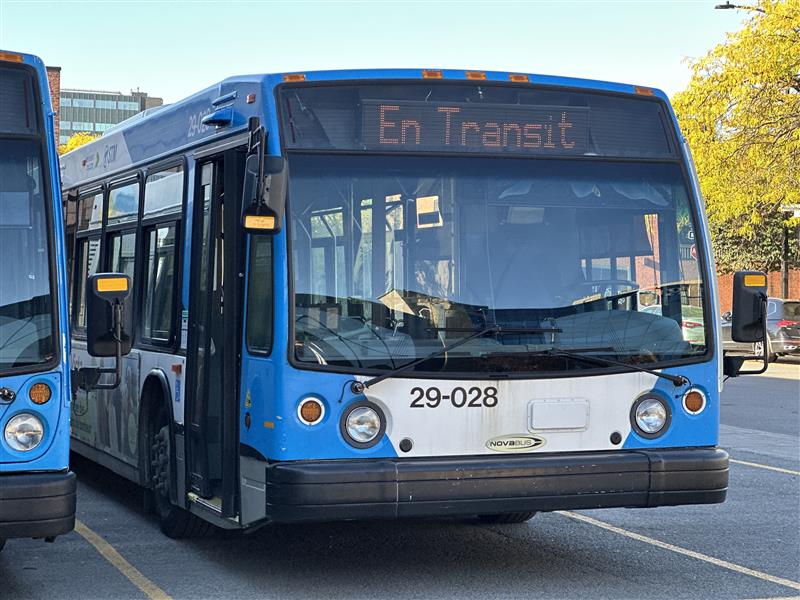
Union leaders called the STM “inflexible” and accused the agency of bad faith bargaining.
“It’s incredible to see how the STM is not moving on its positions,” said union president Bruno Jeannotte in a news release Monday. “A negotiation is done by two people. We put compromises on the table over the weekend and we were completely turned around.”

But the STM says the offer showed “no further progress” and demanded significant concessions, including changes that would affect the transit agency’s operations and budget.
“The offer submitted by the union last Saturday provided no further progress and demanded major concessions — setbacks, elements of which carry significant financial impact for the STM,” said Katherine Roux Groleau, STM’s director of public affairs.
“In terms of flexibility, what the union once again proposed was overly rigid in the process and did not allow us to have the right person at the right place to meet operational needs.”
The strike is scheduled to continue through Oct. 5, with STM service suspended during non-peak hours on Monday, Wednesday, and Friday. A general overtime strike also remains in effect, though essential services are maintained under an agreement approved by Quebec’s labour tribunal.
Mediator’s mandate set to expire
Talks resumed Monday and more negotiation sessions are expected this week. However, the union warns time is running out, as the mandate for the provincial mediator — appointed in June — is set to expire Tuesday, Sept. 30.
“At least they have to sign up to put the mediator again because we need that person,” said François Enault, first vice-president of the CSN. “If they don’t want to put the mediator, we’ll really see they’re in bad faith.”
The STM did not confirm whether it supports extending the mediator’s mandate but said it is following the process outlined in Quebec’s labour legislation.
“We are currently following the timeline provided by Law 24. Currently we are with the mediator, and when the next step comes along, we’ll communicate it in due time,” said Roux Groleau.
Union officials also questioned the composition of STM’s negotiating team over the weekend, claiming it lacked senior decision-makers.
“We were ready to do negotiation on Sunday and they said, ‘no, we will see you at the table on Monday’,” said Enault. “All our executive committee was at the table. On the other side, just a lawyer and two people from STM. Madame Lionel was not there. HR was not there.”
The STM disputes that characterization, saying senior leaders were present and available.
“The committee was present on Saturday, as well as the director of HR and the executives. They weren’t at the table — the director of HR and executives — but they were in a separate room and would have been available had we reached further discussions to go and have an agreement,” said Roux Groleau.
“After much deliberation with the mediator, it was the mediator who then convened that we should meet on Monday, given the two parties were too far from reaching an agreement.”
Union defends proposal, warns of possible escalation
Jeannotte said the union’s latest proposal would have led to savings on overtime and addressed issues like psychological harassment complaints — but was rejected by STM leadership.
“We offered the STM an alternative to its request for labour flexibility, which would also have resulted in savings in overtime. But no, she refuses, it’s never enough.”
He also accused the STM of bad faith in its public messaging about budget constraints.
“The STM accuses us of not respecting its budget framework because of our proposal, while we are negotiating normative issues and putting forward solutions that would have resulted in savings. This is to show you how it is acting in bad faith,” said Jeannotte. “One wonders if it is simply waiting for the application of Bill 89 to reduce our right to bargain and slash our working conditions.”
The union warns further strike action could be coming if negotiations remain stalled.
“We still have one more week’s worth of strike, and then we’ll see,” said Enault. “But our goal is not to do strike. Our goal is to have a collective agreement — a good collective agreement.”

Arbitrator sides with union in separate grievance
On Sept. 26, an arbitrator ruled in favour of the union in a grievance, ordering the STM to restore employees to positions altered in violation of the collective agreement.
“We had also warned the STM that it could not impose such conditions in the middle of negotiations. The referee comes to say in the same sense as us. It’s time for the STM to get into negotiation mode!”
Commuters express frustration and fatigue
Montreal transit users voiced a mix of frustration and understanding as they navigated limited transit options again Monday. Several described disrupted routines, longer commutes, and added costs.
“I had to pay an Uber two times just to go to work,” said one commuter. “Not all of us can afford an Uber every day.”
“Sometimes I have to walk in the metro… I can’t do things after work like go to the gym,” said another. “I’m limited. It’s quite difficult, honestly.”
One rider, while not directly impacted by the strike hours, questioned the message it sends.
“You agree on something — stick to it, right?” he said. “I don’t think it’s a proper way to do it.”
Others acknowledged the union’s right to strike, but said the disruptions are hard to manage.
“They have the right to strike, but it’s an inconvenience for people,” one commuter said. “For people who need transit during the day, it’s very difficult.”
“Now I have to be at school like half an hour earlier every day,” said another. “I don’t like it that much, and I hope they don’t strike again.”
What’s next
The STM says it remains committed to negotiations and reaching a deal.
“We’re doing everything we can to negotiate with the union and to find a solution,” said Roux Groleau.
“The STM is fully committed to this negotiation process and wants to work with the union to modernize the working conditions in order to get this agreement.”
If no progress is made this week, the union may escalate its pressure tactics. The next walkouts are scheduled for Wednesday and Friday.