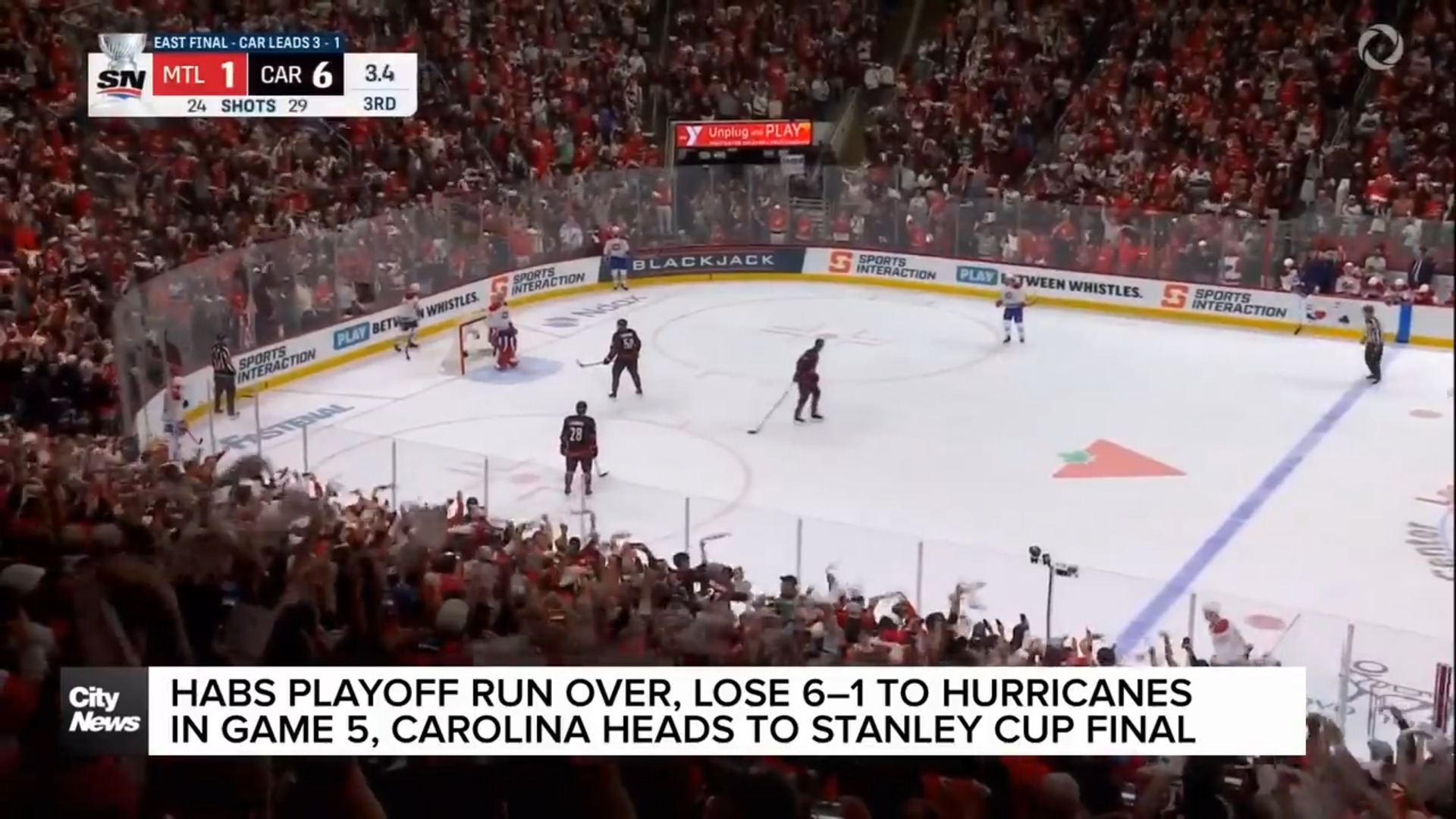
One month to go: Montrealers to vote for next mayor Nov. 2
Posted October 2, 2025 10:29 am.
Last Updated October 2, 2025 6:10 pm.
With one month to go until Montreal’s municipal election, five candidates hope to become the city’s next mayor — and voters will soon be making decisions that stretch well beyond the race for the top job.
The election, set for Sunday, Nov. 2, includes a total of 102 elected positions across Montreal’s 19 boroughs, including city councillors, borough mayors, and district representatives.
Five-way race for mayor
The five confirmed contenders for mayor are:

- Luc Rabouin, borough mayor of Plateau–Mont-Royal and leader of Projet Montréal
- Soraya Martinez Ferrada, former federal cabinet minister, now leading Ensemble Montréal
- Craig Sauvé, longtime city councillor and new head of Transition Montréal
- Jean-François Kacou, leader of Futur Montréal
- Gilbert Thibodeau, leading Action Montréal
This year’s race marks a major shift at City Hall, with mayor Valérie Plante not seeking re-election after two terms. That leaves the field open for new leadership — and potentially, new political directions for the city.
What Montrealers want
Issues expected to dominate the final stretch of the campaign include housing affordability, homelessness, public transit reliability, and growing concern over safety and traffic disruptions from ongoing construction.
For Kian Vahidi, a Plateau–Mont-Royal resident, the environment is a top priority.
“Someone that cares about the environment specifically, especially with what’s going on with our planet right now and environment, please. So someone that really cares about the environment and that can handle the city with all the bike lanes and everything,” he said. “And maybe less traffic as well since I drive sometimes in Montreal.”
Vahidi says he plans to support Rabouin.
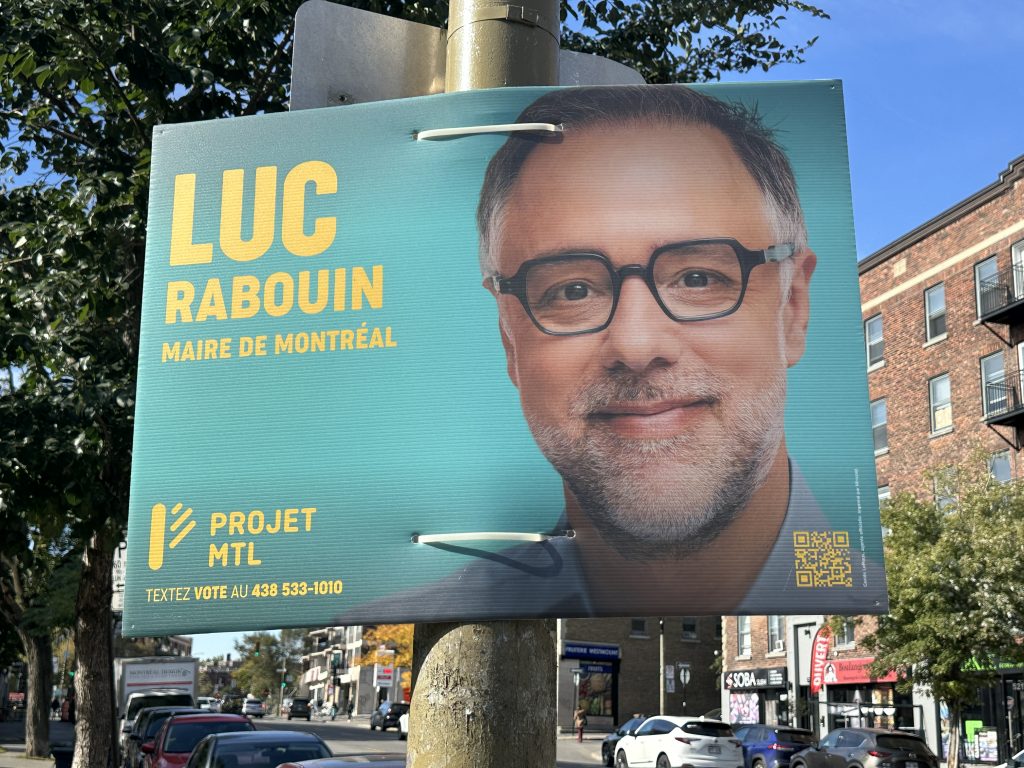
“I feel like he represents mostly the values that I’m going for and I think he would be a great mayor for the city.”
Another Montrealer, living in the NDG borough, said she’s still undecided — but sees the vote as a privilege.
“The only way we’re going to be heard is to get the proper mayor or councillors in place and it’s important to vote,” she said. “That’s a privilege we have so we should use it.”
She hopes the next administration prioritizes homelessness and neighbourhood upkeep.
In Saint-Leonard: frustration with traffic, construction and priorities
In Saint-Leonard, residents voiced concerns about transportation, street conditions, and feeling unheard by decision-makers.
“Well, the problem here, first of all in general, in Montreal, is the flooding,” said one man. “You have to fix the infrastructure, all the pipes in the city, and also the roads.
“I do cycle, but even cyclists have to respect the laws.
“The roads need to be better maintained. There’s a lot of potholes, damages to cars.”
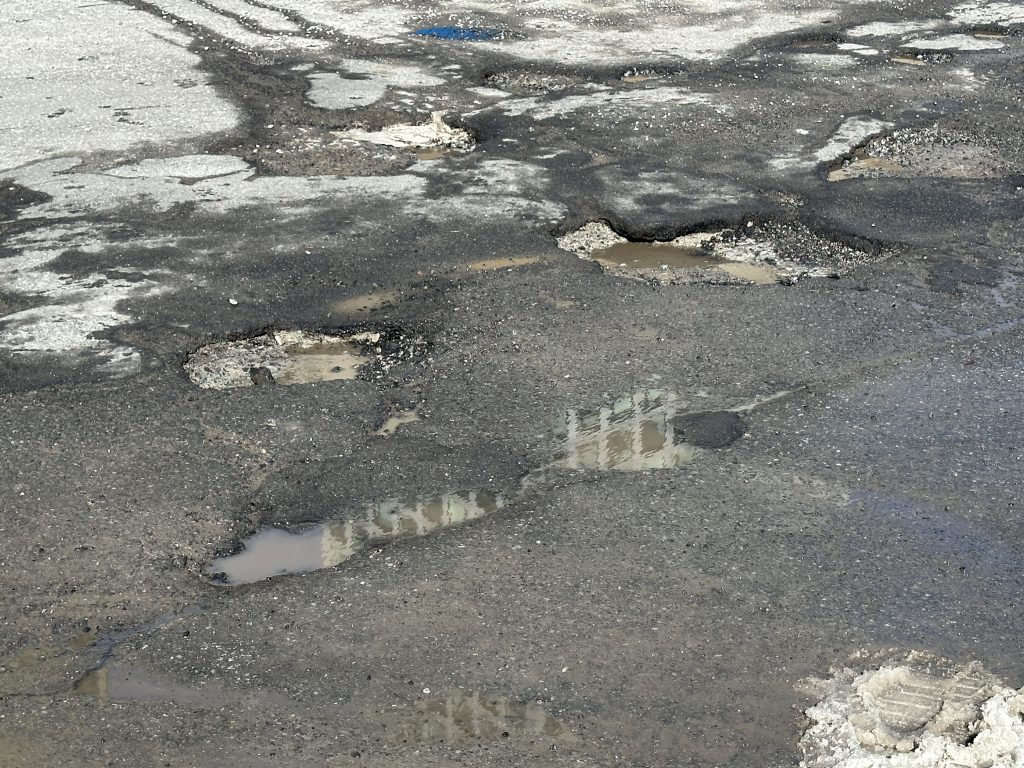
Another Montrealer echoed similar frustrations. “Definitely the state of the roads, the potholes, the cones everywhere — that’s my main concern,” he said. “It’s actually going to be the first time in my life that I go ahead and vote.”
He said he believes Montreal is suffering from a steady decline in basic services. “All of the standards have lowered… the potholes, the way they are repaired or not repaired— everything is getting slower. The little things in your daily life have become worse and make the experience insufferable in the long run.”
Another Saint-Leonard man said he feels the city is becoming increasingly divided. “There’s less union,” he said. “We should work on being together, understanding each other.”
“There’s more and more people on the streets. They’re building everything everywhere — new houses, condos, big blocks and everything— but we’re starting to run, I think, of places to go and space to get around.”
While many supported bike infrastructure in theory, others felt the implementation was uneven.
“It’s a war of two worlds between the bikes and the cars,” said one.
A self-employed fitness trainer expressed a similar sentiment. “I’m all for bicycles, I’m in fitness — but it’s way too much, too fast.”
His advice to city officials: “Listen to the people.”
“How are we going to pay our taxes if we’re just completely shut down? So, we need to listen to us and we have, you know, we love the city…”
Transit, traffic and turnout
Transportation remains a central concern for many, especially in boroughs like NDG.
“Like most people — transport, private, public, bicycle — everything in peace between people but work it smoothly,” said one man, also from NDG. “I walk, I bike, I take public transit like right now and I drive. And there should be easier ways to get around.”
He emphasized the power of the municipal government.
“People underestimate the power that the municipal government has. The excuse that Quebec and the federal government have all the power — they do in some areas, but the stuff that matters to people on a day-to-day basis like garbage collection, like circulation of traffic, like housing… Montreal can have a huge impact.”
Dave King, another NDG resident, hopes the next mayor focuses on affordability.
“Good investment in public transportation and trying to keep prices reasonable for young families,” he said. He plans to vote for Craig Sauvé. “He’s always fought for the working class people, working class families and I think that he would do a lot to help our city.”

King says he’s been trying to follow the race but wishes there were more coverage.
“It’s important to get out there and get your voice out there. I hear a lot of people always complain about decisions that are made, but if everyone takes part in those decisions then maybe they would back them a bit more.”
Insight from a former candidate
Idil Issa, co-founder of Mouvement Montréal and a former candidate for city council in 2021, says running for office at the municipal level is no small feat.
“It takes a lot of grit. It takes strategy. It takes long-term thinking,” she said. “And it takes somebody who can really build a very deep and diverse coalition.”
According to Issa, candidates who want to win will need to connect directly with voters — not just through platforms, but by showing they understand real concerns.

“They need to have that level of authenticity,” she said. “If there’s any type of disconnect… it really takes somebody who knows what’s going on in society and can speak to those concerns.”
She believes cost of living and transit equity are likely to sway voters this year.
“I think people are really concerned about inflation,” Issa said. “A candidate that talks about property taxes, the things that really affect people’s bottom line — I think that’s going to be important.”
She added that the next mayor will also need to navigate a divided debate: “Making the city more accessible for biking, as opposed to helping people get to work and travel in cars — a candidate who can really kind of solve that division would be interesting.”
With voter turnout historically low, she says the key to boosting participation may lie in untapped voter blocs.
“Try to go and find untapped markets and appeal to them and convince them to vote,” said Issa. “That could be a strategy.”
Voting logistics
Advance voting is scheduled for Oct. 26, while voter registration must be confirmed by Oct. 16. For the first time, students will be able to cast ballots directly on campus at select universities and CEGEPs in the final week of October.
Élections Montréal is hoping new accessibility measures will help drive turnout, which hit a record low in the last election. Nearly 1.1 million residents are eligible to vote.
More information about voting options and candidate profiles can be found on their website.