Montreal municipal candidates debate solutions to cohabitation, homelessness
Posted October 9, 2025 4:12 pm.
Last Updated October 9, 2025 5:39 pm.
Homelessness took centre stage Thursday morning as candidates from three of Montreal’s political parties debated their approaches to one of the city’s most pressing social crises.
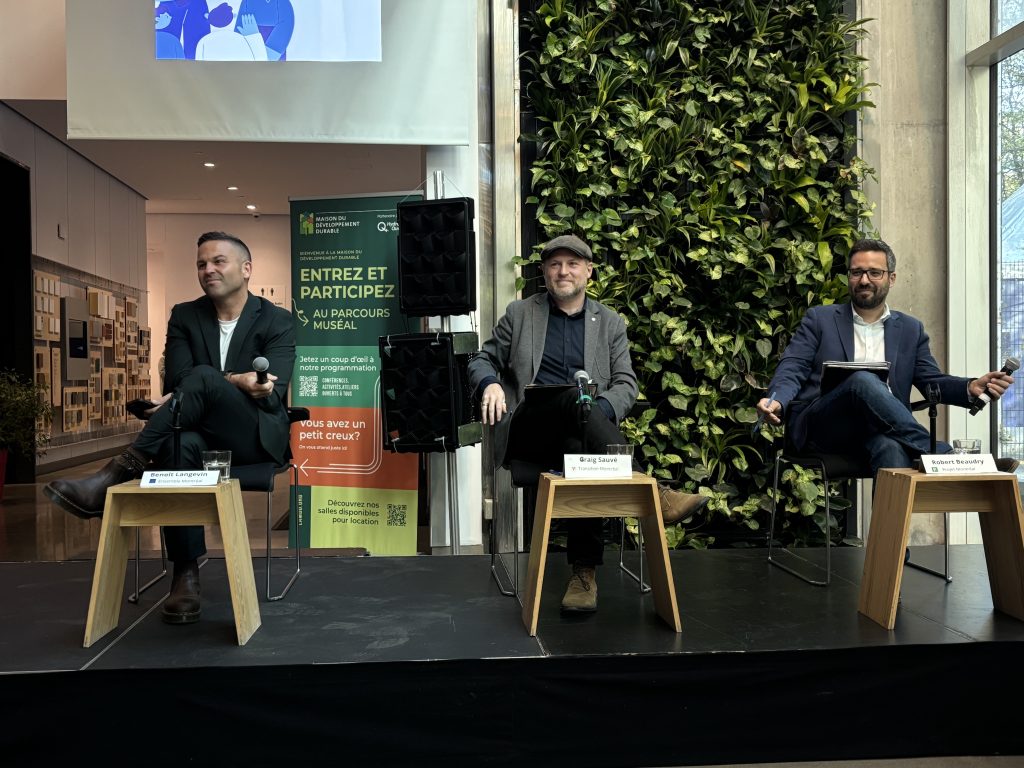
Hosted by the Movement to End Homelessness in Montreal and the Réseau d’aide aux personnes seules et itinérantes de Montréal, the forum brought together Robert Beaudry of Projet Montréal, Benoit Langevin of Ensemble Montréal, and Craig Sauvé leader of Transition Montréal.
Moderated by journalist Jean-Luc Mongrain, the 90-minute debate at the Maison du développement durable drew a full audience of community workers, politicians, and reporters.
The event’s format saw five themes — including homelessness prevention, emergency services, housing and transitional accommodation, social inclusion, and the criminalization of homelessness.
Candidates were challenged to present concrete solutions and respond directly to questions from frontline workers and advocates. Each had a minute and a half to answer, with questions provided a week in advance to help them prepare.
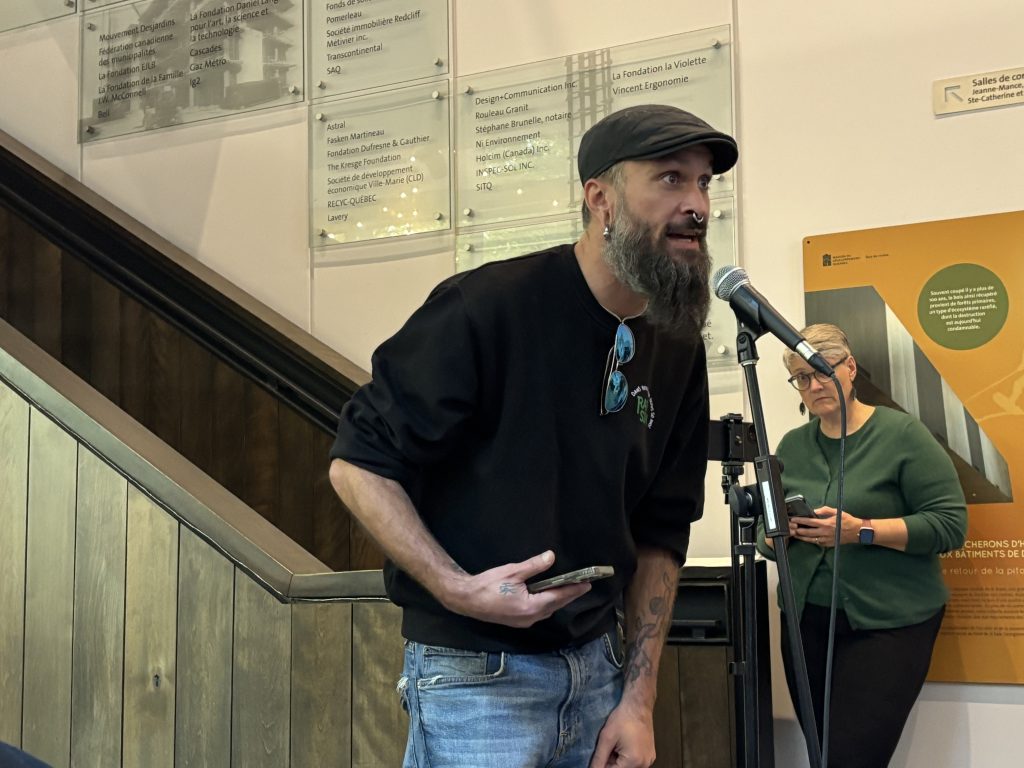
Candidates present differing strategies
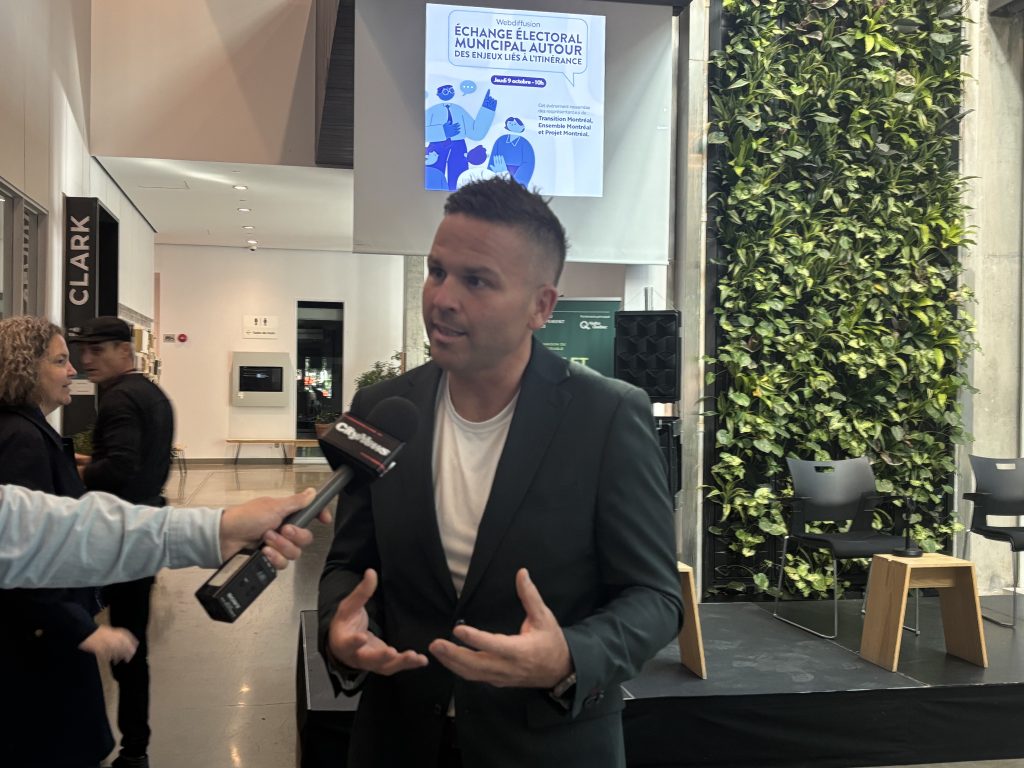
Ensemble Montréal
During the debate, Langevin outlined leader Soraya Martinez Ferrada’s recent $100-million plan to expand emergency shelters. This includes creating a Groupe d’intervention tactique en matière d’itinérance to determine the best locations and practices for new shelters.
“We’re behind in the city of Montreal and that’s why this morning Mrs. Soraya, she announced a hundred million dollars investment in order to renovate, construct and to ameliorate what we have as an offer as 24-7 resources across the city,” said Langevin.
The announcement builds on the party’s broader platform, which includes developing 2,000 transitional and permanent housing units with psychosocial support, investing $120 million in community organizations and outreach workers, and providing microcredit programs to help tenants at risk of eviction.
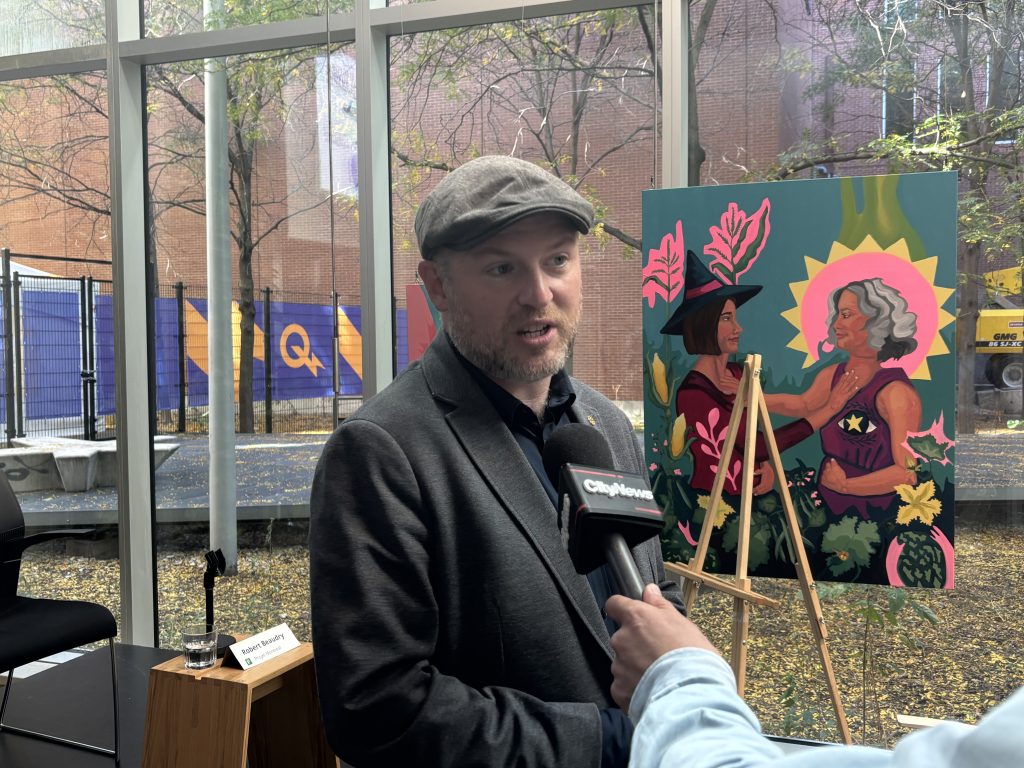
Transition Montréal
Party leader Sauvé proposed the declaration of a state of emergency to allow vacant buildings and hotels to be used as temporary shelters.
Sauvé also expressed wanting to ban police interventions in homeless encampments, replacing them with community-led support teams that include social workers and outreach staff.
“Right now, it’s leadership in the domain of homelessness. There has been a complete void in Montreal. We’ve been passing the buck off to Quebec who’s been ignoring us and then Quebec’s waiting for action from us. So Montreal needs to take leadership in this battle,” said Sauvé.
Transition Montréal’s other measures outlined in a press release include mobilizing unused municipal buildings for shelter use, implementing a tax on luxury homes valued above $3.5 million to fund homelessness initiatives, and creating a municipal rent bank to prevent evictions.
He said the goal is to create a stable source of funding for community organizations and to ensure the city’s approach to homelessness is rooted in human rights rather than enforcement.
Projet Montréal
Beaudry focused on long-term prevention, highlighting initiatives to protect rooming houses and expand affordable housing options throughout the city.
He also emphasized the need for public infrastructure, including accessible restrooms and hygiene facilities, as a key element for cohabitation in public spaces.
Projet Montréal, which has been criticized for past encampment dismantlements like the one on Notre-Dame Street, maintains that long-term housing remains the city’s best tool for addressing homelessness.
Led by Luc Rabouin, the party has been expressing plans to strengthen housing protections and expand support for people experiencing homelessness.
The party’s platform includes more than 20 commitments on housing and homelessness, such as adjusting the city’s 20-20-20 bylaw to promote off-market housing, doubling funding for organizations that work with unhoused populations, and creating 1,000 new social and transitional housing units, including 500 modular housing units.
“It’s really important to have a frontline, and a modular housing can respond to the people who are already now in encampments,” said Beaudry.
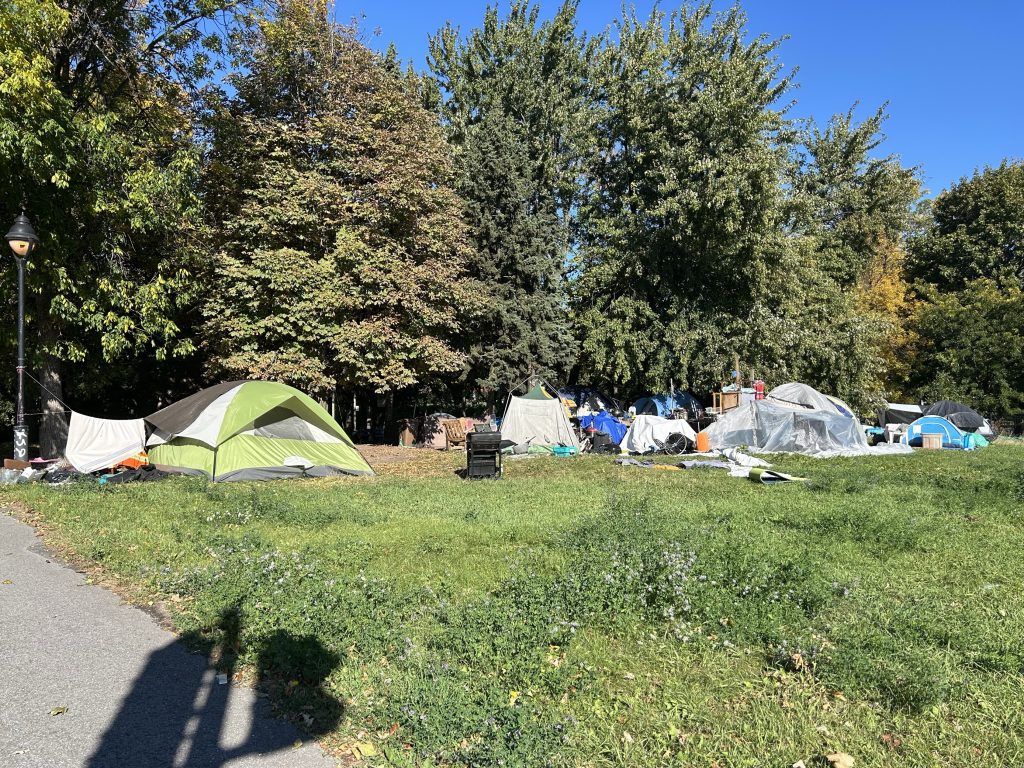
Homelessness has become a defining issue in this municipal election, as Montreal continues to grapple with a deepening housing crisis and growing numbers of people living on the streets.
A public consultation report released earlier this year warned that coordination between governments and local organizations remains inadequate, describing a “major governance deficit” in how the issue is handled.
The report also cautioned against clearing encampments, saying such actions merely relocate the problem instead of resolving it. The most recent count, in 2022, identified 4,690 visibly unhoused people in Montreal — up by more than 1,500 from 2018 — and observers say the figure has likely climbed since then.
Another key topic raised during the forum was the shortage of shelters and resources specifically for women, which drew similar responses from the candidates.
“We need an intersectional approach when we’re talking about getting people out of the streets or offering basic services, because they have different needs,” said Sauvé.
Langevin pointed out that there are only 370 shelter spaces available for women compared to 1,300 for men and other groups, highlighting what he called a significant gap — one his party intends to address.
For Beaudry, the discussion highlighted that roughly 50 per cent of women seeking refuge face discrimination, often due to having children or experiencing sexual harassment.
“We need to develop solutions quickly,” he said, reaffirming Projet Montréal’s commitment to its modular housing plan as a solution.
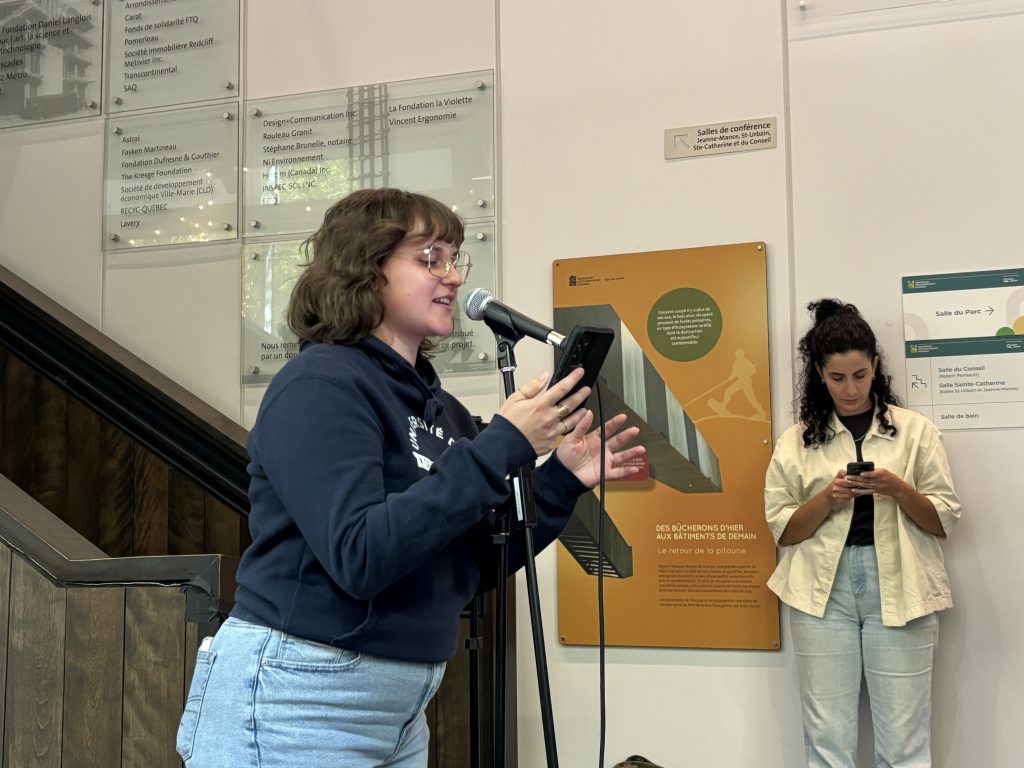
Sam Watts, CEO and executive director of the Welcome Hall Mission, said that while the forum brought forward several promising ideas, what ultimately matters is which party will turn those ideas into concrete action.
“My concern is not about what people say because a lot of people are saying the same things. It’s what are people going to do, and so to move into action is really what we’re looking for, not just simply doing a lot of talking about it,” Watts said.