Montreal maintenance workers’ strike enters 3rd day as service restrictions continue
Posted November 3, 2025 6:49 am.
Last Updated November 3, 2025 6:01 pm.
It’s Day 3 of the Société de transport de Montréal (STM) maintenance workers’ strike, and Montreal commuters continue to face limited bus and metro service — a situation expected to last until Nov. 28 if no agreement is reached.
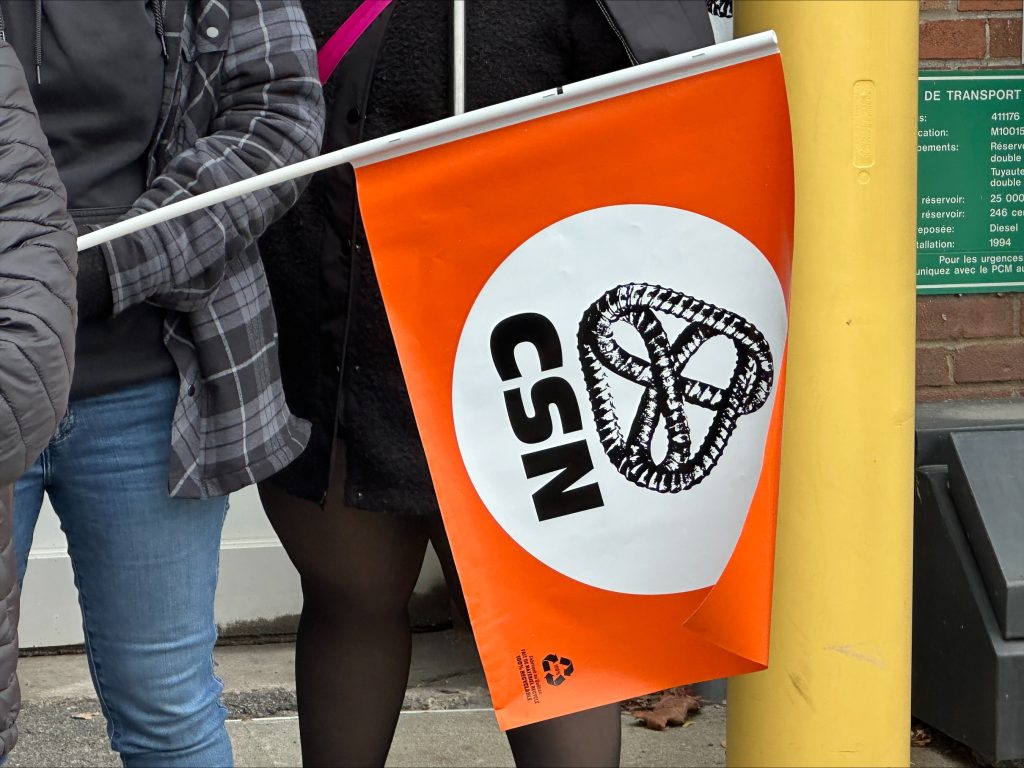
The walkout by the Syndicat du transport de Montréal–CSN began Saturday, alongside a one-day strike by bus and metro operators and station agents with CUPE Local 1983. That 24-hour work stoppage shut down the entire public transit network.
Roughly 2,400 maintenance employees, including mechanics and service staff, are on strike. The union says it resorted to the measure after more than 115 bargaining sessions failed to produce an agreement.

Union president Bruno Jeannotte said the STM is fully to blame for the dispute.
“There is only one party responsible for this strike, and that is the STM,” Jeannotte said. “To negotiate is to propose solutions, while taking into account the concerns of the other party. The STM has been completely closed since the beginning of the negotiations.”

He said the union did everything it could to avoid the strike, but faced “an intransigent employer.”
“We understand that our pressure tactic has a significant impact on thousands of people. We really did everything we could to avoid it,” Jeannotte added. “We must use this ultimate pressure tactic to finally settle this negotiation.”
Negotiations stalled
Union leaders accuse STM management of maintaining a rigid stance, particularly on subcontracting and wages.
Bertrand Guibord, president of the Conseil central du Montréal métropolitain–CSN, said the union has made multiple concessions and proposals, including a global offer last week that the STM rejected.
“We are at the third day of this strike sequence, which would have easily been avoidable if STM had any will to truly negotiate it,” Guibord said. “There’s been a mediation process for the last few weeks. The union took an active part into it, made some concessions, made some proposals, and even made a global offer last week which was rejected by the STM, but not only that and not only the STM did reject the global offer made by the unions.”
He said subcontracting and salaries remain the biggest sticking points.
“STM is now asking to subcontract to privatize core elements of the work of the people we represent, for instance,” Guibord explained. “They want the repairs done to some vehicles, to some equipment, to be privatized. They want the parts building and the parts fabrication contracted to the private sector, but this is really essential because we have some trains running for 50 years here. Nobody in the private sector does those parts anymore. So it’s really important that it’s kept in-house, especially if you think that when doing contracts, STM is bound by the lowest bidder rule, so they have to buy the cheapest part possible. So these parts don’t last. So in the long run, it costs a lot more than if the workers here in-house build better-quality parts on the salaries.”
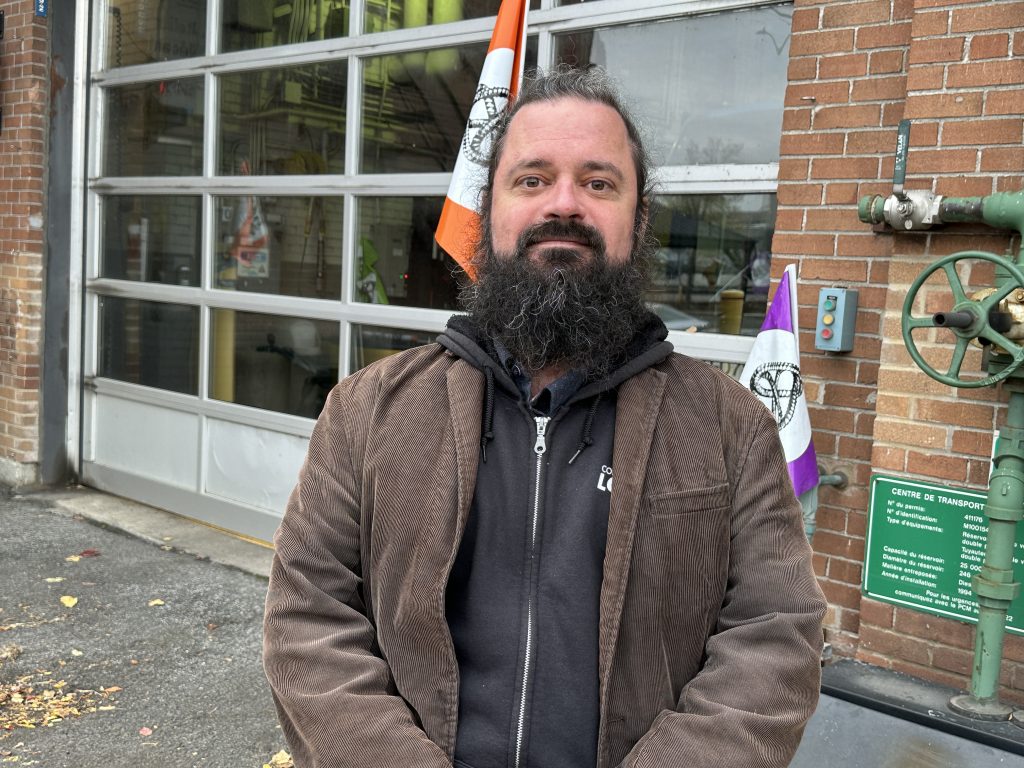
On wages, Guibord said the union’s members have lost significant purchasing power.
“There was a little advancement made by STM in the last few days, but we’re really, really far away from getting an agreement on that,” he said. “Because, as everyone, the workers at the STM have lost a lot of purchasing power in the last few years, especially since their last deal was a seven-year deal. So they’re now way behind in terms of purchasing power as they were seven years ago. And if you consider what’s been signed and what agreements happened in other similar workplaces all over Quebec, the offers made by STM are just far away from what we need.”
Guibord added the strike was not undertaken lightly.
“Nobody strikes for the pleasure of disrupting the service,” he said. “Everybody’s aware that a strike disrupts the normal activities of any workplace, including STM, but after two years, after a hundred and fifteen bargaining sessions, there’s no other way to make sure that at some point STM will act, will accept to bargain.”
He also urged the Quebec government to step in, noting that public transit is essential to Montreal’s daily life and environmental goals.
“We see the full effect of Minister Boulet’s Bill 89. Instead of negotiating to find an agreement with their employees, employers will wait for the minister to do the dirty work and impose working conditions. This government is only balancing the world of work to the advantage of the bosses. However, more than ever, we need to invest in public transit and in jobs of the future like those of the STM to make the just transition.”

In a statement to CityNews, the STM said as part of negotiations with the maintenance workers’ union, “the mediators agreed not to convene the parties again for the time being, given the significant differences in their respective positions.”
“Discussions are continuing without a mediator,” they added. “We have improved our wage offer through self-financing options. If the current process does not bring us closer to an agreement quickly, all options will be explored, including the appointment of a dispute arbitrator to help reach a settlement.”
Union asks new Montreal mayor-elect to get involved
The union representing maintenance workers is now asking the mayor-elect of Montreal, Soraya Martinez Ferrada, to get involved.
Martinez Ferrada indeed said Monday, just hours after being elected, that her top priorities as mayor include helping to end the ongoing strike by public transit workers.

Service disruptions
Montreal’s transit network saw major interruptions over the weekend and continues to operate on a restricted schedule.
- Oct. 31: Regular service operated until the end of the day.
- Nov. 1: A one-day strike by bus drivers, metro operators, and station agents (CUPE 1983) shut down all bus and metro service.
- Nov. 2–28: Maintenance workers’ strike continues, resulting in reduced service across the system all week, including weekends.
Adapted transport service remains available.
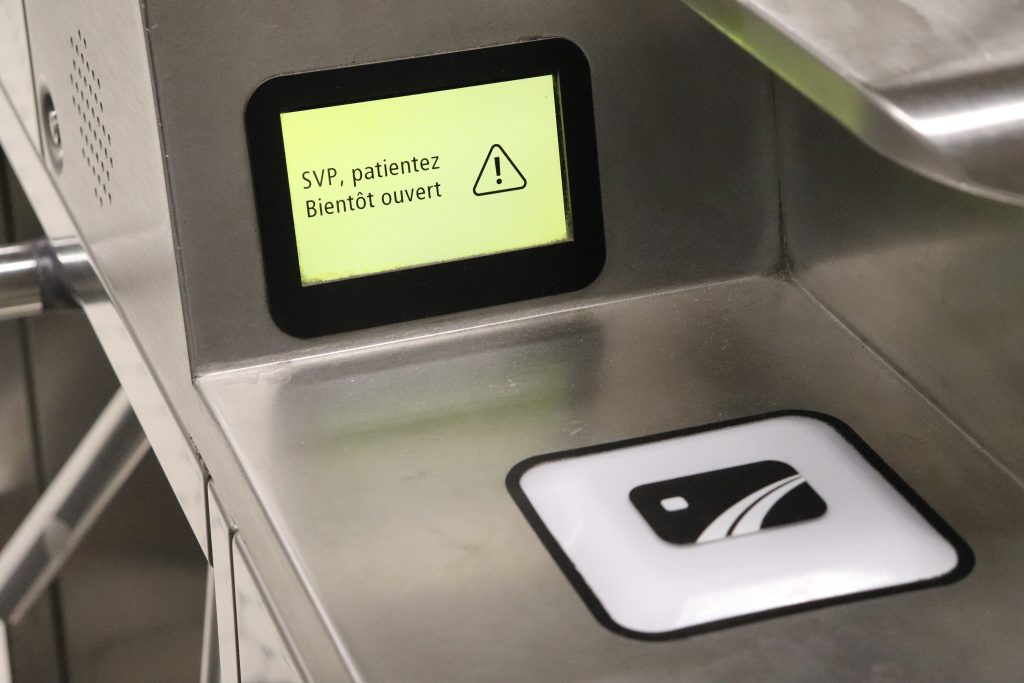
The metro now opens daily at 6:30 a.m., with no train service or station access before that time. Metro service is limited to:
- 6:30 a.m. – 9:30 a.m.
- 2:45 p.m. – 5:45 p.m.
- 11 p.m. until regular closing time
Stations close progressively after the last train passes each night.

Frustration among commuters
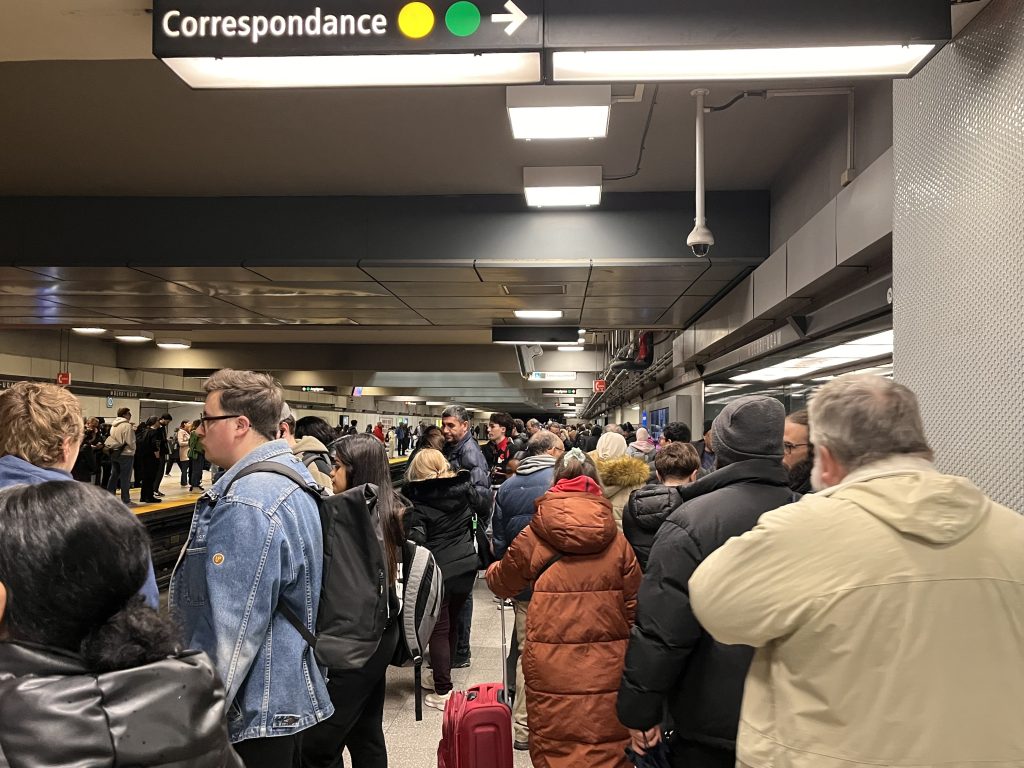
The disruptions have left many Montrealers frustrated and struggling to adjust their routines. Reduced metro hours and long waits for buses are adding to travel times across the city.
One commuter said the strike hasn’t affected him much personally because he mainly uses the REM, but noted that many others are struggling.
“A bunch of my friends have been screwed over by the strike because now they have to come in by car, pay for parking, and release more CO₂ into the air,” he said.

He added that the best outcome would be a fair deal for both sides.
“The proper one and the nuclear one that we want to all avoid for future reasons. The first one being the optimal one is that we come to a conclusion agreement that benefits both the drivers as well as the maintenance crew. The nuclear option is that we don’t come to an agreement and the new law regarding the prevention of essential service strikes comes into effect at the end of November or early December if I remember well. Then the government will be able to strike down any strikes it deems essential, be it transport right now or education or any other system in the province.”
Another commuter summed up his feelings more bluntly: “It sucks.”
Others said the strike has made daily life more difficult, especially for those working or studying outside rush hours.

A PhD student said she supports the workers but finds the new schedule challenging.
“The workers have a valid reason for striking, especially after 115 negotiations that didn’t go anywhere,” she said. “But it does impact me pretty greatly because I am a PhD student and that means I have to stay in the lab longer than the usual rush traffic hours, and then that means around like 8 p.m. I have to walk home and that is a long walk in this weather especially.”
She said the walk can take between 25 and 45 minutes depending on where she stays, while some of her friends face up to 90-minute walks.

Another commuter said the month-long strike has disrupted his nightly activities.
“I think this time is too long and it will impact for like one month and even though it doesn’t influence my work a lot, it affects my entertainment during the night,” he said. “I live in downtown but I play badminton in UDM, so during the night I have to take my friend’s car or need to leave very early for that.”
Others said they understand the workers’ right to strike, but hope for a swift resolution.
“It’s definitely annoying,” said one part-time student. “Getting to school has been an issue as well, maybe more so than getting to work, just because of the irregular hours. So having to get into classes, sometimes you have evening classes or afternoon classes, you have to get in there early in the morning for no reason. When this was happening for less than a month, I think it wasn’t as much of an issue, but the idea this is going to happen for a month I think is exceptionally annoying.”
CUPE operators threaten further action
Bus drivers and metro operators represented by CUPE Local 1983 have warned they may strike again on Nov. 15 and 16 if no progress is made at the negotiating table.
The union has said such action is intended to put pressure on the government and STM management to address funding and service quality issues.

What’s next
Unless a deal is reached, Montreal’s transit network will continue operating on a reduced schedule until Nov. 28.