Day 5 of STM strike: Transit interruptions persist across Montreal, medical trips affected
Posted November 5, 2025 8:51 am.
Last Updated November 5, 2025 5:52 pm.
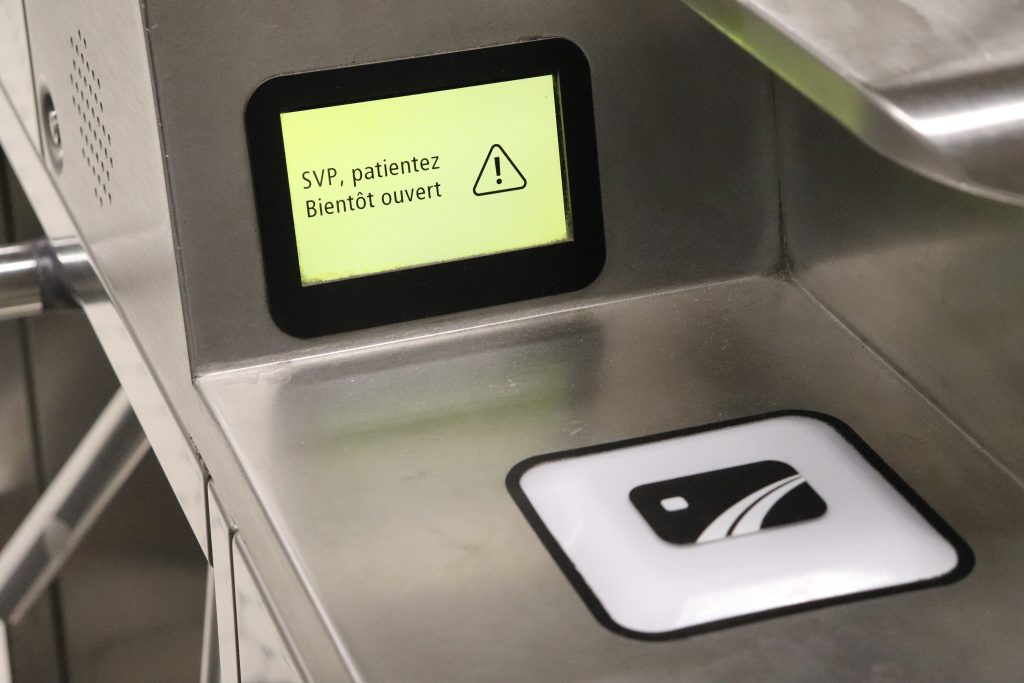
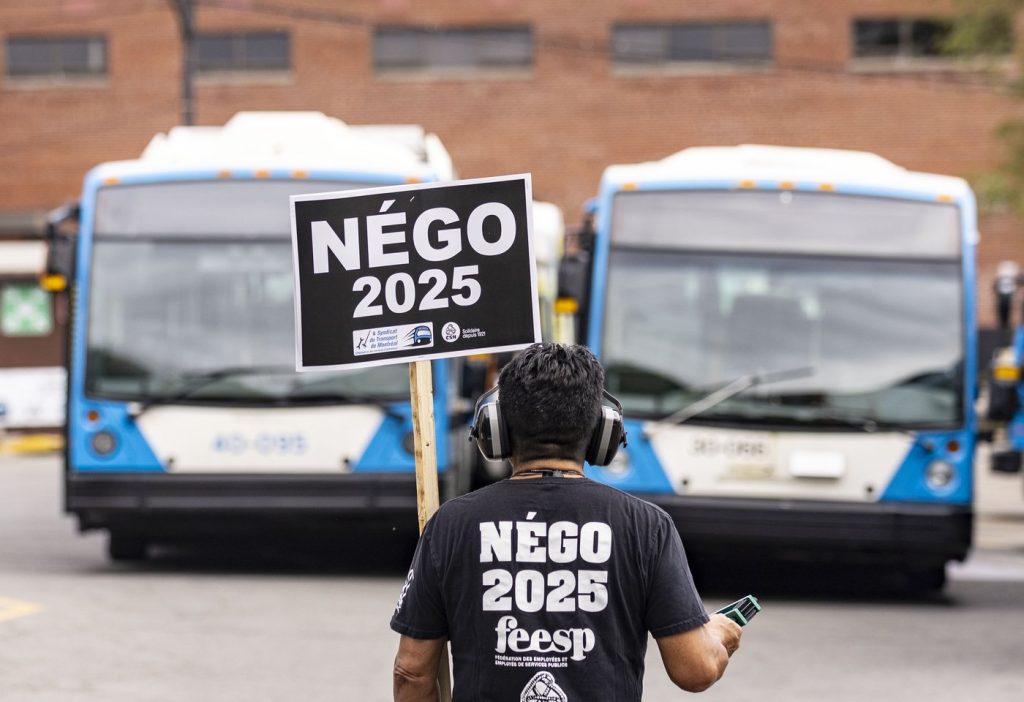
Montreal’s public transit system continues to experience major disruptions as the strike by STM maintenance workers enters its fifth day. Limited bus and metro services are expected to continue until Nov. 28, unless a deal is reached sooner.
Strike hits maintenance workers and commuters
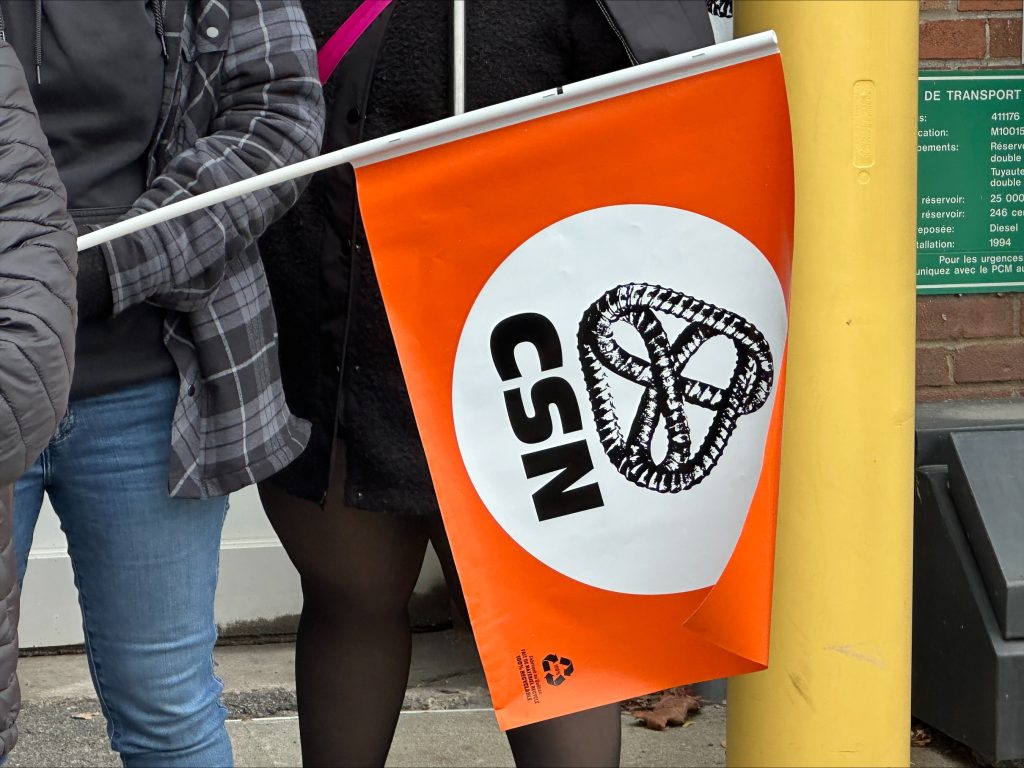
The walkout involves roughly 2,400 maintenance employees, including mechanics and service staff, represented by the Syndicat du transport de Montréal–CSN.
The union says it had no choice but to strike after more than 115 bargaining sessions failed to produce an agreement. Workers are demanding wage increases and an end to the subcontracting of critical maintenance work.
Service disruptions and what riders should know
The strike is affecting regular bus and metro services, including routes serving schools, with some trips cancelled. Commuters are encouraged to check the STM’s school service page for details on affected routes.
The metro now opens daily at 6:30 a.m., with no train service or station access before that time. Metro service is limited to:
- 6:30 a.m. – 9:30 a.m.
- 2:45 p.m. – 5:45 p.m.
- 11 p.m. until regular closing time
Stations close progressively after the last train passes each night.
Bus schedule:
- 6:15 a.m. – 9:15 a.m.
- 3 p.m. – 6 p.m.
- 11:15 p.m. – 1:15 a.m.
Paratransit services, however, are not affected and continue to operate as usual.

On Wednesday, the STM told CityNews in a statement that it continues to advise its customers to allow more time than usual and to plan their trips in advance.
The agency notes that the STM website remains the most reliable source of information, as it includes scheduled timetables, adjustments based on actual conditions, and real-time data.

Commuters struggle to reach hospitals and clinics
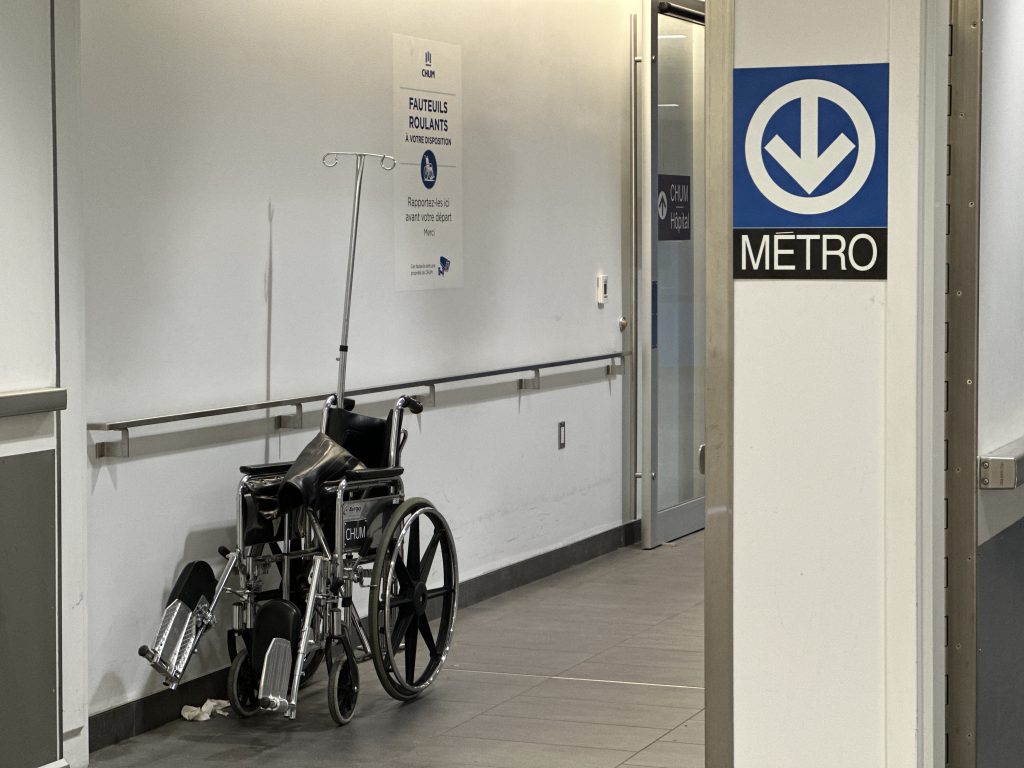
The limited service hours are especially difficult for Montrealers who rely on public transit to reach medical appointments. Many travel outside of rush hours, when no metro or bus service is available, for checkups, treatments, or vaccinations.
Paul Brunet, chair of the Conseil pour la protection des malades, explained the impact on Montreal’s elders.
“You have more or less 350,000 elders living on the Island of Montreal. More or less 150,000 of these people are already registered for free public transportation. So one might estimate that at least half of them have a medical appointment or something that has to do with a medical appointment. So of course it will, and it’s already impacting elders in a lot of instances, for thousands of them, of course,” he said.
He added that Uber pricing has surged due to high demand.
“Uber has gone with dynamic tariffs. It’s more expensive now because they know that people need them. Whereas for taxis, I’m not aware that they have raised their tariffs. But then again, you know, it’s public transportation. I think that people have the right to access healthcare. There’s no reason why a strike, without respecting the right to strike, should impact elders.
“The right to access healthcare should be a priority as the right to strike is.”
“I represent elders, I represent patients, and we think that the right to be saved and taken care of when your health is not doing well should come before the right to strike.”

Annie Lavoie, head of service at the cafeteria at CHUM (Centre hospitalier de l’Université de Montréal), described operational challenges.
“We had to adjust some employees’ start times. What’s difficult is that employees are being held hostage, which is tough. Our teams work 24/7. I have a lot of employees who start at 6 a.m., so it’s impossible for us to start at 6 a.m.,” she said.
She added that the cafeteria had changed its opening hours to ease the pressure on staff.
“We’ve adjusted our opening hours to try to adapt our services a little to allow employees to arrive without being stressed when they start work. But this has a big impact on the teams in the field.”

Lavoie also described the inconvenience for patients.
“If it affects employees, it definitely affects patients. Even patients who don’t necessarily take public transportation will be affected by the increased traffic density. We see it. I drive, and I see it.”
Other commuters expressed similar frustrations.
“It’s got to affect pretty much anybody who takes it, especially coming to the hospital. Anybody that has appointments if it’s at a certain hour when the STM is not running, I don’t see how else they would get here other than having to pay more money, or you know, taxis, Uber, stuff like that. I don’t use the STM too much, but I mean it does affect a lot of people that I know,” said one Montrealer.
Another Montrealer shared the challenges of getting to and from a hospital appointment.
“It wasn’t my appointment, first of all, it was my partner’s appointment, but we had to really… we were lucky to have an appointment that was just after the strike ended for today, or like, you know, the first segment of it, I guess. But we have to now Uber home. The Uber, like the way that they’ve inflated their pricing for the strike, is crazy. So monetarily it has affected us, and just like convenience, they have to go to school after this. So it’s like getting there and then getting home for me — it’s like two separate rides now, more money.”

She added her thoughts on solidarity with transit workers.
“They absolutely should strike, they should be getting what they want, though, you know? It’s like they shouldn’t have to strike this much to be heard. I think more people should be standing up for them, picketing, being on the front lines to show solidarity because that will help this progress and not make the STM keep striking. But I completely support them. The inconvenience for me is a small part of the bigger picture.”
Physicians have also expressed concern about how the STM strike affects patients’ ability to access care.
‘Public transit isn’t a luxury, it’s a necessity’
Physicians have also expressed concern about how the STM strike is affecting patients’ ability to access care.
Resident physician, health columnist and content creator Dr. Michelle Houde took to TikTok to voice her frustration, saying the strike exposes deeper inequities in the city’s health system.
“Public transit isn’t a luxury — it’s a necessity, it’s a right,” she said. “The STM strike is an opportunity for society to reflect. Honestly, as a doctor, I disagree with the ruling that people’s health and safety are not at risk during the strike. I have patients who can’t come to the clinic, and they are usually the patients who need me the most.”
Houde described how some of her patients have struggled to reach appointments because of limited service hours.
“I have a patient who arrived four hours early so she could take public transit when it was running, who told me she didn’t know how to pick up her child from school, her elementary school child who can’t get home alone. She is a single mother with no social support, not physically fit enough to cycle long distances, who lives farther away because housing is cheaper there, who can’t afford a car and certainly can’t afford a taxi or an Uber, but that said, she had no choice. I gave her the money to take a taxi.”
@lamdcoloree Je suis inquiète pour la santé des personnes qui comptent sur le transport en commun. Cette grève a des impacts qui démontrent toute l’importance du transport en commun et de l’argent qu’on y injecte.
♬ son original - Michelle • MD colorée
Houde added that the strike highlights how transportation is tied to social justice and public health.
“The impact of a crisis like this, if I can call it that, is truly significant. Especially for those who need the most care and love from our society. Access to public transportation is a major health determinant that helps limit social inequalities in health, that is, it helps limit the health gap between the more and less privileged.
“A fairer and more equitable society that provides basic services to the population. It is a more peaceful, healthier, less violent, happier society. Even if you have a lot of money, you have everything to gain from ensuring that the most vulnerable people are able to meet their basic needs. Eating, housing, transportation, among other things.”
She concluded her video by calling for long-term investment in public transit and in the workers who keep it running.
“Public transportation requires major investments, good working conditions for employees, and good accessibility for all. And that can make a difference in cities across Quebec,” she said. “This is not an opinion on the conflict, but rather a health perspective on an issue that may not seem to be related to public transportation.”
Increased demand for rideshare services
Uber drivers are confirming a surge in demand. One driver, Ben, said calls have been “one after another” since the strike began.
“Ever since the strike, it’s been much busier for me. There’s been more calls, one after another. I feel bad for the people who use the transit system, but in a way, it profits us, you know, helps us,” he said.

Ben added that the spike in demand started during the weekend.
“On Saturday, Halloween Eve, it was very busy. After parties, there was another ride right after another. It was constant, even late in the morning. From that evening on, after the parties, there was always another call wherever I was. It was constant, like my evening and even late in the morning — so it was very busy.”
CSN: ‘STM is making time’
The Syndicat du transport de Montréal–CSN says two meetings have taken place this week with STM senior management. The union maintains it remains open to reaching a deal quickly but accuses the transit agency of holding a rigid position that has not changed.
Union representatives are also meeting with the new mayor of Montreal today to discuss the state of negotiations.
“We have taken steps to find an agreement. In front of us, it seems that the STM is making time. It doesn’t budge and always wants to open the door wide to subcontracting,” said Bruno Jeannotte, president of the Syndicat du transport de Montréal–CSN.
“Obviously, the STM would rather see its services shut down than find an agreement with us. Public transit users want to be able to count on the long-term and safe reliability of public transit. Entrusting critical tasks such as manufacturing and repairing parts to the private sector will only increase costs and the number of breakdowns. That’s really not what the STM needs. The closure of the STM continues to hurt employees and the entire population who are experiencing the effects of the strike. It is high time that the new mayor and the government get involved so that a negotiated agreement can finally be reached,” he added.
Business, cultural groups urge Quebec to act
As the STM strike stretches on, six major organizations — the Chamber of Commerce of Metropolitan Montreal (CCMM), the Greater Montreal Hotel Association (AHGM), the Quebec Restaurant Association (ARQ), the Conseil des arts de Montréal (CAM), the Fédération des chambres de commerce du Québec (FCCQ), and the Conseil du patronat du Québec (CPQ) — are urging the Quebec government to act now.
In a joint statement released Wednesday, the groups called on Labour Minister Jean Boulet to move up the implementation of Bill 89, a new law designed to ensure that public needs are better protected during strikes or lockouts. They argue that accelerating the law’s start date could help limit the economic and social impact of the ongoing transit shutdown.
Minister Boulet’s new law, adopted last May, is scheduled to come into effect Nov. 30.
It will allow him, if he deems that a labour dispute is causing “serious harm to the public” and when mediation between the parties has failed, to impose dispute arbitration. An arbitrator would then determine the working conditions of the employees on strike or locked out.
A decision to this effect by the minister would also result in ending the labour dispute.
The six organizations emphasized that while the right to strike is fundamental, it must be exercised with the public interest in mind, and called for deeper reforms to align public services with the economic and social realities of Montreal.
In response, Boulet said he is reviewing all options and remains open to collaboration.
“I’m not ruling out any options at this point,” Boulet said. “As you know, the bill to give greater consideration to the needs of the population on Nov. 30, is bringing it forward an option? It could be an option. But would it have to be done in collaboration with the other parties.”
“There are two parties that voted against the adaptation of this bill. I don’t necessarily know the specific bill. There are fast-track consent procedures, but nothing has been ruled out at this stage. I am analyzing our options, but I would like to point out that the parties have the primary responsibility to reach an agreement,” he added.
‘Public transportation is an essential driver of economic activity’
The organizations also commended Mayor Soraya Martinez Ferrada for making the issue a top priority and requesting a meeting with STM Director General Marie-Claude Léonard to discuss solutions.
“Public transportation is an essential driver of economic activity: it keeps our economy running, supports businesses, and allows hundreds of thousands of people to get around every day,” said Isabelle Dessureault, president and CEO of the Chamber of Commerce of Metropolitan Montreal.
“This strike directly affects those who work in the restaurant, cultural, and service industries, well beyond the 9-to-5 framework. Anticipating the coming into force of the Act to better consider the needs of the population in the event of a strike or lockout is a pragmatic and necessary measure to reduce the impact of this strike on the population and the economy of the metropolis. The Quebec government has the tools to act now. It must use them,” she added.
Michelle LLambías Meunier, president and CEO of the CPQ, echoed that message:
“The CPQ already issued this appeal a few days ago, and our message remains the same: we must act now. Every day that public transportation is paralyzed weakens economic activity, prevents many workers, especially those with atypical schedules, from getting to work, and jeopardizes the health and safety of the population. The most disadvantaged are being held hostage by this critical situation. It is urgent that legislators intervene without delay to avoid the worst. The tools exist: it is time to use them.”
Dominique Villeneuve, head of the Greater Montreal Hotel Association, said the strike threatens an industry that depends heavily on round-the-clock transit access.
“Hotels in Greater Montreal operate 24 hours a day, seven days a week. Our teams depend on public transit to cover morning, evening, and night shifts, which enable the city to welcome visitors and host major events. This prolonged strike compromises our establishments’ ability to offer their services and increases pressure on employees and employers. It is essential that the government intervene quickly to ensure the continuity of services that are essential to Montreal’s economic and tourism vitality.”
Martin Vézina, vice-president of public and government affairs for the ARQ, added that restaurant workers are also feeling the strain.
“It is essential that the situation be resolved quickly for the well-being of restaurant workers, many of whom use public transportation in Montreal to get to work. Not knowing how they will be able to do so and return home afterwards is a source of unnecessary stress for them. Let’s not forget that the economic vitality of downtown restaurants depends on customers from different neighborhoods in Montreal, as well as from the surrounding suburbs, and that a prolonged strike will have an impact on their financial health.”
Véronique Proulx, president and CEO of the FCCQ, said every day of disruption weakens the province’s urban economies.
“Public transportation is essential to the economic vitality of Quebec’s major cities, especially Montreal. Every day of paralysis further weakens our economy. Ultimately, thousands of workers are unable to get to their jobs and businesses are seeing their customer base decline. That is why it is essential for the government to intervene quickly to restore the situation.”

Tensions with CUPE Local 1983
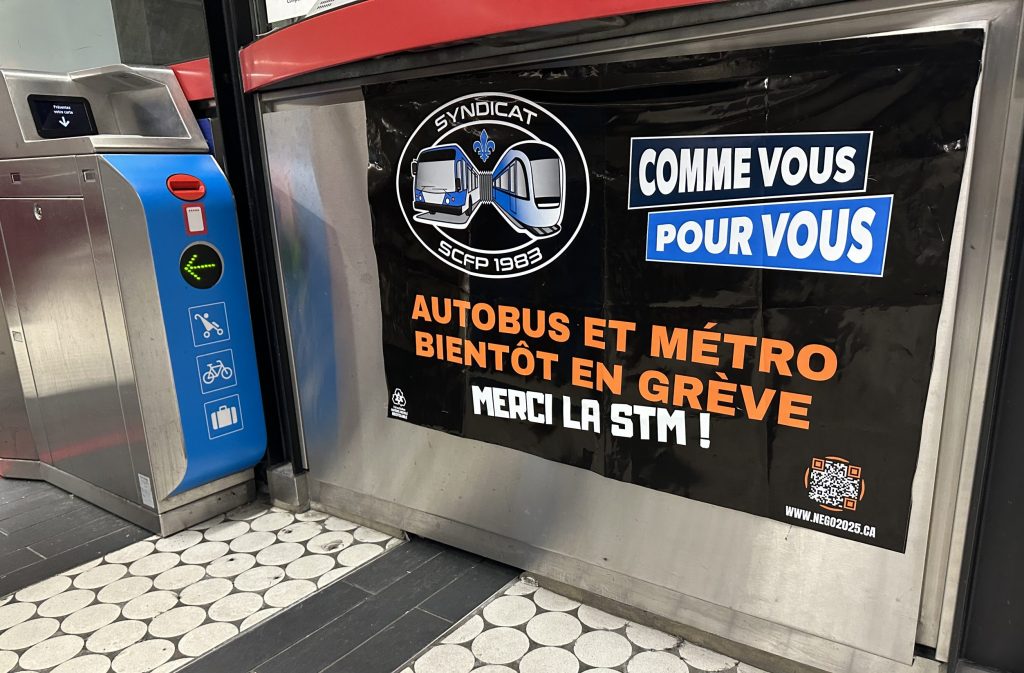
The maintenance strike is unfolding alongside ongoing labour tensions involving CUPE Local 1983, which represents about 4,500 bus drivers, metro operators, and station staff.
CUPE members carried out a 24-hour strike on Nov. 1 and could stage another walkout on Nov. 15 and 16 if a new contract is not agreed upon.
CUPE told CityNews it had no updates to share at this time, noting that mediation has begun and negotiations are continuing.
Talks scheduled to break deadlock
Late Wednesday afternoon, the STM announced via social media that a meeting between mediators, the STM, and the maintenance workers’ union is scheduled for Thursday. In recent days, both parties have held discussions in an effort to break the ongoing deadlock. The STM says they are fully mobilized to reach an agreement as quickly as possible.
[Info grève] Une rencontre entre les médiateurs, la STM ainsi que le syndicat des employés d'entretien est prévue demain. Des rencontres ont eu lieu ces derniers jours entre les deux parties pour tenter de dénouer l’impasse. [1/2] pic.twitter.com/iKVKJAbDMZ