STM maintenance workers halt strike, service will resume gradually on Wednesday
Posted November 12, 2025 6:28 am.
Last Updated November 12, 2025 4:54 pm.
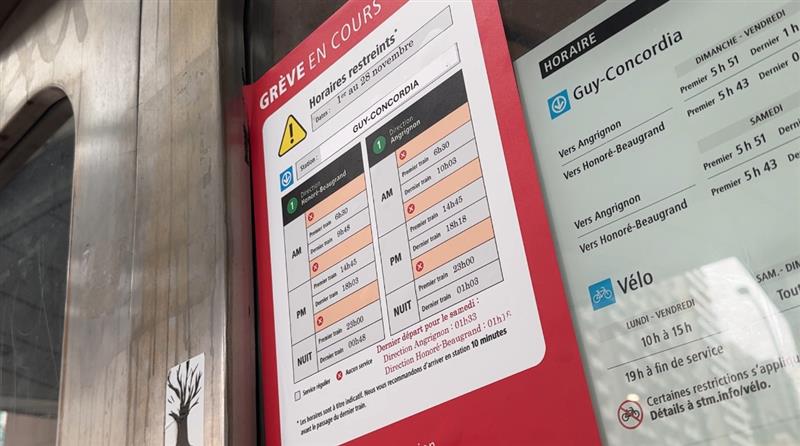
Montreal commuters woke up Wednesday to an operational metro and bus network, after unionized maintenance workers with the Société de transport de Montréal (STM) called off their strike late Tuesday night.
The STM confirmed that the suspension of the strike by its maintenance employees will allow it to offer uninterrupted service starting Wednesday morning, but warns that the return to normal will be gradual.
“It was the best thing (to do), strategically speaking,” said union president Bruno Jeannotte.
The Syndicat du transport de Montréal–CSN, which represents 2,400 maintenance employees, says the decision was made to “continue negotiations” with the public transit agency and avoid triggering the provincial government’s new labour law ahead of schedule.
“It is clear that for us, this is a step backward. But it’s a step backward that allows us to rest and continue negotiations,” Jeannotte said. “We have lost an important lever.”
He described the move as a strategic retreat, meant to protect workers from being forced into binding arbitration under Law 14, Quebec’s new strikebreaking law currently fast-tracked in the National Assembly. Jeannotte also added that the move was made to safeguard the “significant progress” the union has made in negotiations with the empoyer.
“By withdrawing our strike notice, it is to avoid being subjected to arbitration proceedings in the coming hours, which would last — what? A year, two years?” Jeannotte said.
But withdrawal from the picket lines doesn’t mean the union is giving up, Jeannotte said. He added that his union would have found itself in a situation where they would be “tied down” if workers rushed headlong into the special law.
“Our right to strike would have been taken away from us, pending arbitration,” the union leader said.
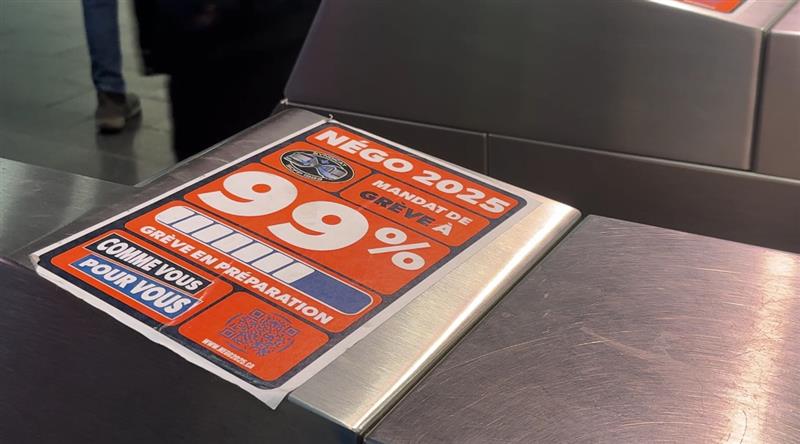
The maintenance employees have been on strike since the beginning of November and originally set their sights on ending the walkout on Nov. 28.
The union called off the strike at around 10:30 p.m. Tuesday night, and by 6 a.m. Wednesday morning, maintenance employees returned back to work.
In a statement to CityNews, the STM confirmed that no agreement had been reached ahead of halting the strike.
“The STM notes that it presented three comprehensive offers, including a salary increase based on cost-saving measures within the financial framework, and that all of these offers were rejected by the union,” the statement reads.
“Over the past few weeks, we have been calling on the union to end its strike. I am pleased that customers can return to regular service and that they can count on the STM to resume their daily activities,” STM CEO Marie-Claude Léonard said. “While we are disappointed that we were unable to reach an agreement despite our offers, we will continue to do the work to get there. “
Regular service will be fully restored only on Thursday.
Labour Minister presses ahead with Law 14
Calling off the strike isn’t stopping Labour Minister Jean Boulet from going full steam ahead with implementing Law 14 ahead of schedule, he said Wednesday morning.
The law, which was passed in May and is due to come into effect on Nov. 30, will give the minister the power to break a strike without passing special legislation in the event of a lockout.
Boulet told reporters Wednesday that the measure is necessary to give the government “the tools” to manage the impact of labour disruptions on the public, particularly as Montreal bus and metro drivers still remain poised to completely shut down service over the weekend.
“We need those tools,” the minister said.
To accelerate the Law 14’s implementation, Boulet tabled a special law on Wednesday that would allow the province to end a potential bus and metro driver’s strike before Nov. 30.
However, Boulet will need unanimous support from opposition parties in the National Assembly. On Tuesday, Québec solidaire said they would be voting against.
Boulet has promised that the government will not invoke a gag order if the measure fails to pass.
Myriam Leduc, spokesperson for the bus drivers and metro operators union, told CityNews that talks with the employer took place Wednesday with the goal of reaching an agreement.
The Administrative Labour Tribunal held a public hearing on Monday regarding which essential services should be maintained during the two-day bus and metro drivers strike. It is expected to issue its decision in the coming days.
Law 14 a ‘corrosive effect’ on collective bargaining: labour prof
Labour experts warn that Law 14 could further restrict unions’ ability to strike, a move they say weakens the balance of power between workers and employers.
According to McGill University labour professor Barry Eidlin, withdrawing from the strike comes after the union found itself in a position where it possessed little leverage at the bargaining table. Law 14 also means unions like those of the STM will have a harder time amping up the pressure if they deem it necessary to strike in the future.
“This is the predictable result of repeated government intervention in labor disputes,” he said. “They can’t just turn the strike on and off like a switch.”
Hot off the heels of Quebec ordering doctors back to work after they launched pressure tactics against Bill 2 — legislation that overhauls their pay structure — Eidlin said measures like Law 14 are part of a broader pattern in Canada. He also recalled other labour disputes like Air Canada’s flight attendants in August and Canada Post workers in 2024, where workers were ordered back to work.
Both at the provincial and federal levels, he said, Canada stands apart from other G7 countries in the degree to which governments repeatedly rely on back-to-work orders to regulate labor disputes.
“There’s no other country that comes close,” Eidlin added.
By restricting the ability for a union to strike, governments skew labour disputes in favour of the employer, he said. Back-to-work legislation reduces their incentive to reach a negotiated settlement at the bargaining table because employers know that they can “rely on government to order workers back to work.”
It’s a sentiment shared by STM union leaders, as maintenance union officials accused the STM of dragging its feet at the bargaining table ahead of the law’s implementation.
“We were certain we had a window of opportunity for a settlement. Minister Boulet and the CAQ government gave the STM more reasons to stay frozen,” Jeannotte said.
“We see the corrosive effect that this has on collective bargaining,” Eidlin added. “Employers have many levers they can exert over their workers, but workers have one, which is the power to withdraw their labour.”
Mayor-elect urges other unions to follow suit
Speaking to reporters Wednesday morning, Montreal mayor-elect Soraya Martinez Ferrada applauded the maintenance workers’ decision to pause their strike.
“I salute the fact maintenance unions put a pause in their strike,” she said. “They have to show good faith that they’ll negotiate at the table.”
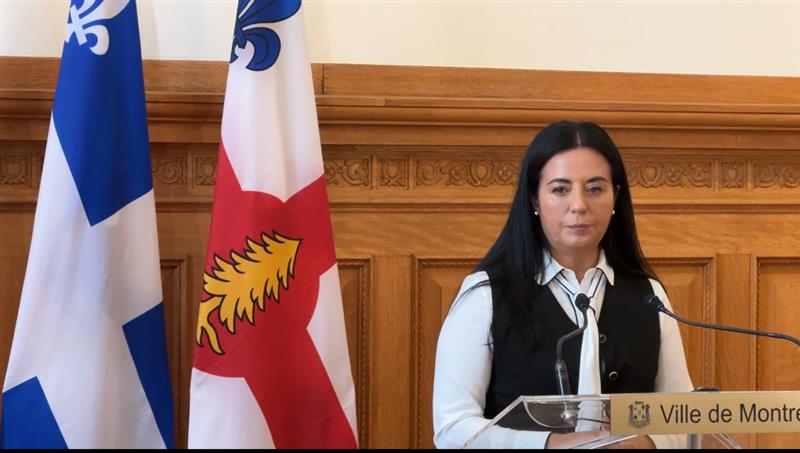
Ferrada called on bus and metro operators to confirm whether they will move forward with their planned strike, and urged them to call off the walkout by the end of Wednesday.
“I am pleased that the STM maintenance workers have accepted my request for a pause in their strike action. The impact on the daily lives of Montrealers was becoming unbearable,” the city’s next mayor wrote in a social media post.
–With files from La Presse Canadienne