Homelessness crisis remains top challenge as Montreal enters new year
Posted January 2, 2026 11:36 am.
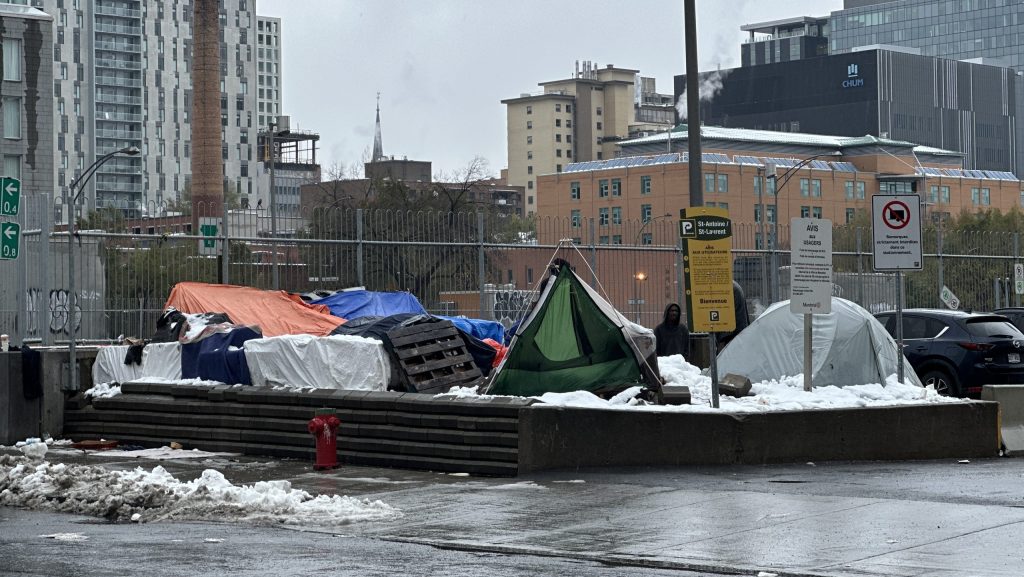
As Montreal enters the new year, homelessness remains one of the city’s most pressing challenges.
In December, Mayor Soraya Martinez Ferrada unveiled a winter plan aimed at addressing the crisis. The measures included the creation of a new crisis response unit, the installation of hundreds of heating stations across the city, and a commitment not to dismantle encampments during the coldest months.
For many Montrealers, however, the response does not go far enough.
“It could be anyone,” said Amy Pearce. “You would hope someone would do something if you were in that situation.”
Others were more blunt in their assessment, saying governments need to act faster and more decisively to help people living on the streets.
Advocates working directly with people experiencing homelessness say the city’s intentions are positive but warn that success will depend on execution.
“The issue is always going to be around implementation,” said Sam Watts, president and CEO of Welcome Hall Mission. “Great ideas and great intentions can be derailed by a failure to implement.”
This winter marks the first season for a new city administration that has made homelessness its top priority. But frontline organizations stress that emergency measures alone will not solve the problem.
“We have to marry homelessness policy to housing policy,” said James Hughes, president and CEO of Old Brewery Mission. “If we’re serious about solving homelessness, housing has to be at the centre of that conversation.”
Both Hughes and Watts say prevention must be a cornerstone of any long-term solution. They warn that homelessness is no longer limited to those without jobs, noting that rising rents and housing shortages have left even working Montrealers increasingly vulnerable.
“Rather than simply reacting to what we see in front of us, we need to ask how we can prevent people from falling into homelessness in the first place,” Watts said.
Hughes pointed to measures such as purchasing existing rooming houses to keep them out of the private investment market and preserve affordable housing options under public or non-profit control.
Watts also emphasized that reducing visible homelessness benefits the entire city, not just those living on the streets.
“If there are fewer people sleeping rough or in doorways, it leads to better outcomes for individuals, but also for the economy and tourism,” he said.
Advocates also caution against stigmatizing people experiencing homelessness, saying they are members of the community, not outsiders. Several residents shared personal stories of seeing neighbours living in cars or struggling to survive through the winter months.
“It’s heartbreaking. I mean I have, right in front of my home there’s a person that has a car and that person lives in his car and each morning it just breaks my heart,” said Eric Ferry.
“These are human beings,” said Don Dadaoti.
Watts said Montreal has overcome similar challenges in the past and can do so again.
“I’m old enough to remember when there were no encampments in Montreal,” he said. “We can get back to that. We can.”