5 new affording housing projects totalling 105 units to be built in Montreal to address homelessness
Posted December 15, 2025 11:03 am.
Last Updated December 15, 2025 5:09 pm.
Five affordable housing projects totalling more than 100 units will be built in Montreal by next year to address homelessness.
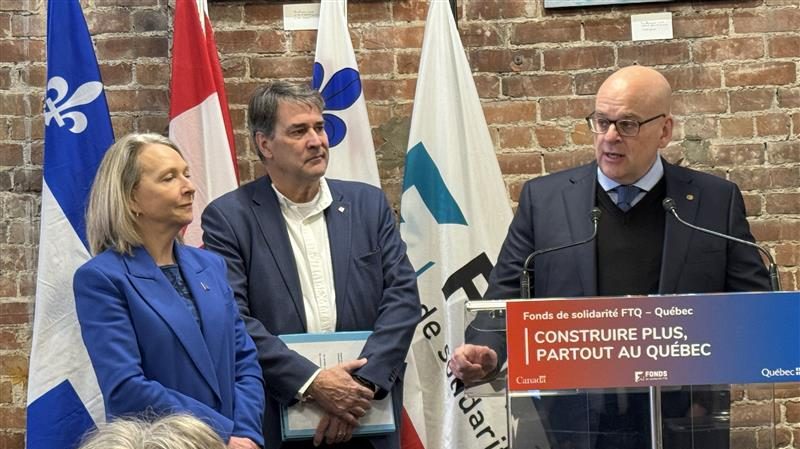
All three levels of government, along with the Fonds de solidarité (FTQ), made the announcement Monday at a press conference at the Old Brewery Mission in Montreal.
It’s projected to cost $40 million.
“There’s only one way we’re going to do this: it’s if we work together,” said Claude Pinard, responsible for homelessness in Montreal and president of the city’s executive committee.
All five sites have already started construction, and the majority of units will be available in 2026, with the latest to finish next December.
Alongside Pinard at the announcement were federal Liberal MP Claude Guay and Sonia Bélanger, the Quebec minister for social services and for seniors and caregivers. The governments will provide a combined $44 million to build the housing units intended for homeless people and those at risk of homelessness.
They will be built by Groupe CDH and Corporation Mainbourg, two non-profit organizations specializing in community housing.
Montreal’s Old Brewery Mission is spearheading two of the five projects for a total of 31 units.
“We’ve got to stop people coming in as well. And that’s housing policy and housing projects,” said James Hughes, president and CEO of the Old Brewery Mission.
“It’s really as a collective that we can take this on.”
The five projects announced:
- L’Artère de l’Est, by L’Artère de l’Est: four rooms including 11 beds, with common areas
- St-André Project, by Ma Chambre: 32 units
- MSD Tillemont, by Maison St-Dominique: 38 units
- MONK, by Old Brewery Mission: 18 units
- De L’Église, by Old Brewery Mission: 13 units
“These projects demonstrate the importance of a united network that not only provides shelter, but also support tailored to the needs of people who are homeless or at risk of becoming homeless,” Bélanger said.
This is the latest in the city’s response to the homelessness crisis – something the new Martinez Ferrada administration has labelled is “at the core of what our administration will be.”
Since Soraya Martinez Ferrada’s election, the city added around 500 new spaces across Montreal’s warming centres. It’s also announced the creation of an emergency task force that meets once a week.
“Government’s going to have to be there, civil society is going to have to be there, actors. And that’s the way it’s got to get done,” Pinard said, who added Monday’s announcement was a key part of the city’s vision.
“Since our arrival, with the help of our crisis unit, we have implemented rapid and concrete measures, while actively working on sustainable solutions,” he said.
“We have to think in thousands of units and not hundreds of units if we’re going to reverse the (trend),” Hughes added.
Monday’s announcement was made against the backdrop of an increasing amount of concern for those experiencing homelessness as temperatures drop in Montreal.
Fatal tent fire
A man in his 30s was found dead after his tent caught fire in the Rosemont-La Petite-Patrie Sunday morning.
Urgences-santé told CityNews Monday that was one of two fire-related incidents in the past two days involving people living on the streets trying to stay warm.
They warn that heating enclosed spaces carries the risk of carbon monoxide poisoning, urging people to use warming shelters instead.
At the announcement, federal representatives say they’re working on a deal with the province to secure joint funding for even more housing.
“We’re talking hundreds of thousands of units for affordable housing,” Guay said.
According to Old Brewery Mission staff, there are around 5,000-6,000 unhoused people in Montreal.
Elected officials of all levels say their task in the upcoming period is to house all of them.
“I think it’s realistic, because we can see that we are changing the way we work with our various partners, whether it be with the federal government, as you saw today, with the provincial government, with the municipal government, and with all of our partners,” said Bélanger.
“We don’t have enough money if you want to do it by yourself,” Pinard said.