Luxury units drive Montreal vacancy rate higher, but affordable rentals remain scarce: CMHC
Posted January 5, 2026 3:20 pm.
Last Updated January 5, 2026 5:44 pm.
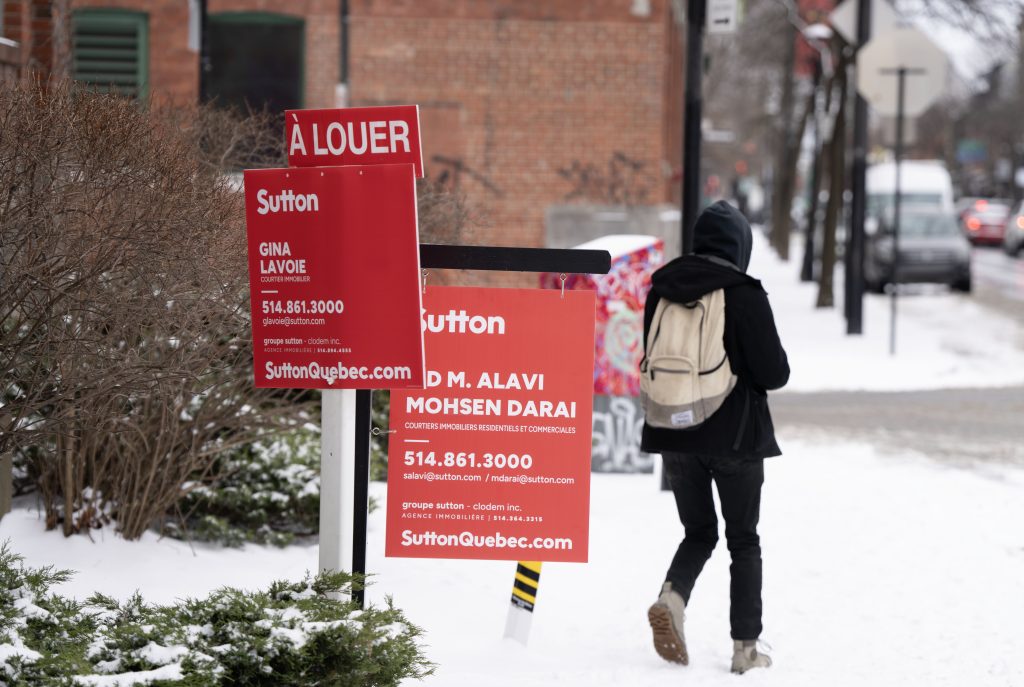
The Greater Montreal region recorded a rental vacancy rate of 2.9 per cent last year, up from about 1.5 per cent two years earlier, according to the Canada Mortgage and Housing Corporation’s 2025 rental market report.
Housing advocates say the higher vacancy rate does not reflect improved access to affordable housing.
“The problem with taking only the vacancy rate as an indicator of whether or not there’s a housing crisis is that we’re not considering what apartments are available and what apartments are not available,” said Shannon Franssen, interim co-ordinator with the Coalition of Housing Committees and Tenants’ Associations of Quebec (RCLALQ). “And the CMHC data clearly shows that the apartments that are available in Montreal are high-rent apartments or luxury apartments, expensive apartments.”
The report highlights two concurrent trends in 2025. More expensive apartments renting between $1,900 and $2,800 per month posted a vacancy rate of around six per cent. Meanwhile, more affordable units renting below $1,300 a month had a vacancy rate of just 1.5 per cent.
“We see that across Montreal and also other regions in Quebec, that for people who are living a modest, medium or low income, finding an apartment is incredibly difficult,” Franssen said.
The coalition says governments have largely focused on building new housing to address the crisis, but argues that approach does not ensure affordability. Instead, it is calling for stronger rent control regulations.
“The provincial government needs to put in place stronger rent control regulations to control the market,” said Franssen. “That’s really the way that we can ensure that there are affordable rents and that landlords aren’t putting up their rent too much in between tenants and too much from year to year.”
Landlords, however, say the market has become more challenging for them as well.
“It’s been getting harder and harder for landlords to rent,” said Martin Messier, president of the Quebec Landlords Association (APQ). “A lot of landlords are actually issuing gratuities and free months of rent and stuff like that because it’s not an easy market right now.”
The association says newer rental units, particularly in downtown Montreal, have been harder to rent.
“It takes a while before those new units integrate the market. Hopefully for those landlords, it won’t be a problem for much longer,” Messier said. “It takes a while. So when we have a new construction, there’s always a period in time where those new buildings are harder to rent because of the price factor, and the rent control system that we have is different for newer buildings, so we have that for a certain amount of time.”
CMHC economists point to slower population growth as a factor behind the rising vacancy rate.
“What we saw in 2025 actually is that we saw a slowdown in the demographic growth,” said Francis Cortellino, an economist with CMHC in Quebec. “So fewer international students and maybe a few fewer temporary workers from abroad. So we had maybe a slower demand, and this is why we saw an increase in the vacancy rate. And what we saw also last year that maybe it wasn’t there maybe two years ago, we also saw the vacancy rate increasing in those lower rent ranges. So I wouldn’t say it’s easy to find an apartment that is affordable right now, but it’s probably a bit less difficult than it was two years ago at least.”
Despite the shift, housing advocates say the crisis is far from over.
“The housing market is still critically stressed and it is still incredibly difficult for Montrealers to find a reasonable rent,” Franssen said.