Coroner’s report cites ER process gaps in death of Laval grandfather who waited 10 hours
Posted January 7, 2026 5:22 pm.
Last Updated January 8, 2026 5:06 pm.
A newly released coroner’s report has identified significant gaps in emergency department procedures at a Laval hospital that contributed to the death of a 69-year-old man who spent 10 hours in the emergency room without seeing a doctor.
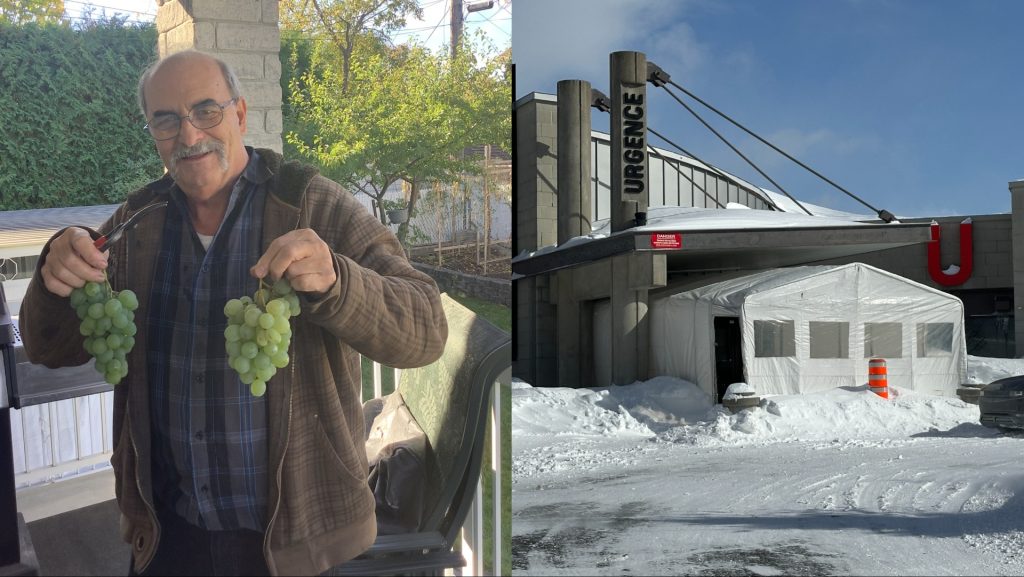
Umberto Mastantuono died on Feb. 12, 2025 at Hôpital de la Cité-de-la-Santé. His death triggered investigations by the province’s coroner’s office later that month.
The report, signed by coroner Julie A. Blondin, concludes that Mastantuono died of a heart attack and that resuscitation efforts were initiated after a delay. His death was ultimately ruled natural.
Security camera footage reviewed by the coroner shows Mastantuono collapsing in the waiting area shortly after midnight. While he was quickly transported to the resuscitation room, the report notes that several minutes passed before cardiac massage was initiated.
“Security camera footage obtained shows he was placed on a stretcher by staff, but that the maneuvers do not appear to have begun during his evacuation from the waiting room,” the report reads.
According to the coroner’s findings, Mastantuono’s death also occurred amid severe overcrowding in the emergency department. On the day he was presented to the hospital, the occupancy rate was approximately 173 per cent.
The coroner found that Mastantuono was initially assigned a priority level two by a triage nurse, the most urgent priority level apart from needing resuscitation. Seven minutes later, that decision was downgraded to level three.
“I don’t know why the nurse changed it from P2 to P3,” said Patrick Martin-Ménard, a medical law attorney. “Certainly if he was initially treated as P2, there were some concerning factors that made the nurse come to that decision. And changing it from P2 to P3 has a significant incidence on the timeline in which he will be seen.”
The Canadian Triage and Acuity Scale (CTAS) says patients at level three are meant to be re-evaluated regularly while waiting. But Mastantuono was sent back to the waiting room without medication, where he waited 10 hours without being reevaluated.
“There does not seem to have been any re-evaluation,” said Martin-Ménard. “From the moment that he was triaged to the events that happened at midnight.
“Normally triaged patients have to be re-evaluated at a specific timeline. And in reality, we often see cases where triaged patients have not been re-evaluated and their condition significantly deteriorated, and no one noticed because no one re-evaluated them. And that is a big problem.”
Martin-Ménard believes that lack of re-evaluation is common in emergency rooms throughout Quebec, and causes “a number of avoidable deaths and avoidable disasters.”
“If nothing is done to properly evaluate and change dangerous practices in emergency rooms in Quebec, it will not be the last time that we see that.”
CityNews contacted Mastantuono’s family, who declined to comment for now and said they might be ready in the future. However, they said they are aware of the report’s release and are “upset with the situation.”
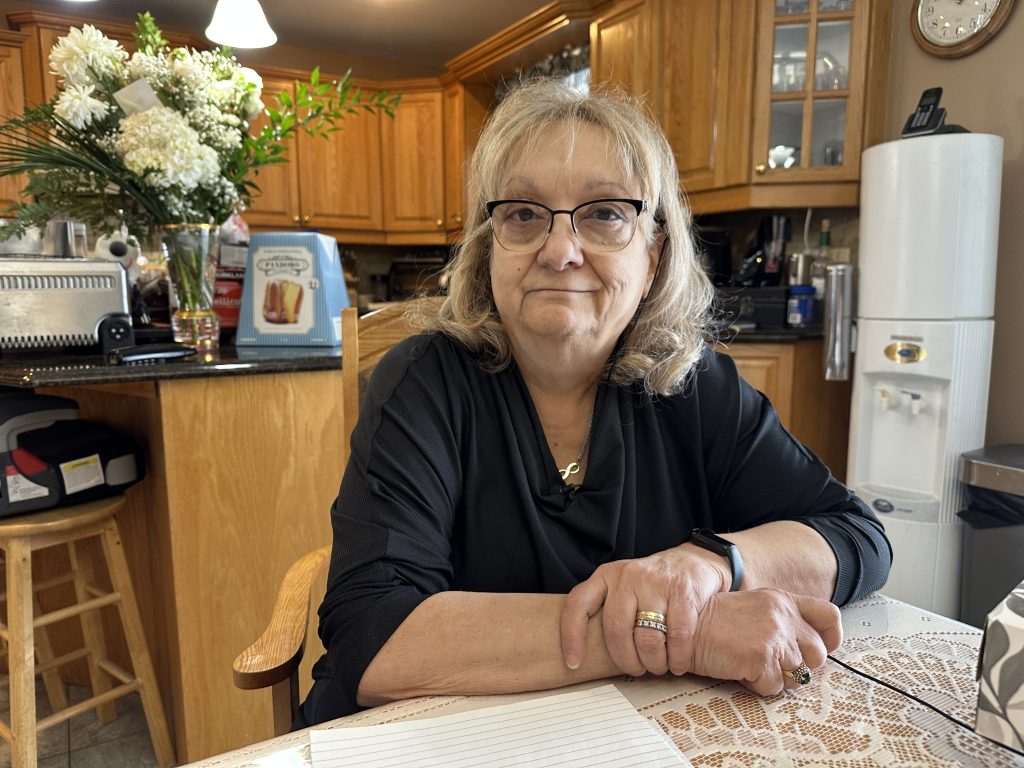
Mastantuono had a history of heart issues, such as being treated for arrhythmia, according to his wife, Diamante Mastantuono.
Diamante told CityNews in February that while in triage, her husband did an electrocardiogram to assess his heart activity. When results didn’t point to any problems, he was forced to wait, even as he started to feel worse and asked for help.
Around 2 a.m. the next morning, the family was called to the hospital and told Mastantuono was in serious condition. Then Diamante’s son broke the news.
“So we got there, and he says, ‘Dad is gone,’” Diamante said. “I go, ‘gone where, where’d he go?’ I thought he just took his clothes and left. He got fed up of waiting, didn’t call and just left.
“So I was getting mad and he says, ‘no, mom, dad died.’ I said, ‘it can’t be. I spoke to him at eight o’clock.’ I made him talk to the grandkids.”
In a statement issued following the coroner’s report, CISSS de Laval acknowledged gaps in its operational processes, adding that it is taking the recommendations seriously.
“The report highlights shortcomings in operational processes in a context of significant overcapacity,” the CISSS said.
The health authority says it conducted an internal analysis immediately following the incident and put in place a structured action plan with a clear timeline. According to the CISSS, most of the corrective measures are already completed or currently being implemented.
“Work is underway, and the vast majority of measures outlined in the institution’s action plan have already been implemented,” Santé Québec said in a brief statement.
Quebec’s Ministry of Health and Social Services said that their “thoughts go out first and foremost to the family and loved ones affected by this event,” in a statement penned Thursday.
“Anyone who turns to the health and social services system should be able to do so with confidence that they will receive the best care and services required by their condition,” they added.
Among the actions outlined in response to the coroner’s recommendations, CISSS de Laval says it has committed to strengthening emergency room staff training around triage, following the guidelines set out by Quebec’s nursing order and CTAS. It also plans to improve how patients in the waiting room are reassessed over time, particularly when delays stretch on.
During periods of heavy traffic in the emergency department, CISSS de Laval says it will work to better prioritize patients and reorganize workflow to ensure those most at risk are identified and treated more quickly.
“There have to be some measures put in place to ensure that patients who are triaged with a high level of priority are promptly re-evaluated if they cannot be seen in the prescribed delay by the emergency room guide,” Martin-Ménard said.
The medical attorney says the Mastantuono can explore a number of legal options, if it chooses, including a complaint to the ombudsman and a civil liability lawsuit “in which the plaintiffs have to prove a fault, a damage, and a cause between the fault and the damage.”
Patients rights advocate Paul Brunet says expanding access to home care for elderly patients could help reduce the strain on emergency rooms.
“Most of them, let’s say 50 per cent of them, if they had been followed (up) at home, they wouldn’t need hospitalization and neither would they need a bed in long-term facilities,” Brunet said.
“You have to keep up with the elders and make sure they’re fine at home.”
Brunet believes the circumstances surrounding Mastantuono’s death warrants a formal public investigation, something the Quebec government said in February that it would carry out following the incident.