Respect and civility at the core of new Quebec school rules
Posted January 11, 2026 12:03 pm.
Last Updated January 11, 2026 5:10 pm.
As students return to classrooms across Quebec following the holiday break, new rules aimed at promoting respect and civility are now in effect.
The measures, announced by former Education Minister Bernard Drainville, were introduced in response to a rise in violence and bullying in schools. The government says the goal is to create safer, more respectful learning environments for both students and staff.
Formal language now required in classrooms
As of January 2026, public and private schools are required to apply updated codes of conduct. These codes emphasize respectful behaviour and clear expectations for how students interact with teachers, staff and classmates.
Under the new rules, students must address school staff using respectful titles such as “Mr.” or “Mrs.” In French-language schools, the formal “vous” is now the standard when speaking to adults.
Michael Gagliano, a resource teacher at Lester B. Pearson High School, says the rules set a baseline for respect.
“I think it’s quite interesting to say the least when we think of starting with just addressing somebody as ‘Sir’ or ‘Miss’ or ‘Vous.’ It gets the lowest kind of common denominator of respect, so if we’re starting there, I mean it tells you how far we’ve come and the opinions of teachers,” he said.

He added that the rules also reinforce professionalism and the teacher-student dynamic.
“I think it reinforces that professionalism and that divide between the youth and the generations before them,” Gagliano said.
Gagliano noted that respect goes beyond titles.
“Yes, there is an authority kind of behind it when you’re addressing somebody with those pronouns, but there also needs to be a bit more of that authority in terms of what our role is in society is to kind of pass on information and to pass on knowledge. So I think there is that level that has to be there,” he said.
Students see respect in formal language
Students at Pearson say the rules reflect the respect they already practice in their school.
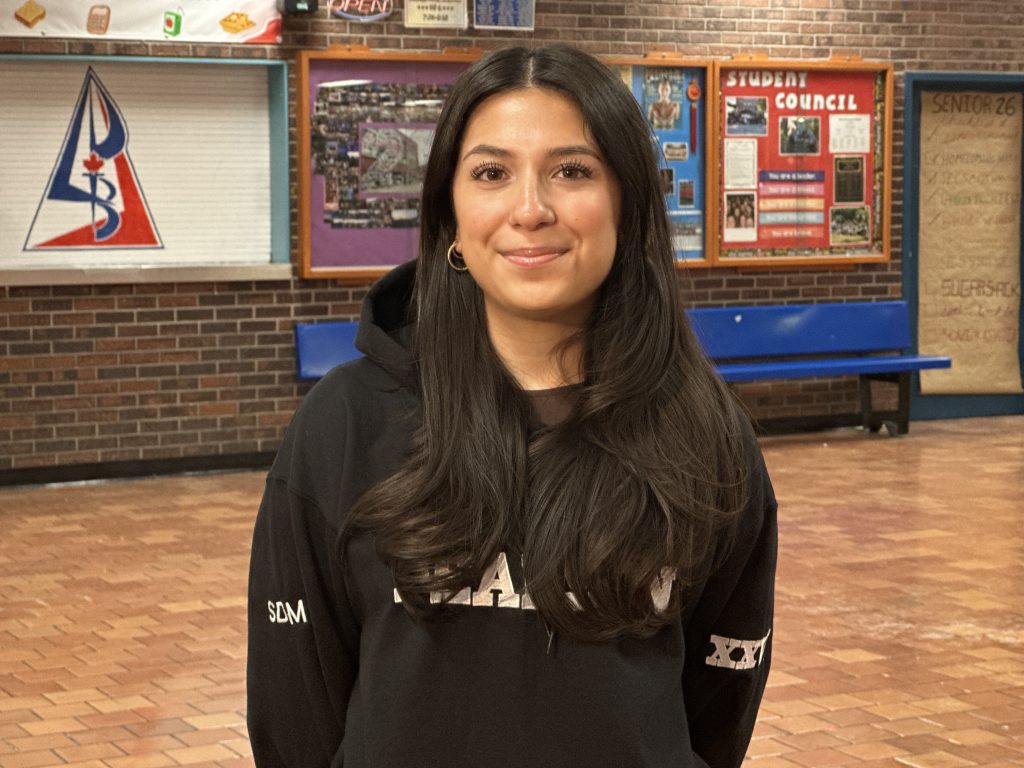
“I think that we should always be aiming for respect, but here at Pearson we always use those terms to refer to our teachers and to speak to our teachers,” said Adyson Miniaci, a Secondary 5 student.

Miniaci added that making the rule official could influence other schools.
“By making something a law that you’re not already used to, going through change is always something that’s different for people. So this might make a change to them and maybe affect them in a certain way, but I think that once they would start doing it, they would eventually get used to it,” she said.
“I think that it’s something that everybody should be doing already. And by making it a law, I’m sure it’s something that will start to happen and everybody will start to do it,” Miniaci added.
Sonia De Michele, also a Secondary 5 student at Lester B. Pearson High School, said formal language can change the tone of the classroom.
“By addressing the teachers formally, it definitely gives a different feel to the classroom instead of saying “Tu”, “Vous” is very much more respectful,” she said.
Miniaci added that while some students may feel less comfortable speaking to teachers, the overall effect is positive.
“A negative effect I think would be that students would feel less comfortable talking to their teachers. They would feel like there’s less of a communication… A positive effect would probably be more respect all around. Teachers would probably feel more respected by the students with this law in place,” she said.
Other measures target bullying and screen use
The government says the new codes also include basic standards of civility, including polite language, respect for school property, and appropriate behaviour toward peers and staff.
Consequences for breaking the rules vary depending on the seriousness of the behaviour, from warnings to suspension or expulsion. Students may also be required to repair harm through apology letters, community service, or participation in discussion circles. Each school principal decides which sanctions apply.
The rules build on Quebec’s Plan to Prevent Violence and Bullying, launched in Oct. 2023. They also complement a province-wide ban on cellphones and other personal devices during school hours, aimed at reducing cyberbullying and social conflicts.
Miniaci said the ban is already having an effect.
“I think it does help…the biggest problem was people taking pictures and videos of each other without consent and having them posted. So I haven’t seen that happen at all with this new law, which is definitely a positive,” Miniaci said.