Montreal vigil marks 9th anniversary of Quebec City mosque attack, as Islamophobia persists
Posted January 29, 2026 2:09 pm.
Last Updated January 29, 2026 9:39 pm.
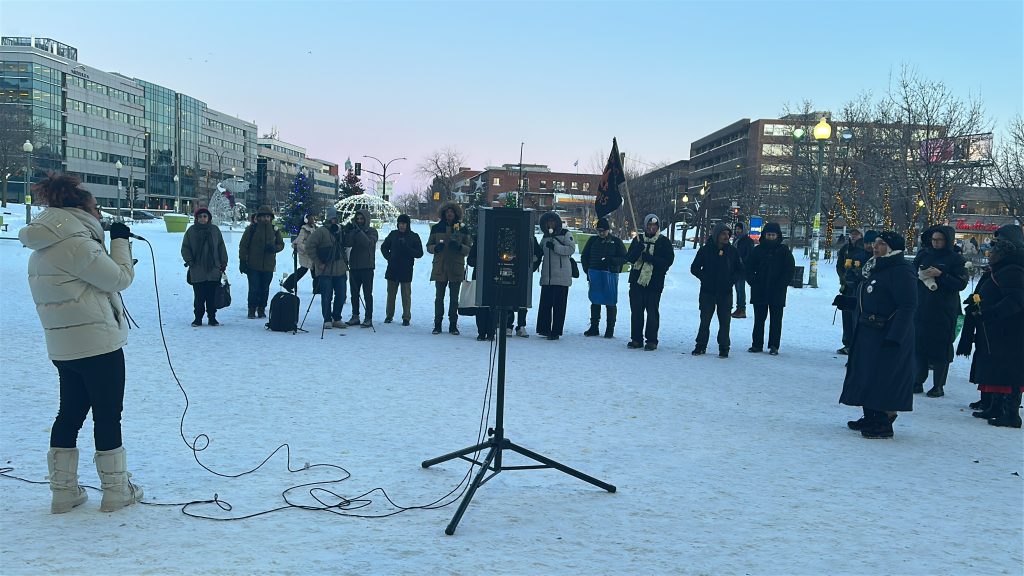
Montrealers gathered Thursday to commemorate the victims of the Quebec City mosque attack, marking nine years since one of the deadliest acts of anti-Muslim violence in Canadian history. A public vigil was held near the Parc metro station to honour the six Muslim men killed in the 2017 mass shooting.
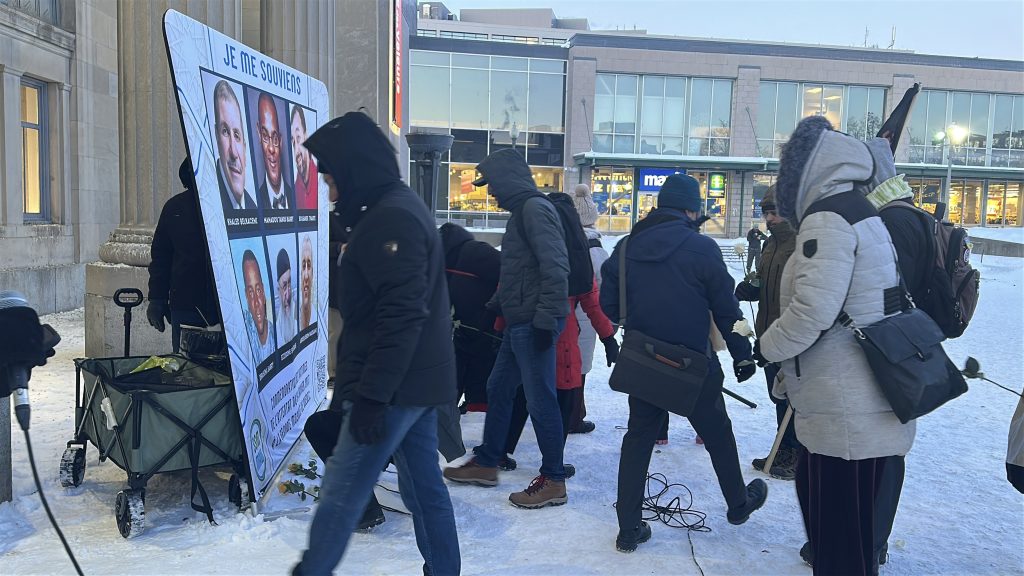
Organized by Muslim Awareness Week, the vigil brought together community members, elected officials, faith leaders, and advocates for a solemn act of remembrance. Attendees stood in silence as the names and photos of the victims were displayed, reflecting on lives lost and a tragedy that continues to shape conversations around hate, belonging, and Islamophobia in Quebec.
Six Muslim men were killed when a gunman opened fire inside the Islamic Cultural Centre in the Sainte-Foy neighbourhood of Quebec City during evening prayers on Jan. 29, 2017.
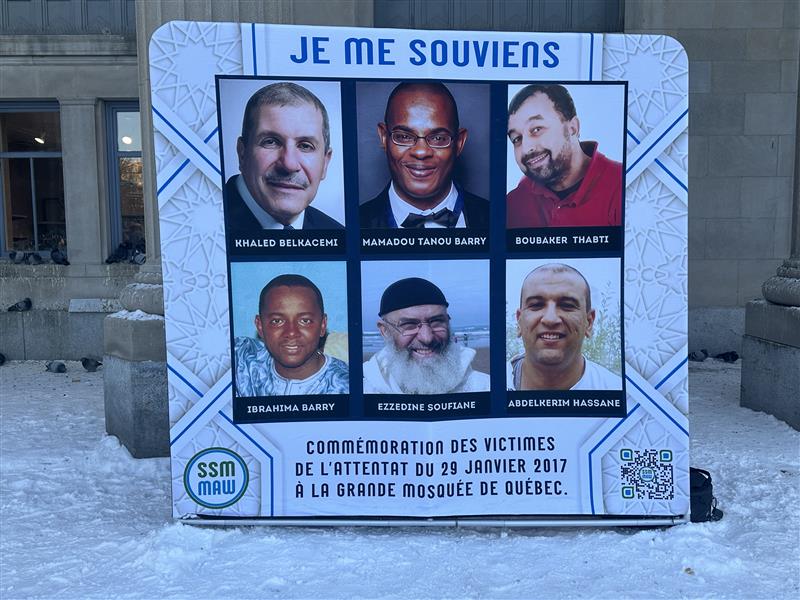
Ibrahima Barry, Mamadou Tanou Barry, Khaled Belkacemi, Aboubaker Thabti, Abdelkrim Hassane and Azzedine Soufiane died that night. Several other worshippers were injured in the attack, which occurred shortly before 8 p.m.
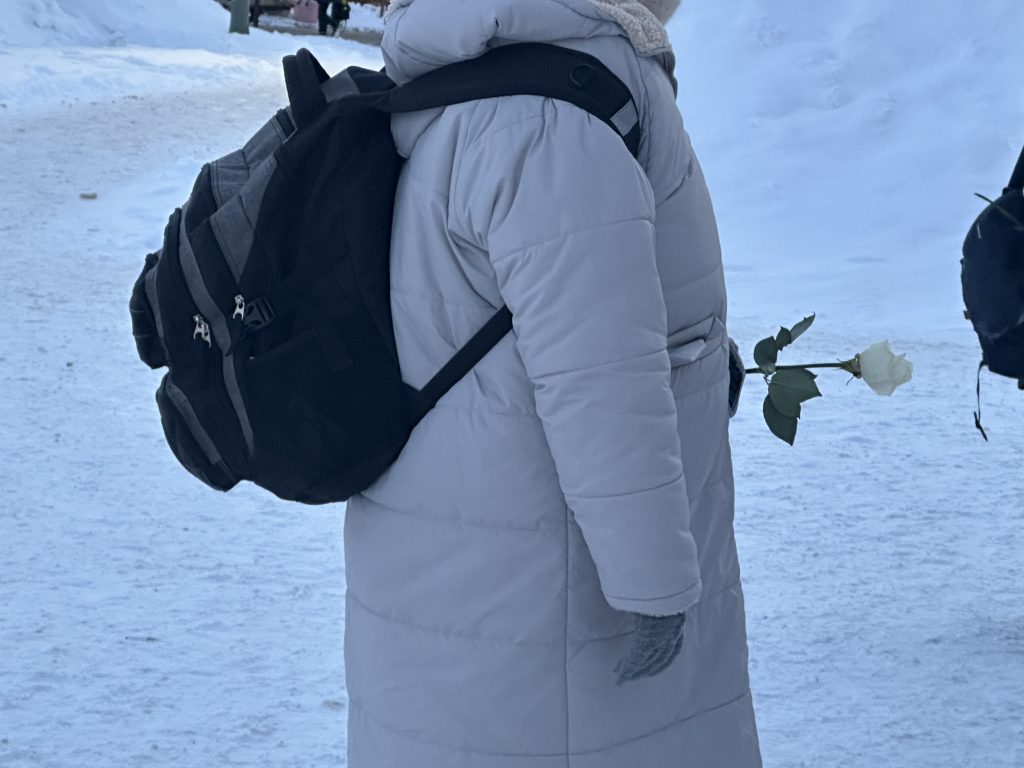
Following remarks from invited speakers, the vigil concluded with a moment of silence. Flowers were distributed to attendees, who later placed them on the ground in front of a backdrop displaying the victims’ photos.

Remembering lives lost — and why remembrance still matters
Organizers said the vigil was intended not only to honour the men who lost their lives, but also to reflect on the broader impact of the attack and the ongoing need to confront hatred and intolerance.
“It is disheartening that, even nine years after the attack at the Centre Culturel Islamique du Québec, where six Quebec Muslims lost their lives, hatred, fear, and intolerance toward Muslims continue to be instrumentalized to advance political agendas,” said Salam El Mousawi, the co-founder of Muslim Awareness Week.
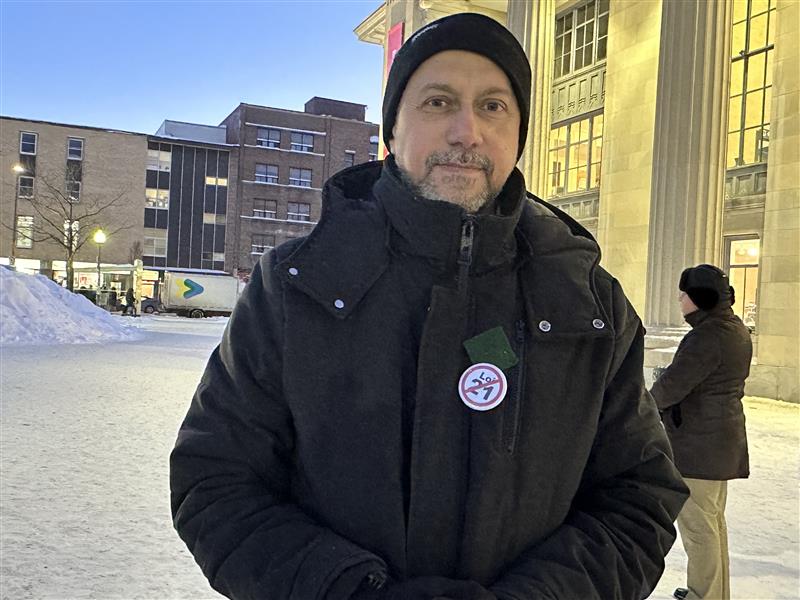
The organization itself was created in the aftermath of the attack by a small group of activists who felt compelled to respond in a way that benefited Quebec society as a whole. Their goal, he said, was to raise awareness about Muslims and their everyday realities — as parents, workers, and citizens — and to challenge misconceptions that can fuel fear.
“We wanted to bring out more awareness about Muslims, their challenges, they are like regular people,” he said, noting they take their children to school, pay taxes, and contribute to society like any other Quebecers.
He said organizers believed ignorance played a central role in motivating the attack, and that increasing understanding remained essential to preventing similar acts of violence. Over the years, Muslim Awareness Week organized roundtable discussions, intercultural bazaars, artistic performances, and educational initiatives, often in partnership with churches, synagogues, community organizations, and different levels of government.
Earlier in the week, members of the organization’s board donated blood and plasma at Héma-Québec centres — an annual gesture meant to counter violence with life and hope.
“The killer spilled the blood of six innocent people and injured many others,” he said. “We offer our blood — we give our blood to give life, to give hope.”
He said continuing to hold vigils nine years after the attack remained essential.
“There are six people who lost their lives,” he said. “This is really sad for the whole community, for Quebec, and for humanity.”

He noted the men were killed simply for being Muslim, despite the fact that many were professionals — including doctors, pharmacists, and IT specialists — who contributed to the prosperity of Quebec and Canada.
“We need to continue to remember them every year to remind the population that ignorance is really harsh when it’s not dealt with,” he said, describing Islamophobia as a serious societal illness that must be addressed through awareness campaigns, education, and government policy.
Despite the cold temperatures, he said the vigil itself was a message of defiance.
“We are defying Islamophobia,” he said, adding that organizers hoped the gathering would encourage people to work together toward a peaceful society focused on shared challenges such as housing, education, and health care — issues that affect everyone, regardless of faith.
Speakers emphasized that remembrance was also about ensuring the victims’ stories were never forgotten.
“We cannot let this tragedy be in vain. It robbed the lives of six innocent souls whose families were forever devastated and impacted. Their violent deaths left six widows without their husbands and 17 orphans without their fathers. Their stories should never be forgotten. We must always remember. Never again,” said Samira Laouni, the chair of Muslim Awareness Week.

‘This is not Quebec. This is not Canada.’
Badreddine Filali Baba, a board member of Muslim Awareness Week, said Jan. 29 remained a painful and significant date.
He described the shooting as one of the most devastating tragedies in Quebec’s history, comparing it to the 1989 École Polytechnique massacre, where 14 women were killed because they were women.
“We were not expecting this to happen in this beautiful province of Quebec, or in this beautiful country of Canada,” he said.
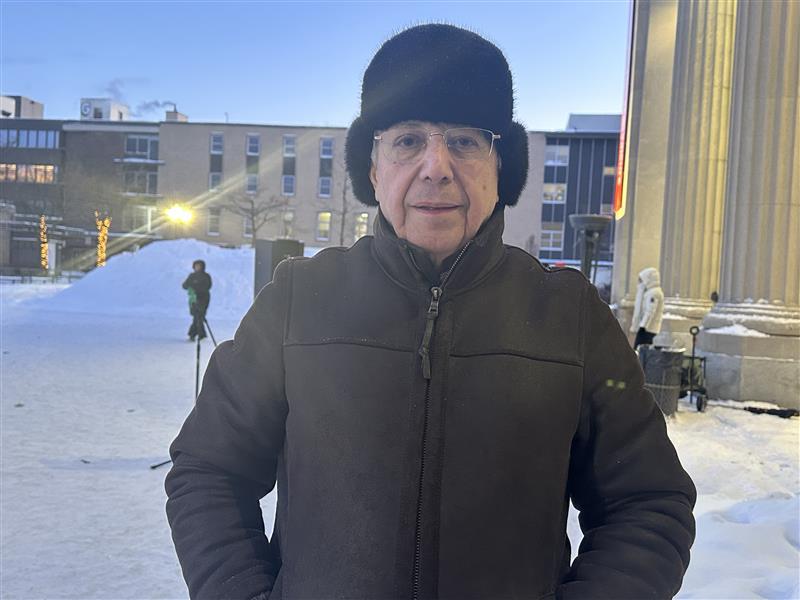
Filali Baba said the vigil was about remembering the victims and their families, as well as Muslim Quebecers who continue to carry the trauma of that night.
Nine years later, he said the message remained clear: Muslims were citizens like any other Quebecers.
“They carry the same dreams, they have families, they have kids, and they want to live in peace and harmony with all the citizens of Quebec,” he said. “We have the same duties, we enjoy the same rights, and we want to contribute to this society.”
He added that holding vigils every year served as a reminder that the attack did not represent Quebec or Canada.
“We are meant to live in harmony,” he said. “Even if we don’t have the same opinions, we are all citizens.”
National day of remembrance
This year’s vigil will hold additional significance as it coincides with the fifth National Day of Remembrance of the Quebec City Mosque Attack and Action Against Islamophobia, observed annually on Jan. 29.
Vigils commemorating the victims have been held across Canada in the years since the attack, reflecting an ongoing national effort to honour the lives lost and address Islamophobia.
Stephen Brown, CEO of the National Council of Canadian Muslims, said the Quebec City mosque attack did not occur in isolation, but followed a series of Islamophobic incidents. In the months leading up to the shooting, a pork head was left outside the Islamic Cultural Centre of Quebec — an act offensive to Muslim religious beliefs — and a far-right group called the Soldiers of Odin patrolled neighbourhoods with mosques in Quebec City.
“The phenomenon was trivialized publicly,” Brown said. He added that the lessons from the attack appear to be increasingly forgotten. “The discourse in today’s society, and how Muslims feel in Quebec, is remarkably similar to the context that existed before the attack.”
Brown said demand for legal support from the National Council of Canadian Muslims has increased significantly. He said the council’s legal clinic received more calls each month last year than it had in the entire year previously, with women and children making up a large proportion of those seeking help.
“I can’t tell you how many people are asking me whether there is a future for them in Quebec,” Brown said.
Brown said he remains hopeful despite the challenges.
“Our country and our people have consistently demonstrated the ability to change perspectives and build opportunities for living together,” he said.
In October, Ensemble Montréal, the city’s new municipal administration led by Soraya Martinez Ferrada’s, announced new measures aimed at combating Islamophobia, stating that the Muslim community has too often been targeted by insults and prejudice that fuel mistrust and division.
Muslim Awareness Week is an annual initiative that promotes solidarity and dialogue, inviting people of all backgrounds to learn about the achievements, contributions and concerns of Quebecers of Muslim faith.
Quebec City mosque shooter Alexandre Bissonnette was originally sentenced to life in prison without parole eligibility for 40 years. On appeal, Quebec’s highest court reduced his parole ineligibility period to 25 years.
-With files from The Canadian Press