Montreal marks 35th Black History Month with City Hall ceremony
Posted February 2, 2026 9:46 pm.
Last Updated February 2, 2026 10:59 pm.
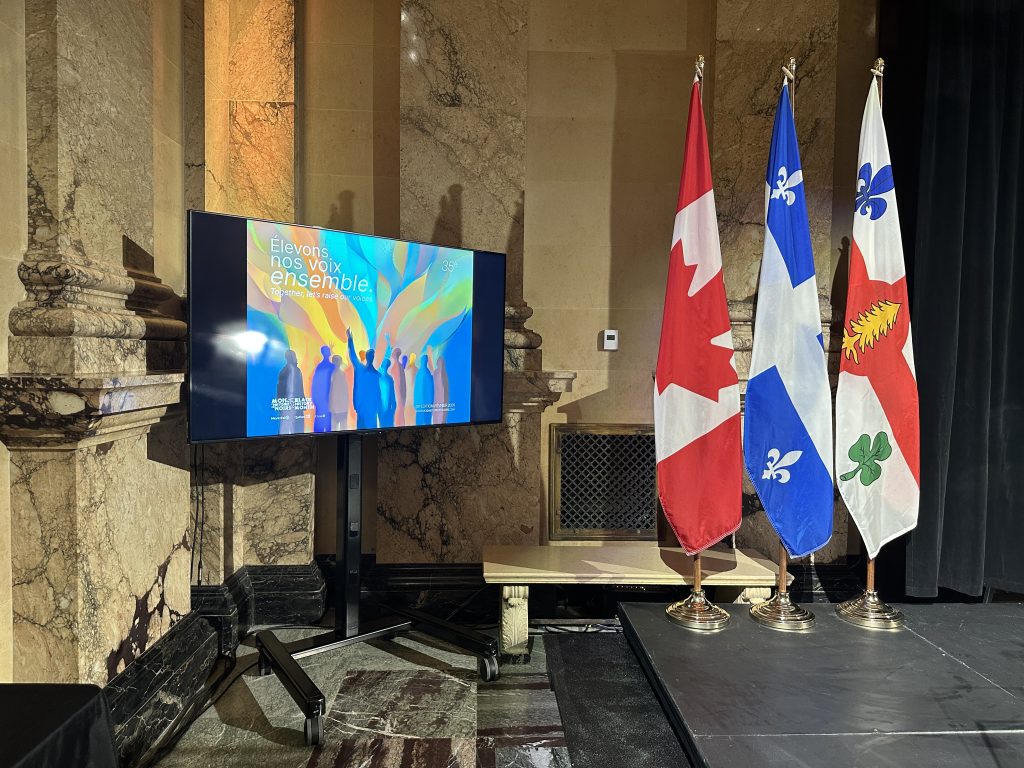
Montreal marked the opening of the 35th edition of Black History Month on Monday evening with a ceremony at City Hall, launching a milestone year rooted in memory, recognition, and collective voice.
The event brought together community members, organizers, laureates, and elected officials to reflect on both the progress made and the work that remains, as the Round Table on Black History Month kicks off an anniversary edition charged with meaning.
A year defined by history — and responsibility
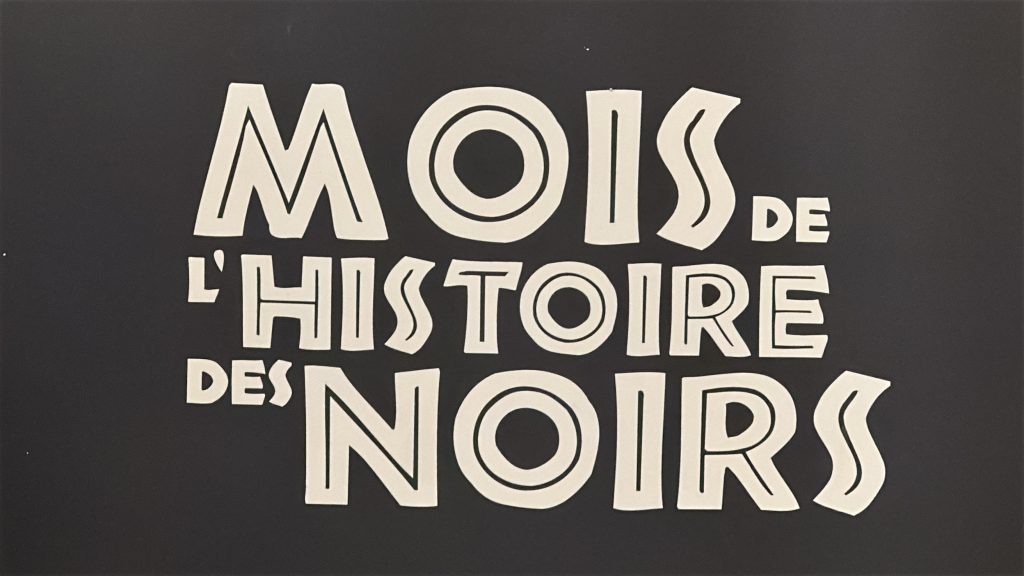
This year’s edition carries added significance, coinciding with several milestones: the 35th anniversary of programming led by the Round Table on Black History Month, the 100th anniversary of Black History Month, and the 15th anniversary of its official logo.
Organizers describe the anniversary year as both a moment of reflection and a call to action, underscoring the role Black History Month continues to play as a space for education, recognition, and dialogue well beyond February.
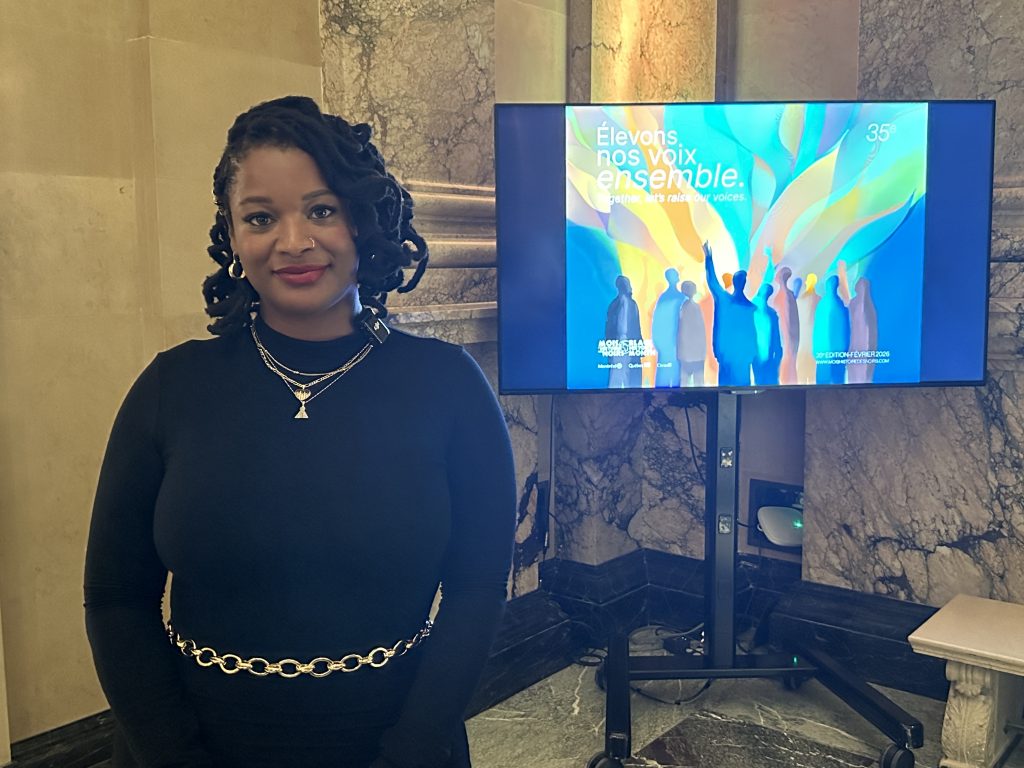
“I’m Black 365 days a year. I don’t get to change my skin after February 28th or 29th,” said Tamara Angeline Medford, spokesperson for the 35th edition. “This is a celebration to educate our allies and educate those who might be walking side by side with us, but who aren’t members of the community, so that they can understand that oppression impacts everybody.”
Together, let’s raise our voices
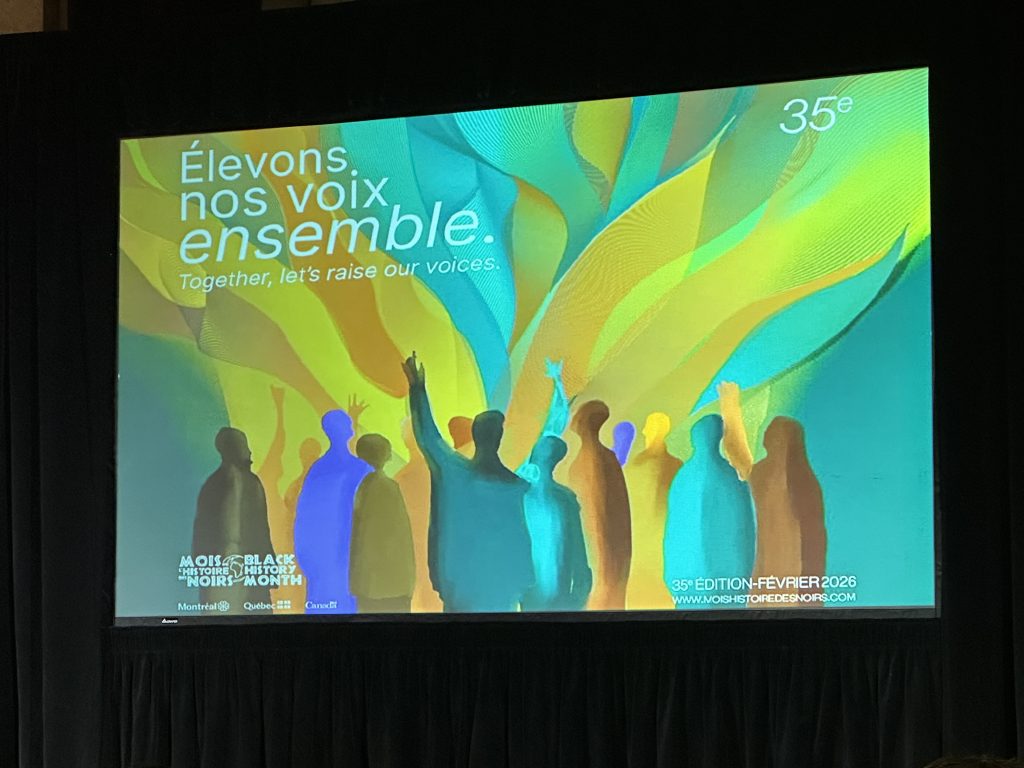
The theme for the anniversary edition, Together, let’s raise our voices, reflects a belief in collective power — a principle Medford returned to repeatedly throughout the evening.
“Together, Raise Our Voice means more than just a simple theme for me,” she said. “If we think of all the movements that we’ve had, it was not done by any individual. It was done by a collective coming together, unifying around a common goal, a common interest, and saying we need and deserve change by any means.”
While acknowledging progress, Medford stressed that systemic inequities continue to shape everyday life.
“A lot has changed, but we still have a lot to do,” she said. “Discrimination, racism, and oppression still permeate all aspects of our life. From our children’s schools… a lot of racial discrimination for women and Black men in the workplace, especially for our community members who are of disabilities and are not even included in certain spaces.”
Still, she emphasized the power of unity.
“As long as we keep coming together to raise our voice, I believe change will happen,” Medford said.
Honouring community leaders
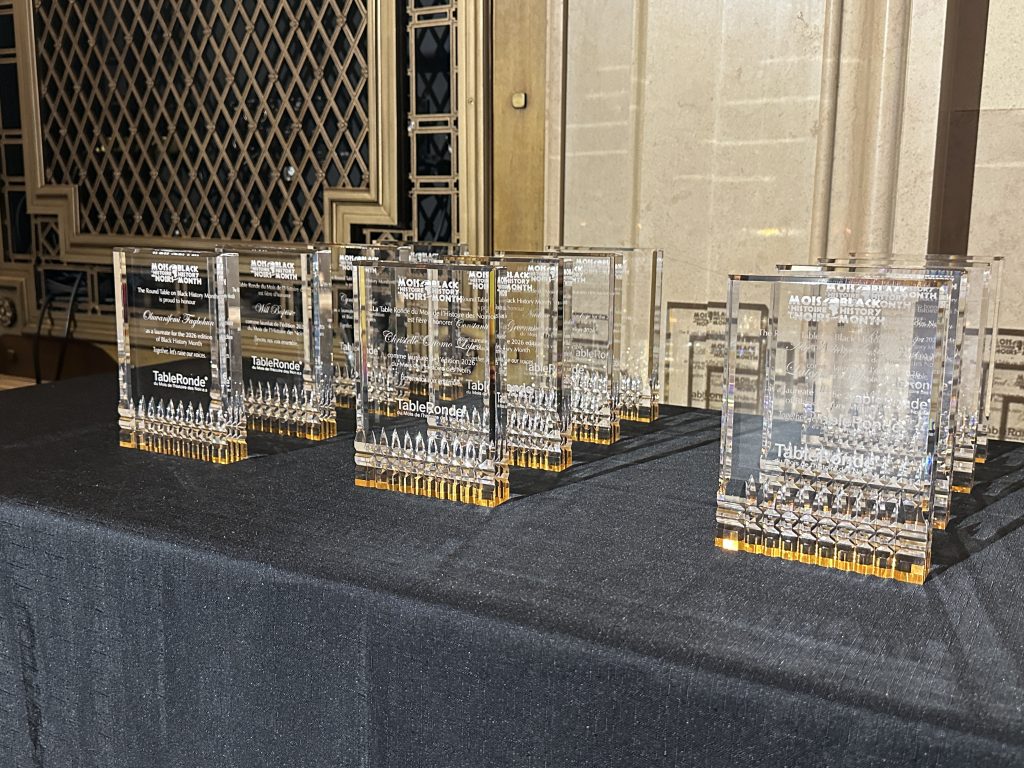
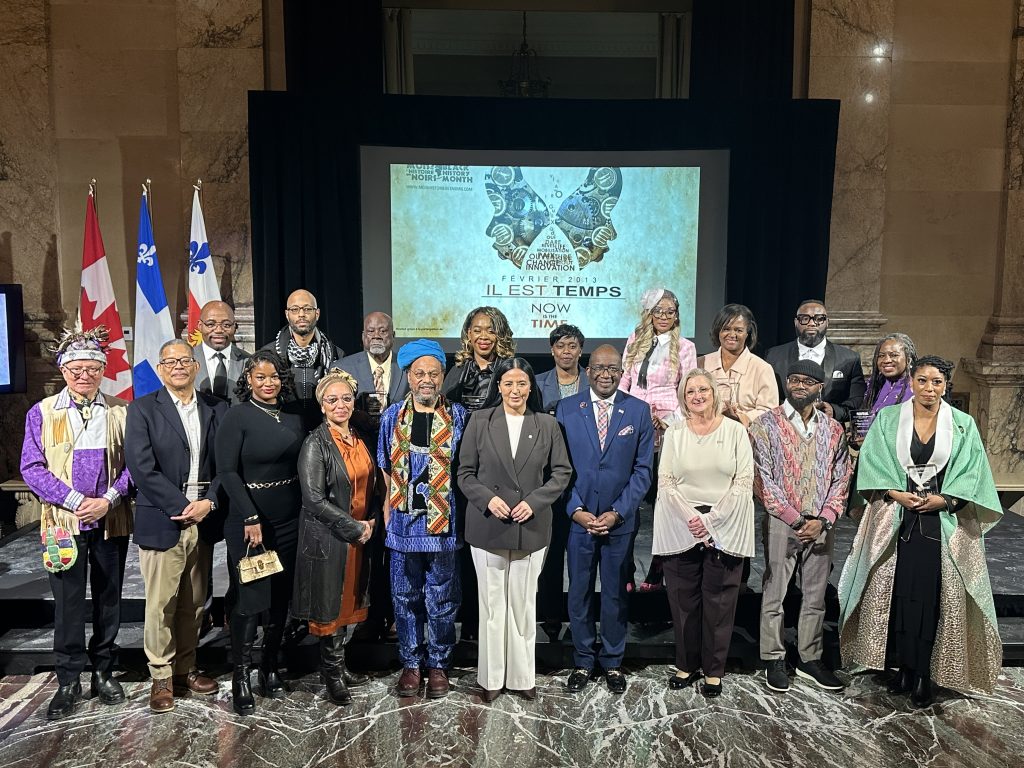
A central moment of the evening was the unveiling of the 2026 Black History Month laureates — 12 individuals whose work has shaped Quebec’s Black communities across education, culture, health, social justice, business, and the arts.
During the ceremony, the laureates were presented with awards on stage and invited to sign the City of Montreal’s golden book.
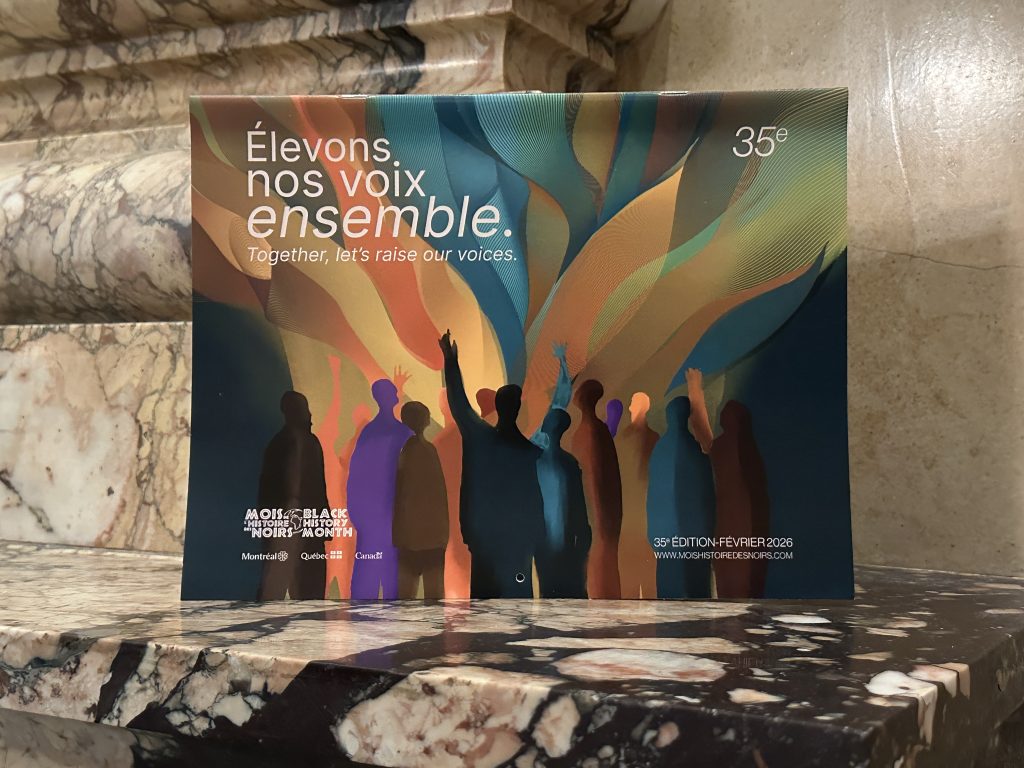
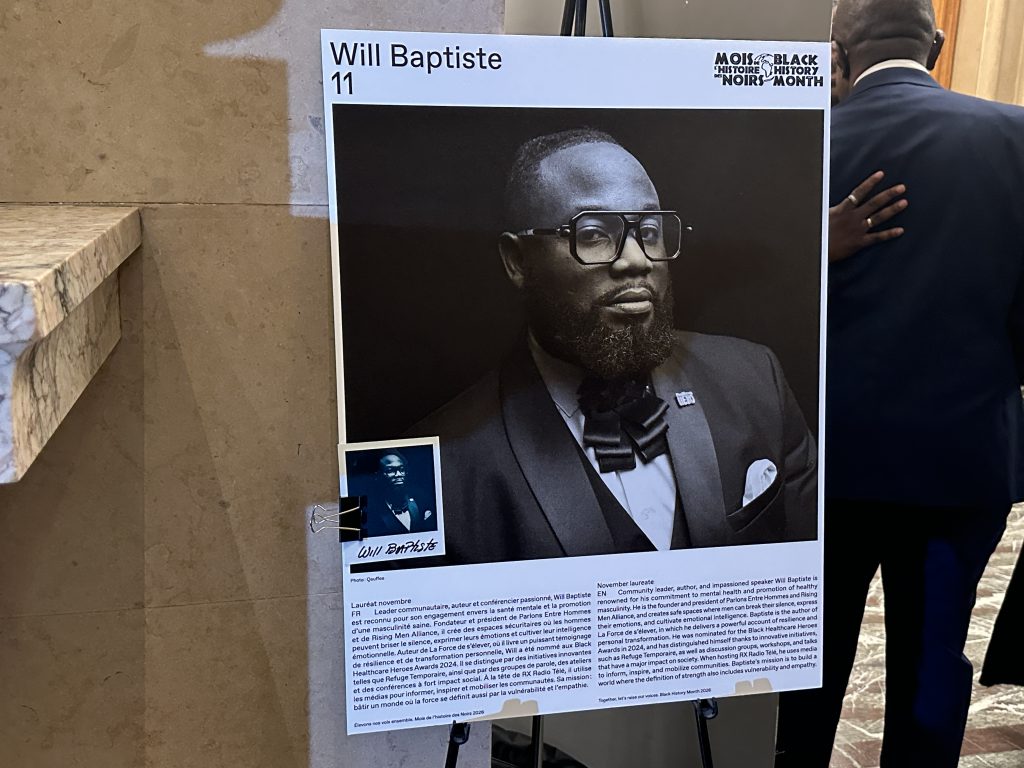
As part of a renewed tradition, the Round Table is producing and distributing a free calendar highlighting one laureate for each month of the year, with portraits captured by Montreal photographer Qauffee.
The 2026 honourees reflect a wide spectrum of achievement, including educators, artists, journalists, entrepreneurs, cultural leaders, and advocates whose work spans both grassroots initiatives and institutional leadership. Their collective impact speaks to resilience, innovation, and long-standing community engagement.
Among them is Will Baptiste, founder of Parlons Entre Hommes and the Rising Men Alliance, whose work focuses on mental health and healthy masculinity.
“It means a lot to me,” Baptiste said. “I moved to this country about 18 years ago because I wanted to get a fresh start. Never in my life, 18 years later, that I’d be standing here at a city hall and being recognized for something that I started five years ago, not knowing where it was going to take me.”
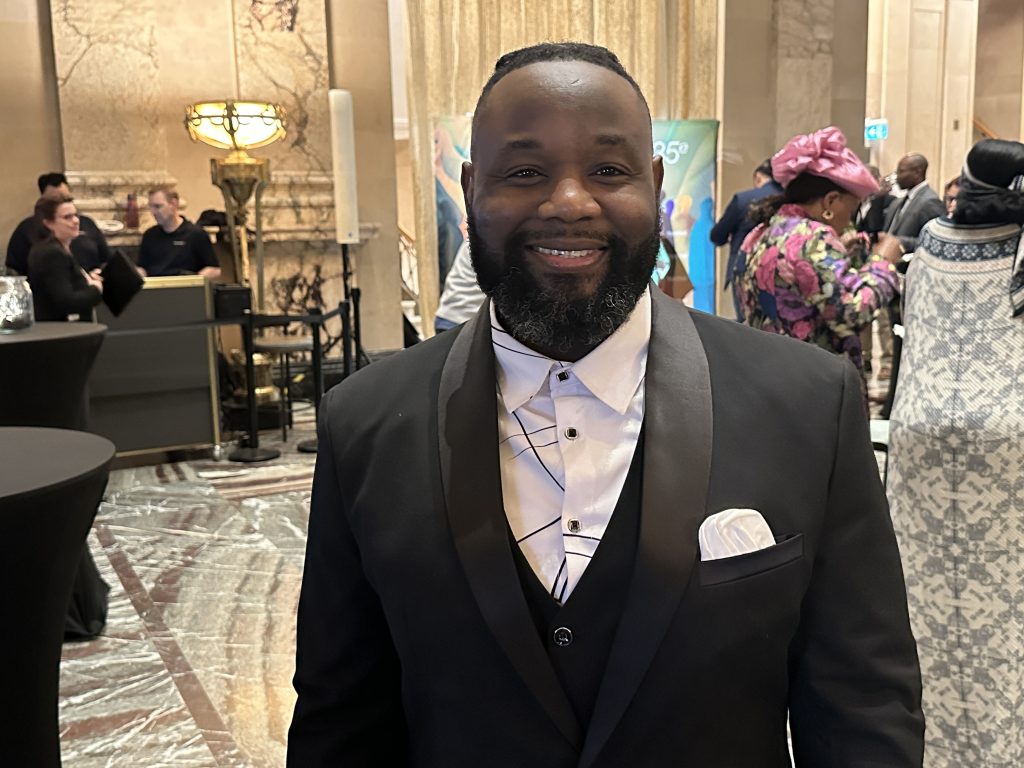
He said the recognition validates work that is often unseen.
“Sometimes we feel like we’re working in the shadows and nobody really knows what’s going on,” he said. “For me to get this nomination today, it means a lot to me. Also, it means a lot to my community.”
Political leadership and the reality of racism
Montreal Mayor Soraya Martinez Ferrada, who attended the ceremony, acknowledged the laureates and the significance of their contributions to the city.
“I think it represents the people that we have from the Black community that are very important to the history of Montreal — not only the history, but today, the contributions they make to society and to the identity of our city,” she said.
Reflecting on the theme of this year’s Black History Month, Martinez Ferrada emphasized the importance of collective action and speaking out against discrimination.
“I think it means we have to be loud. I’m a racialized woman, I’m Hispanic, my husband is a Black man, and we live in a society where discrimination and racism doesn’t have its place, and we have to be loud and speak our voices together to make sure that we are fighting against discrimination and celebrate the contributions of our Black society or our Black community,” she said.
She added that while progress has been made, sustained effort is still required.
“I think we do have a long way to go still because the bias of our society makes it that the invisible kind of racism that we still live today has to be fought, and it’s in the little things that we advance, and I think we still have to work together to make that happen,” she said.
A month of culture, remembrance, and mobilization
Beyond the opening ceremony, the anniversary edition features a wide-ranging program across Montreal and throughout Quebec, highlighting classical music, visual arts, dance, community wellness, and dialogue.
Events include performances by Ensemble Obiora and Les Ballets Africains, exhibitions such as The Body in Ritual, winter activities through BLK WinterFest, and initiatives like the annual blood drive supporting people living with sickle cell anemia. Programming will also take place in regions including the Côte-Nord, Mauricie, Trois-Rivières, and Rouyn-Noranda.
Beyond a month, toward a mandate
As celebrations unfold across Quebec, organizers emphasize that the 35th edition is meant to resonate far beyond February — a reminder that Black history is living, continuous, and shared.
Medford framed the anniversary as both a legacy and a responsibility.
“It’s a 35th edition, and it speaks to, even though a younger celebration here that we’ve been having in Quebec, but still the value of people coming together to raise their voice to say, we matter and everybody deserves to know that,” she said.