CNESST orders shutdown of Douglas Hospital lab over asbestos risk after January flooding
Posted February 13, 2026 10:18 am.
Last Updated February 13, 2026 11:20 pm.
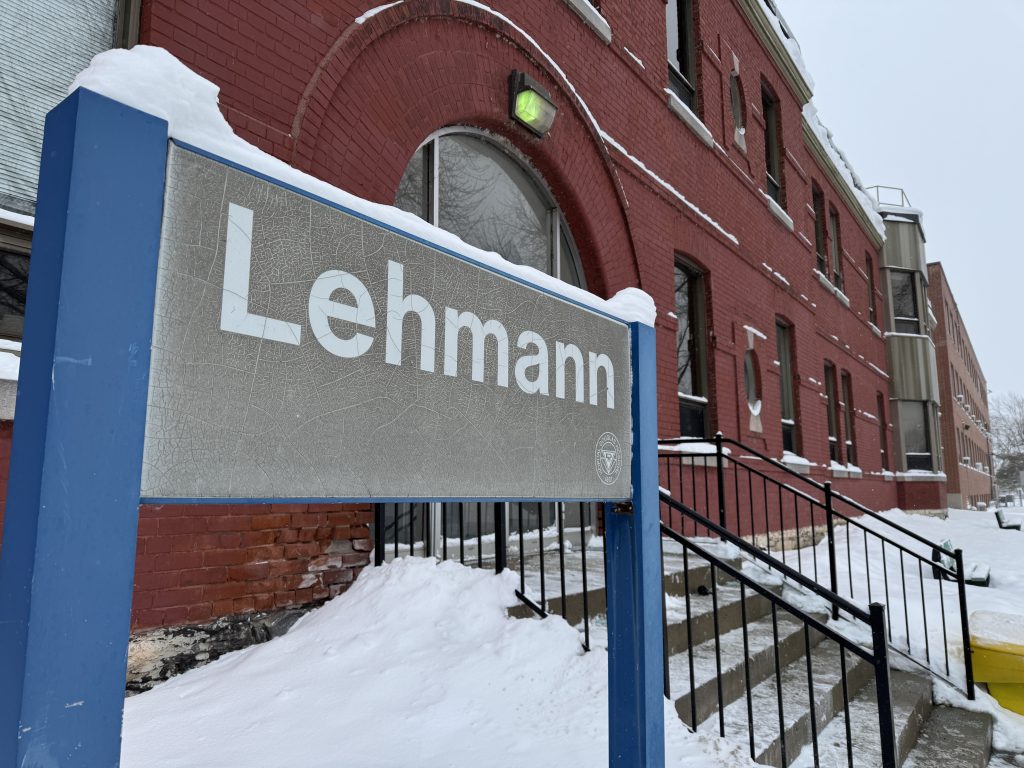
An over 100-year-old research wing at Montreal’s Douglas Mental Health University Institute has been ordered to shut down after staff were exposed to a serious risk of asbestos following a burst pipe that flooded multiple laboratories in late January, according to a document by Quebec’s workplace safety board obtained by CityNews.
The decision by the CNESST came a week after four labs inside the Lehmann Pavilion were flooded on Jan. 27, destroying millions of dollars worth of equipment and research material.
“We are all feeling devasted,” said Cecilia Flores, a professor of psychiatry at the Douglas Research Centre.
Staff are now prohibited from accessing the research wing’s first and second floors due to the presence of materials containing asbestos (MCAs) and materials suspected of containing asbestos (MSCA) within the “plaster-cement walls, insulation and acoustic ceiling tiles” of the building.
“The employer cannot demonstrate that MCAs and MSCAs located in the area affected by the water damage are in good condition and are not likely to emit dust that may contain asbestos fibers,” the report dated Feb. 3 reads.
The report explicitly warns of “a danger of workers’ exposure to asbestos dust.” It describes asbestos as “a proven human carcinogen” that can cause asbestosis, mesothelioma and lung cancer.
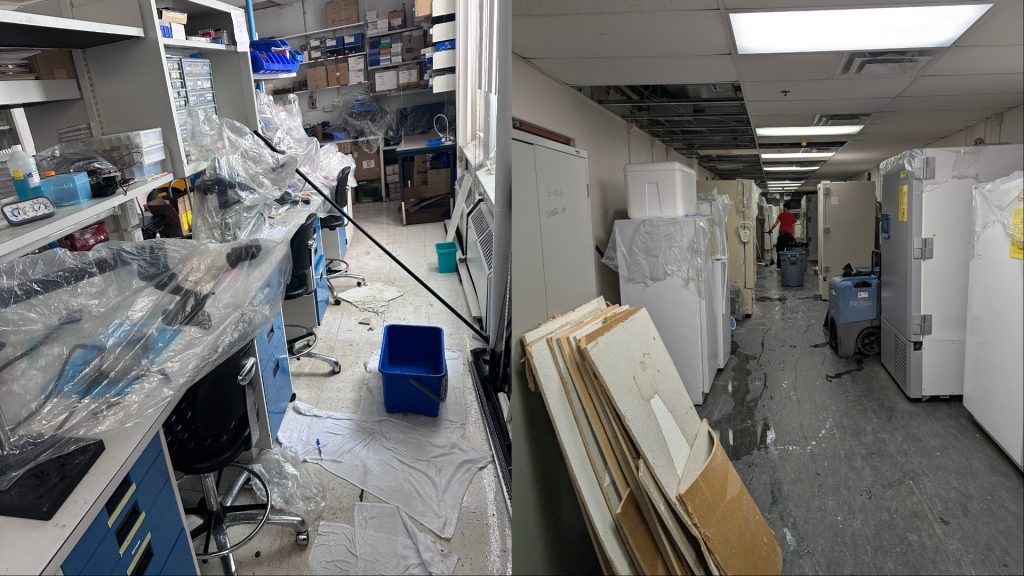
Associate professor of psychiatry Mark Brandon said he, alongside students and staff, had access to the building for nine days to retrieve sensitive materials and expensive equipment.
Brandon estimates he personally spent more than a dozen hours inside the Lehmann Pavilion during that period, while his students entered the building daily to recover research materials.
“Depending on the factors present, this situation leads to the possibility of inhaling asbestos fibers which, once they enter the respiratory system, become lodged in the alveoli of the lungs, potentially causing serious or fatal illnesses for workers,” the report reads.
The building was closed under Article 186 of Quebec’s occupational health and safety law.
The employer is equally obliged to address the research wing’s current condition under Article 51.8.
In an email statement to CityNews, CIUSSS de l’Ouest-de-l’Île-de-Montréal, the regional health authority of the Douglas Institute, said the health agency was taking the situation seriously and has put in place a safety protocol.
“In particular, we have closed access to the Lehmann Pavilion,” said Helène Bergeron-Gamache, spokesperson for CIUSSS de l’Ouest-de-l’Île-de-Montréal. “For staff who must go there, training has been provided on the use of personal protective equipment and on the protocol for safely entering and exiting the premises.”
‘The timeline was not well managed’: Researchers unclear if CIUSS could have closed the Lehmann sooner
An air-quality report from company Airpur Pro, dated Jan. 30, found samples on the first and second floors containing between 5 and 20 per cent asbestos.
The company recommended that “thorough cleaning of surfaces and equipment” be carried out as soon as possible using “a vacuum cleaner equipped with a HEPA filter.”
The report is cited directly in the CNESST decision, which ordered the shutdown.
However, emails obtained by CityNews showed that as of Jan. 28, researchers were instructed to enter the building using standard protective equipment, including N95 masks.
It wasn’t until Feb. 3 — the same day the building was shut down — that staff were told they would need to be fitted for asbestos-specific protective equipment.
“A P10 mask (with fit test), tyvec gown and eye protection are now required to be worn by anyone entering Lehmann,” one email from Feb. 3 reads.
Both Brandon and Flores said that they, alongside other researchers, were not initially informed that asbestos had been identified in the building between the flooding and the Lehmann’s closure.
“We don’t know when exactly the first report from asbestos was read by the people in charge of closing the building,” Flores said. “The timeline was not well managed.”
The hospital’s scientific director Gustavo Turecki said most buildings on the Douglas campus are officially classified as requiring immediate attention, according to provincial infrastructure standards.
“We have insects, we have bats here,” Turecki said. “The infrastructure is not appropriate for the missions that we have here in the hospital, including its clinical mission and education and research.”
Staff say they’ve been raising concerns for years, only to be met with a deaf ear.
The Lehmann building was built in 1896.
“The entire Douglas needs to be rebuilt. I think the ministry knows this, but they’re not supporting us,” said Brandon.
“We’re very concerned about the future,” Flores added. “The research centre has been requesting for a new building that would be appropriate to do this type of research and that would be safe.”
The Douglas has since launched an emergency fundraising campaign to cover the costs of damages. So far, they said they’ve secured $500,000.
Conditions before reopening
Access to the affected floors cannot resume until authorized by a CNESST inspector.
Before that can happen, the employer must identify and inspect all affected asbestos-containing materials, prove they are not emitting asbestos fibres, or carry out corrective work in line with provincial safety regulations.
“We are currently working with the Direction des assurances du réseau de la santé et des services sociaux (DARSSS) to assess the extent of the damage,” Bergeron-Gamache. “We are also collaborating with the CNESST to ensure the safety of the premises for our staff and students so that activities can resume in this pavilion.”
“Our priority is to ensure the health and safety of our staff and patients.”
The labour standards board will only allow limited access to the building. Only under strict conditions, including possessing approved protective equipment, can staff enter the Lehmann, the report says.
As of Feb. 13, the Lehmann Pavilion remains closed.
CityNews has also reached out to Santé Québec and the CNESST for a comment.