Quebec businesses demand simpler rules, AI policy and increases to immigration
Posted March 23, 2026 11:59 am.
Last Updated March 23, 2026 5:23 pm.
The Quebec chamber of commerce unveiled on Monday its economic priorities and policy recommendations for the government by 2030, in which they demanded increase in immigration, simplified bureaucracy and public procurement rules and artificial intelligence (AI) policy to meet labour shortage.
The Fédération des chambres de commerce du Québec (FCCQ) released a set of 55 recommendations, which it says were based on extensive consultations with businesses in Quebec.
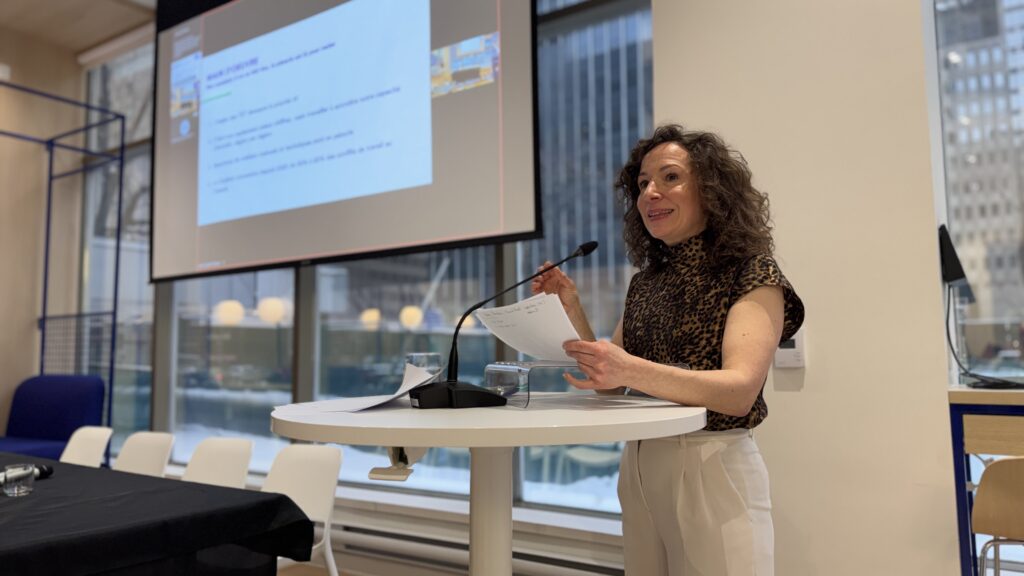
“Businesses want an environment that is more predictable, more agile, and better suited to today’s economic realities,” Véronique Proulx, president and CEO of FCCQ said. “Our plan provides clear, actionable solutions aligned with their needs.”
The federation represents 120 chambers of commerce and over 1,000 corporations, totalling over 40,000 businesses in the province.
The proposals released in the “Priorités économiques – Québec 2030” include: centralized, electronic portal for bidding and awarding provincial and municipal contracts, province-wide strategy for procurement from Quebec businesses, tax incentives for international expansion.
The document also called for reduction of administrative burden which it said impacts regions outside Quebec even though they account for 65 per cent of the province’s GDP.
The businesses’ association proposes setting up an “interministerial one-stop shop” for simplifying regulatory requirements modeled after an initiative by the French government known as France Expérimentation.
The federation also demanded abolishing the “one per cent law” which requires companies with a payroll of over $2 million to invest in workforce development.
It also called for restoring the Temporary Foreign Worker Program (PTET) with its simpler rules, as it existed before pre-September 2024 as well as for increasing permanent immigration to meet worker demand.
“Labour shortages being the number one issue of medium and small companies,” Proulx said at the press conference Monday.
“We can see that over the next year 1.3 million people will be leaving the labour market,” she added. “So we need to increase immigration levels, we need to renew permits for our temporary foreign workers, but we also need to look at AI.”
It asked the government to introduce a provincial strategy for adoption of AI in businesses to meet the “persistent” labour shortage.