Quebec premier meets with business leaders ahead of Washington trip next week
Posted April 24, 2026 10:31 am.
Last Updated April 24, 2026 5:30 pm.
Premier Christine Fréchette will travel to Washington next week to meet with American elected officials and business people.
The premier’s office confirmed on Friday that Fréchette would leave on Sunday for a day of meetings on Monday.
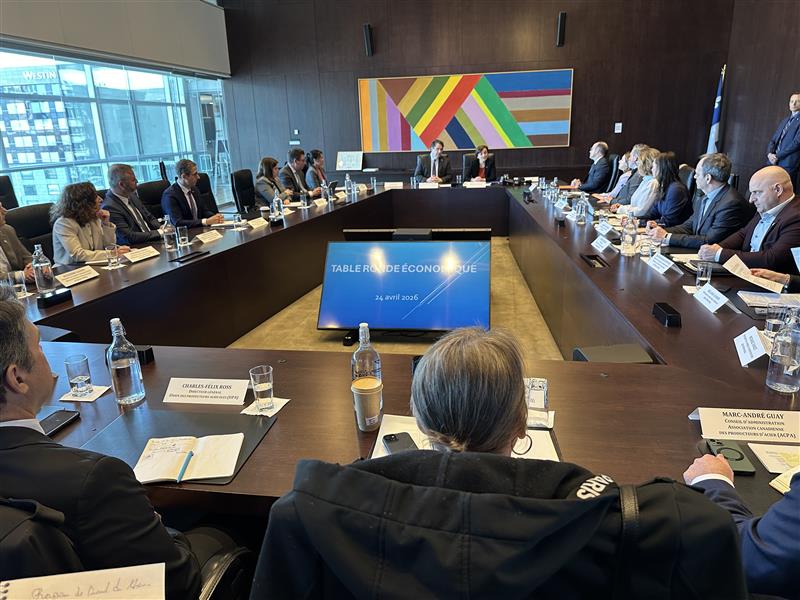
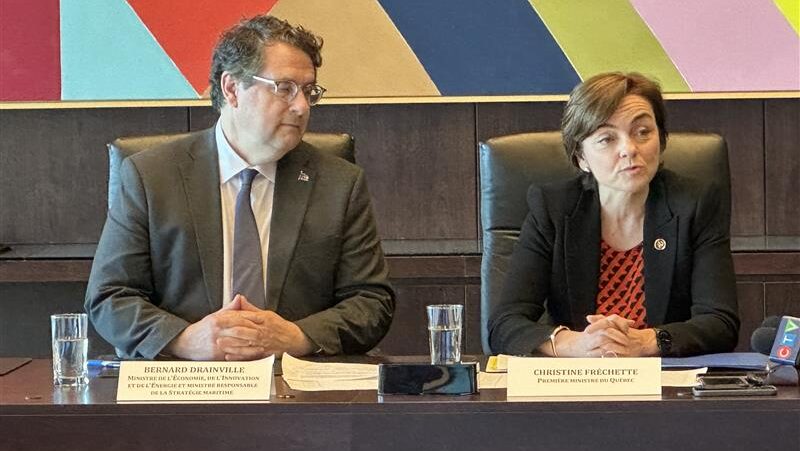
The mission’s objectives are to defend Quebec’s interests in the context of the revision of the Canada–United States–Mexico Agreement (USMCA) and to strengthen ties with U.S. economic stakeholders and elected officials, she said following a meeting with representatives from several key economic sectors in Quebec. The meeting took place at the headquarters of the Caisse de dépôt et placement du Québec, in downtown Montreal.
“I’m very pleased with the meeting we had. I had the opportunity to speak with some twenty leaders of business associations about the nature of our economic and political relationship with the United States. And right as I was about to begin my mission in Washington, it was important for me to hear their perspectives.”
A disaster averted
Fréchette was accompanied by her new Minister of the Economy Bernard Drainville. The meeting was the first time Drainville and Fréchette acknowledged working together in their new roles.
Business leaders from a range of sectors including aluminum, steel, forestry, agriculture and manufacturing were given the opportunity to give a short presentation to Fréchette and Drainville behind closed doors Friday morning.
The President and CEO of the Caisse de dépôt, Charles Emond, the President of Investissement Québec, Bicha Ngo, and representatives from the aerospace, steel, and aluminum industries, as well as the agricultural sector, were among those gathered around the table, and Fréchette made a point of commending the resilience of all these stakeholders. “If we look back a little over a year ago, we were in a situation where the tariff war was just beginning. And personally, I have to tell you, I feared a massive job loss. That was my fear, because it was our largest trading partner who was starting an illegitimate tariff war against us. And what I see, a little over a year later, is that ultimately, in terms of employment, we’ve fared relatively well, despite everything.”
The premier also highlighted the 10 per cent increase in Quebec exports to markets other than the United States. “Businesses have been diversifying their markets. We’re going to keep up this momentum.”
Véronique Proulx, president & CEO, Fédération des chambres de commerce du Québec, who was also at the meeting said said, “We did remind her, however, that there’s not a lot of things we can do to influence Donald Trump, but there are a lot of levers that her government can leverage to make sure that we reinforce our economy. So we talked about labour shortages, public procurement, and making sure that mining projects, industrial projects in the different regions of Quebec do go ahead.”
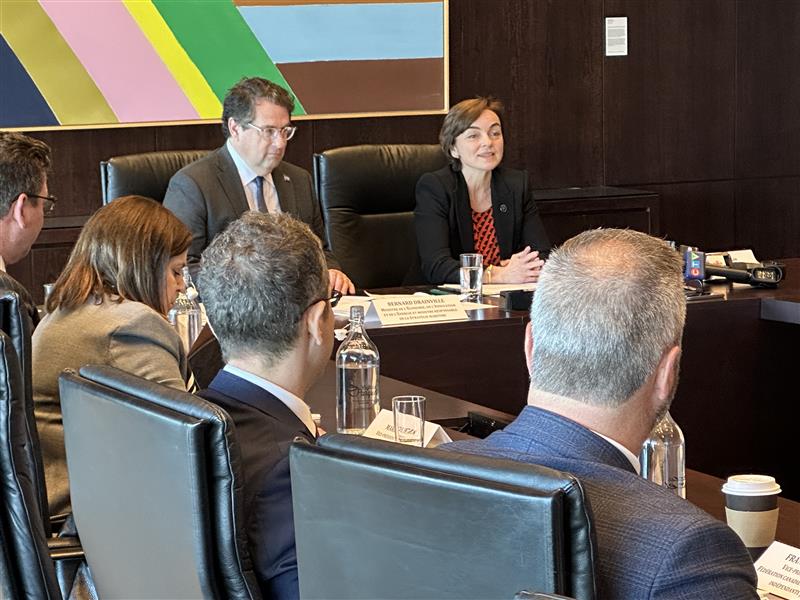
François Vincent, Quebec vice-president for the Canadian Federation of Independent Business said that it was important for Canadian and Quebec leaders to meet with their U.S. counterparts.
“The fact that she’s going is going to help. We have to build the more bridges possible. We have to have our leaders to be there to create possibility that we will build the better agreement for small businesses, for medium businesses, and big businesses in Quebec and Canada,” Vincent said.
Convincing her counterparts—but what about the president?
In the U.S. capital, the premier is set to meet with the U.S. business community, including representatives from the aluminum industry and the housing sector, as well as with U.S. elected officials.
“It is important for us to remind Americans that we are their most important client. Canada and Quebec is an important strategic region. Therefore, I want to remind them and see what’s coming next, because we will have to have a review process regarding the USMCA, and it will be important for them to hear us.”
Fréchette will therefore, like all other Canadian envoys before her, “emphasize the importance of our economic agreement. Emphasize the importance of our trade ties. Canada is the United States’ largest economic partner. Quebec is at the heart of a wide range of sectors.” At the same time, she intends to establish her own contacts in the U.S. capital.
However, Concordia University economist Moshe Lander is skeptical about much Quebec’s new Premier will be able to accomplish regarding tariff and free trade agreement negotiations during her visit to Washington.
“I don’t know what they can expect. I know what they should expect, which is nothing,” Lander said.
“There’s nothing that she can do. I don’t think that she’s now tapped into some knowledge that the Prime Minister and his trade representatives have overlooked. ‘Oh, Quebec’s worried about steel and aluminum. I didn’t realize that. Let me make a note of that for the next time I talk to the president.’ So this has already been discussed. We’re already 18 months into not just Trump’s administration, but since he’s been elected.”
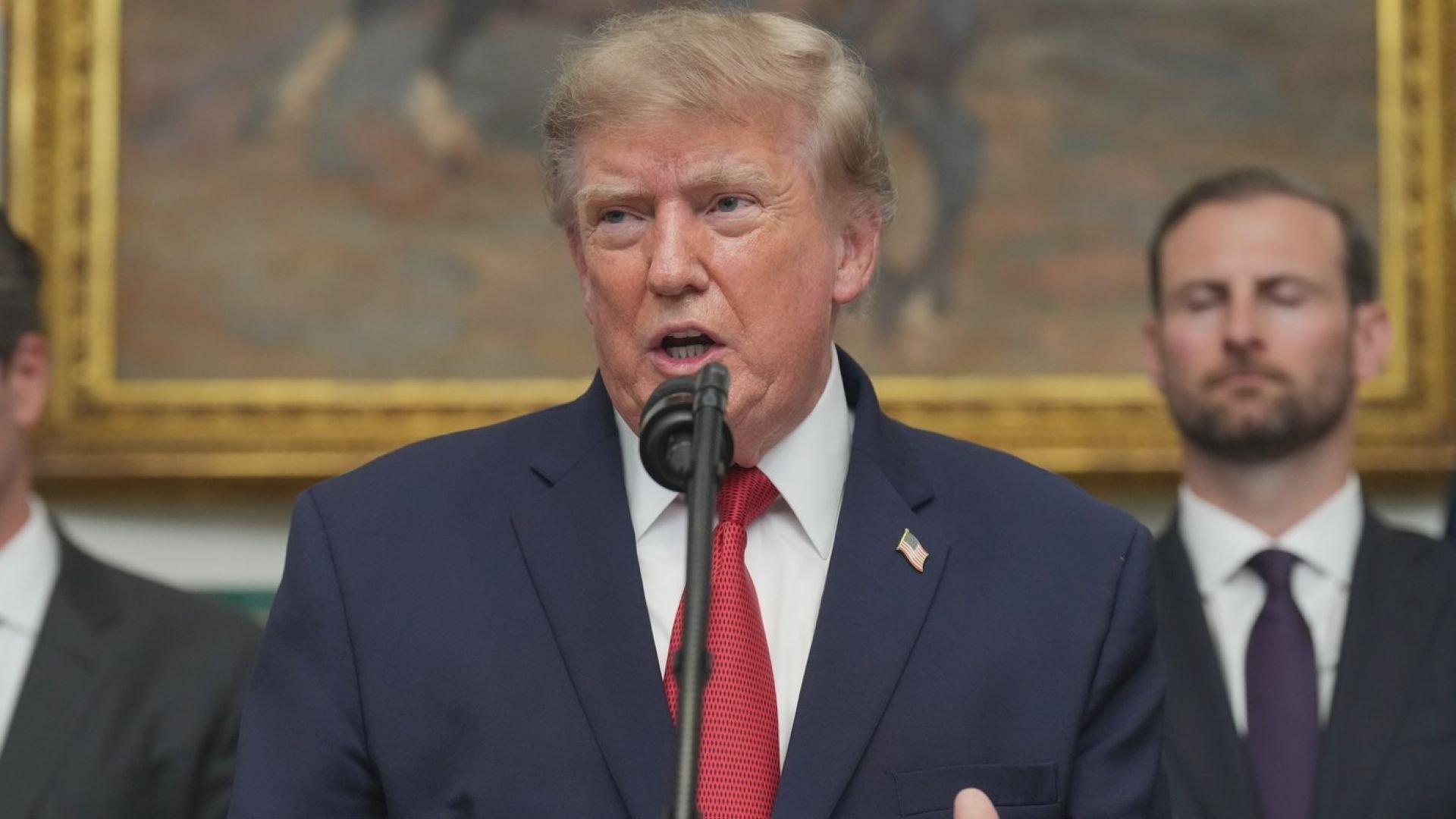
Fréchette says she is well aware of President Donald Trump’s unpredictable nature, but she nevertheless believes it is possible to work behind the scenes.
“We’ll have to be very close to our American partners because things can change overnight,” she said. “And therefore we need to have a close contact and a close dialogue with them in order to prevent any damaging initiatives.”
Fréchette is also scheduled to meet with Canada’s new ambassador to the United States, Mark Wiseman, who recently sparked controversy by sending an invitation to a reception in English only. Wiseman acknowledged on Thursday that this was an “unacceptable mistake.”
His appointment late last year had also sparked controversy in Quebec due to his previous comments criticizing Canada’s supply management system.