SPVM launches anti-discrimination and racism plan
Posted March 24, 2026 2:03 pm.
Last Updated March 24, 2026 6:04 pm.
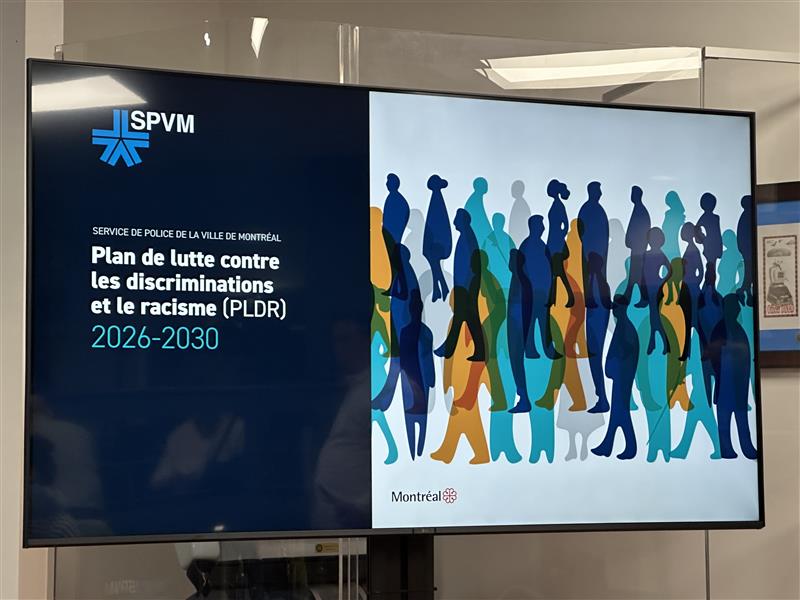
Montreal police (SPVM) unveiled their 2026–2030 Anti-Discrimination and Racism Plan (PLDR) on Tuesday, outlining measures aimed at better reflecting the realities of all Montrealers while addressing systemic discrimination within the force.
The plan comes as police services across Canada face growing scrutiny over systemic racism and accountability.
The plan’s main objective is to strengthen organizational culture by eliminating racial discrimination in police activities, both in interactions with the public and within the force itself.
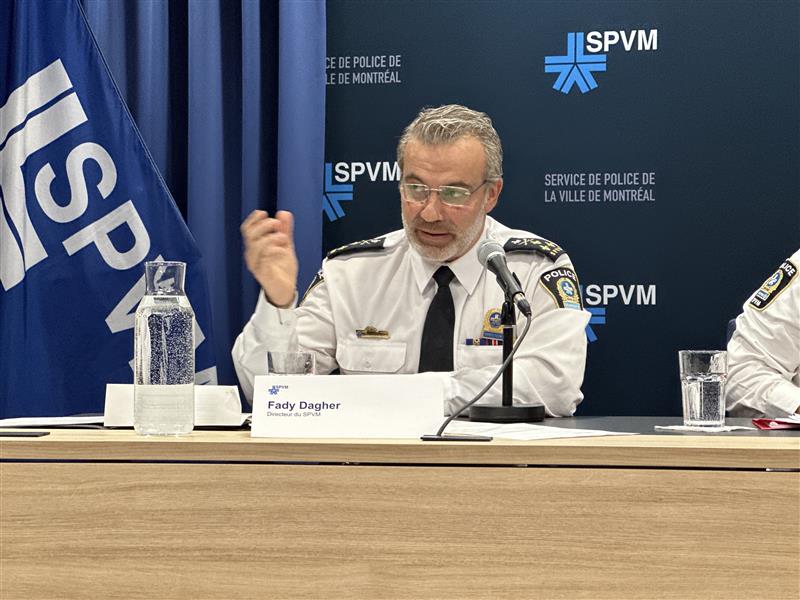
“We have a duty and responsibility to offer not only a service that respects the fundamental rights of each person, but also to meet the expectations of both citizens and our staff,” said Fady Dagher, SPVM director. “With this in mind, I firmly reaffirm that the SPVM will not tolerate any form of discrimination or racism on the part of its staff, whether between colleagues or toward the public. This plan reflects our organization’s desire to continue adapting to better serve the population. A relationship of trust is essential to the legitimacy of police work.”
Police say the PLDR is designed to introduce systemic measures to prevent discrimination, strengthen ethical governance and better integrate diversity throughout career development. The plan also focuses on improving trust between the SPVM and the communities it serves.
It is structured around four key areas of intervention: discriminatory and high-risk behaviours, police interactions, community engagement and career development.
“Just building the bridge between the police and the community on an everyday basis. So the vision is, I’m hoping that in 2030, the police department of the SPVM is going to be as close as possible to all the communities without any discrimination, any racial issues,” said Dagher.
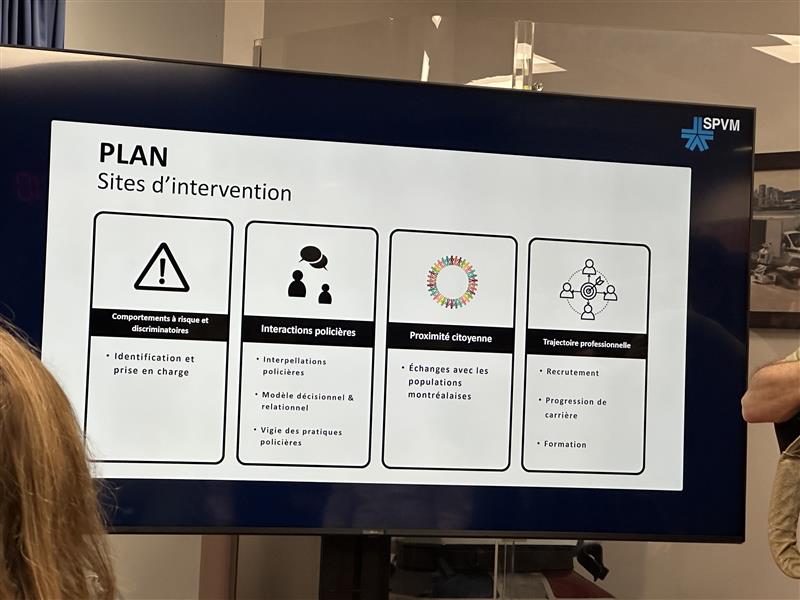
Officials say the plan is intended to drive more concrete changes in policing practices, including updates to internal policies, ongoing training for personnel, and stronger coordination, monitoring and evaluation mechanisms.
The SPVM says the plan will be closely monitored to ensure measurable progress as it works to rebuild trust and address long-standing concerns about discrimination in policing.
“One cannot deliver effective, non-bias and accessible police services without changing the ways of doing things inside, without different recruitments, without different expertise being developed, and also more importantly, without mechanisms mentioned in this action plan to track among other things the behaviors that are not considered professional,” said Fo Niemi, the executive director of the Center for Research-Action on Race Relations (CRARR).
While Joel DeBellefeuille, the founder and executive director of the Red Coalition, says, “People are watching, so they don’t want to see promises, false promises anymore. They want to see action. They want to see body cams. They want to see officers not purposely persecuting and intercepting them because of the colour of their skin or the religion that they practice. And that’s the problem that’s not being addressed in the city. It’s a tough subject, but you’ve really got to pull up your sleeves. They’ve got to really put up their sleeves and face the music and actually show concrete action instead of discussion.”
While skepticism exists for this plan, Montreal police chief Fady Dagher affirms that there are sanctions in place for police officers who violate elements of it.
“When you get to the sanction, of course, we’re going to do it, and we have disciplinary sanctions, but as an organization on the moral side, it’s a bit too late for us. What we try to do to focus on also is how we can detect way before all the minimum, all the little behavior that’s leading to the violence and leading eventually to the sanction,” said Dagher.