Doctors are asking Fréchette to renounce the concessions given to Foundry
Posted April 20, 2026 12:25 pm.
Last Updated April 20, 2026 12:26 pm.
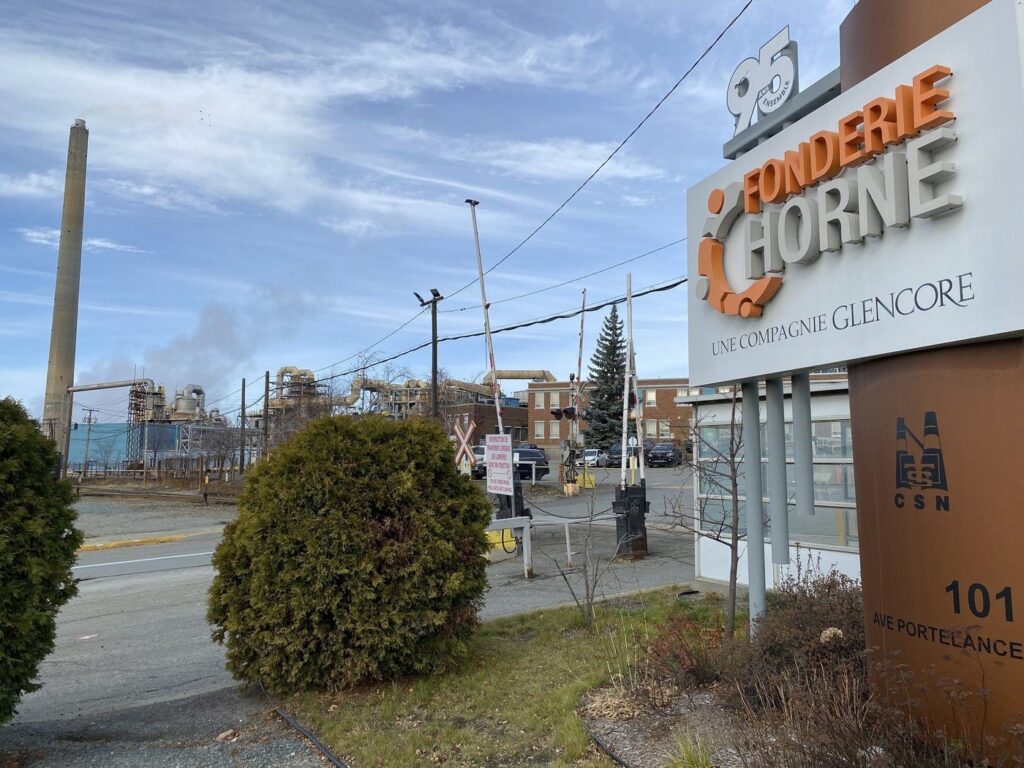
The Quebec Association of Physicians for the Environment (AQME) supports the 118 doctors in Abitibi-Témiscamingue, who are asking the new Premier of Quebec to renounce the concessions granted to the Horne Smelter, operated by the multinational Glencore.
In a message posted on social media on Monday, AQME wrote that “people’s health must stop being overshadowed” by job creation.
The AQME offered its support to family doctors and specialists who, according to Radio-Canada’s report Monday morning, sent a letter Sunday to Quebec Premier Christine Fréchette to convince her to renounce the concessions promised to the Horne Foundry by her predecessor François Legault.
The Horne Foundry, a major employer in Abitibi, has regularly made headlines in recent years because of its arsenic emissions, which far exceed the standards in force in Quebec, and because of its requests to postpone the new requirements.
A few weeks ago, an amendment to a bill led to granting new extensions to meet targets for reducing emissions of arsenic, but also lead, cadmium and other metals.
The current ministerial authorization, granted from 2023 to 2028, would therefore be postponed until 2033, despite warnings from the Regional Directorate of Public Health, which indicated last March that the government is underestimating “the real health risk in an environmental context unique to Quebec”.
“Unfortunately, the new premier intends to reinstate Bill 11 and pass it,” and “there is no balance in this decision,” wrote the AQME.
“In solidarity with the doctors of this region, we wish for more political and regulatory courage in the face of a multinational that certainly has the means to respect our standards without taking the people and the air of a region hostage,” added the doctors’ association.
Several times above health standards
The foundry was to reach a target of 45 ng/m3 in 2024 and to meet a target of 15 ng/m3 from 2027, which is the reference value of the National Institute of Public Health of Quebec (INSPQ), which is nevertheless above the 3mg/m3 of the Quebec standard.
The foundry was also required to present an action plan aimed at meeting the Quebec standard.
Last July, Glencore’s general manager for copper in North America, Vincent Plante, indicated that the company considered the target of 3 ng/m3 “technically impossible” to achieve.
Last December, the government was open to granting Glencore an additional 18 months to meet its arsenic reduction targets, in exchange for which the company pledged to invest $300 million to reduce its emissions.
In February, Glencore had hinted at the possibility of closing the smelter.
The company was demanding financial assistance from the government and, in the event of refusal, a reprieve to reach the maximum annual average of 15 ng/m3 which was to be required from 2027.
The government had then indicated that it was prepared to grant Glencore seven years of regulatory predictability, meaning a commitment not to change the rules until 2033.
–This report by La Presse Canadienne was translated by CityNews