CSN members called upon to update their position on the future of Quebec

Posted May 28, 2026 3:09 pm.
Last Updated May 28, 2026 3:10 pm.
Although it will not take a position for a political party in the context of the next Quebec election, the CSN would like to update its position on the future of Quebec, having already declared itself in favour of sovereignty in the last two referendums.
Under its statutes, the CSN cannot take a position for a political party, unlike the FTQ, which could, but has not done so for several years.
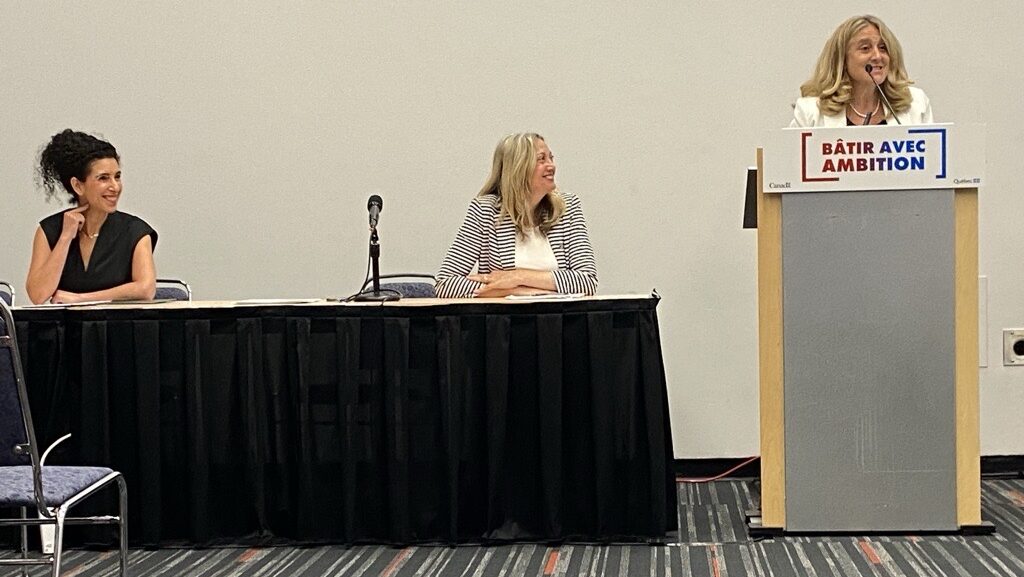
However, as the holding of a third referendum on Quebec sovereignty is back in the news, delegates to the CSN’s triennial congress, which is being held this week in Quebec City, are being called upon to launch a consultation to update the union’s position on this issue.
“During the last two referendums, the CSN’s position was pro-sovereigntist. And we really distinguished between ‘no, we do not support a political party, that is partisan politics’, and the future of Quebec, which is an issue that transcends parties and for which we want to take a position,” said CSN President Caroline Senneville in an interview on Thursday.
“What we want to do during this congress is to tell the members: hey, it would be fun to go and see people, to launch a consultation and to update our position because, operating with our mandate from more than thirty years ago, is not the most comfortable thing.”
New mandate
Senneville is also beginning a new term at the head of Quebec’s second largest union federation, which has more than 300,000 members.
When asked whether the CSN would change its orientations or ways of doing things following this congress, and in the context where the CAQ government has adopted several bills affecting unions, Senneville replied that it was rather up to the government to change.
“We will mainly expect changes from the next government, because the current government has multiplied its anti-union attacks. And the bills it has put forward are contested by almost all union organizations,” she concluded.
However, she admits that the new law aimed at taking greater account of the needs of the population in the event of a strike or lockout, which creates the concept of “services to ensure the well-being of the population”, beyond essential services, is a game changer.
“It’s certain that strike strategies may change in relation to Bill 14, but we’re talking about strategy. So we’ll see how we can exercise our power, so that it still has an impact,” added Senneville.
–This report by La Presse Canadienne was translated by CityNews