Canada boosts aerial firefighting fleet with 10 new aircrafts as wildfire season begins
Posted May 31, 2026 5:34 pm.
Last Updated May 31, 2026 5:55 pm.
As Canada’s 2026 wildfire season gets underway, the federal government says it has leased 10 new firefighting planes and helicopters to boost Canada’s firefighting capacity.
Ottawa will be partnering with the Canadian Interagency Forest Fire Centre (CIFFC) to help provinces and territories respond to wildfires this summer.
John Gradek, an aviation expert at McGill University, said, “From May 1 until Sept. 30, let’s just say, of 10 aircraft that will be strategically deployed across the country with crews and maintenance for those aircraft,” Gradek said.
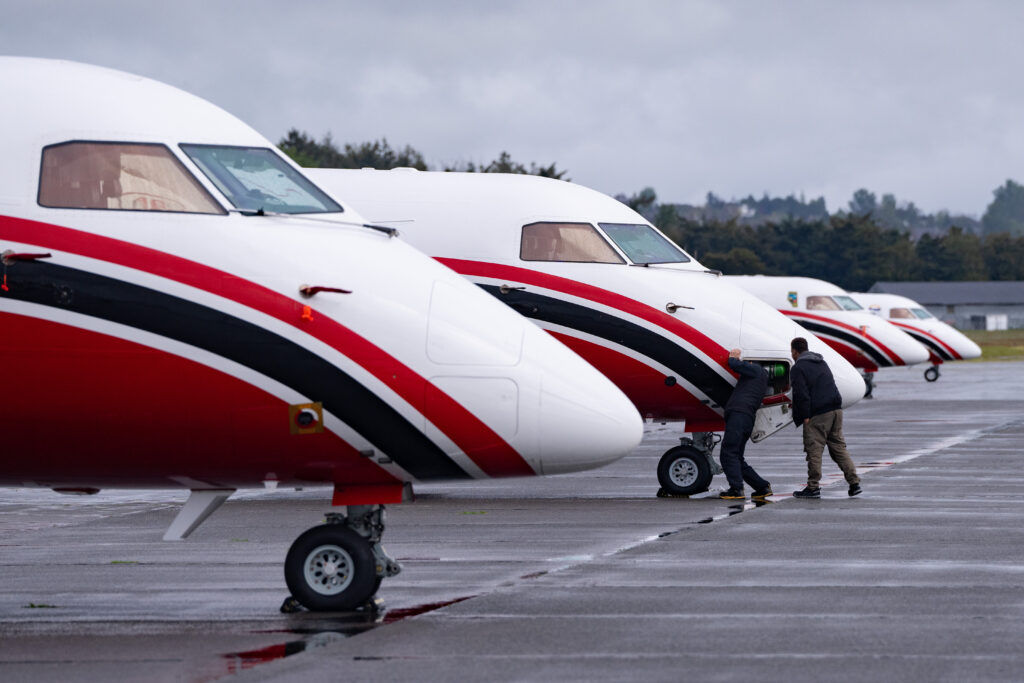
“They will be used to augment the provincial government’s fleet of airplanes and will be deployed as needed by the federal government in support of provincial efforts to fight fires.”
This announcement is welcome news for Canadians who have experienced destructive wildfires in recent years, including the 2023 which saw more than 6,000 fires burning 15 million hectares across Canada and Quebec.
The additional aircraft are essential for firefighting, says Josée Poitras, preventions and communications agent at SOPFEU.
“This announcement is welcome news for all of Canada. Just think back to 2023, when all of Canada was literally on fire, so to speak, and even here in Quebec with the wildfires.”
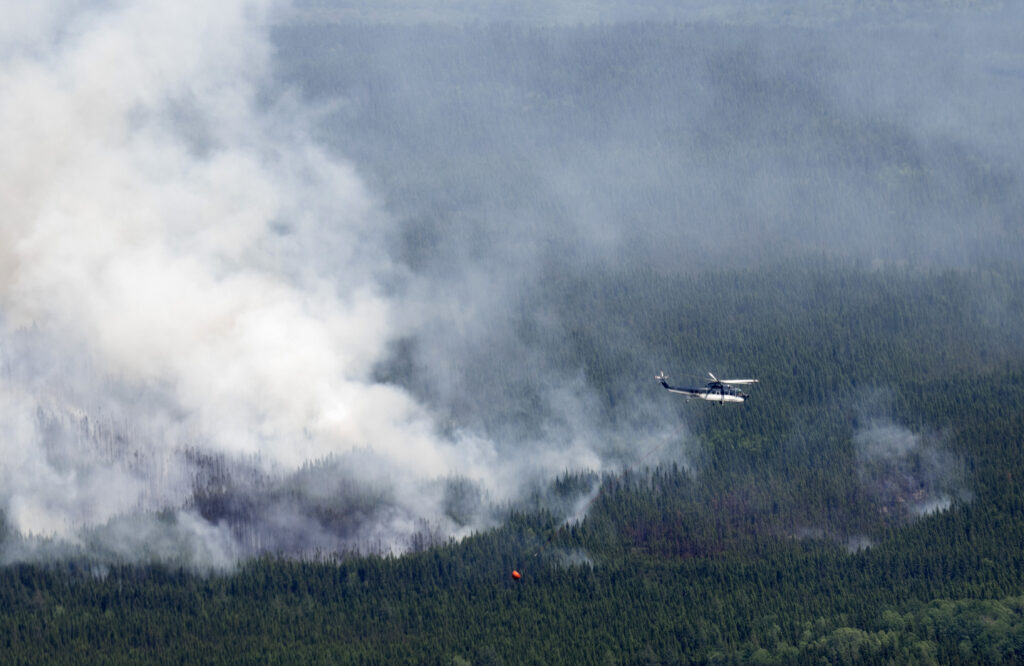
According to the Government of Canada, provincial and territorial wildfire agencies will now be able to request the use of two support assets, one birddog plane, five heavy lift helicopters and four aerial firefighting air tankers, which experts say play a vital role in helping to fight wildfires.
“The airplanes that they’re getting are modern airplanes, they’re Dash 8 air tankers that are deployed to carry about 4,000 litres of either retardant or water,” Gradek said.
The additional capacity should allow crews to tackle many fires, according to Poitras.
“We’ll recall that in 2023, if we take Quebec as an example of that type of fire, there were fires we had to leave behind and monitor because we had other priorities for intervention, including, of course, human lives. And furthermore, in terms of protecting the forest from fire, often at the level of the firefighting aircraft,” Poitras said.
While recent rainfall maybe easing conditions in some areas, Public Safety Canada warns above-normal summer temperatures lie ahead, as 65 wildfires are already burning across the country, six of them out of control.

Gradek says the forecast for the upcoming weeks may worsen the situation further.
“We had 600 lightning strikes in B.C. in the last 24 hours. So I think it’s starting to heat up. We’ve got a severe drought. We’ve got water shortages. We have heat. We have the super El Nino showing up. So there are a lot of signs pointing to potentially a bad year,” Gradek said.
“We know it’s not a question of if the question is going to be when the next big fire season is going to happen and it is going to happen,” Gradek added.
Poitras says Quebec has several options in its arsenal this year.
“For the season, we still have 17 water bomber aircraft, other aircrafts, and helicopters, and we can call on private resources if we run out of capacity,” Poitras said. “Also, when we get help from other provinces, we have the operational capacity to fight forest fires.”
With Canada’s wildfire season set to continue through the summer into October, experts are asking Canadians to be diligent during outdoor activities as summer conditions settle across the country.
“It’s worth noting that 80 per cent of fires can be prevented because they are caused by human error,” Poitras said.