Immigration: Challenges facing the next Quebec government
Posted August 25, 2026 10:36 am.
Last Updated August 26, 2026 9:12 am.
A standoff with Ottawa, the closure of Roxham Road, and dithering over the Quebec Experience Program (PEQ): immigration has been a hot topic during the two terms of the Coalition Avenir Québec (CAQ). And the issue is very likely to feature prominently in the election campaign. What challenges await the party that takes power regarding this sensitive matter?
For immigration lawyer Maxime Lapointe, the next government will have to rebuild bridges with Ottawa. “There have been many conflicts telegraphed by the CAQ with the federal government on several subjects, including immigration,” he stated in an interview with The Canadian Press.
During its mandate, the Legault government repeatedly insisted that there were too many temporary immigrants in Quebec and pressured Ottawa to reduce their number. However, relations between the two levels of government were strained.
According to Maxime Lapointe, it is high time that Quebec sat down with the federal government to open up the Canada-Quebec agreement, because its content “is not up to date with the current reality”.
“Whether it’s to have more control over work permits in Quebec, or to better control foreign students, is Quebec capable of having jurisdiction over asylum seekers? Or over family reunification? Quebec would have liked to impose a French language proficiency requirement to limit applications, but they don’t have the legal authority to do so,” explains the lawyer.
This agreement, signed in 1991, grants Quebec exclusive powers regarding the selection of its immigrants. Doesn’t reopening this agreement risk Quebec losing powers in this area? “Two former immigration ministers told me exactly the same thing: ‘We don’t want to reopen the agreement because we receive so much money and we don’t want to lose it.’ But I find that to be a very defeatist approach,” argues the lawyer.
Maxime Lapointe also believes that it would be better to stop spending so much money on French language training, and instead select a more Francophone immigrant population.
“Caught between two fires”
According to Pierre Fortin, professor emeritus of economics at UQAM, the leaders of the various political parties will be caught “between two fires,” namely the “business lobbies” that always want more immigrants and “moderation.”
“These five party leaders must decide during the election whether they support the business community or the vast majority of the population – more than 70 per cent – who say we need to moderate our immigration transport,” he argues.
Although Fortin believes that the pace of immigration needs to be slowed, he proposes setting the threshold for permanent residents at 50,000 per year.
“Why? Because before 2016, Canada had the best reputation in the world as a host country for immigrants. We also had rigorous selection criteria. And then we let that go for 7-8 years. It’s an economic and social disaster,” he explains.
Former Immigration Minister Jean-François Roberge lowered the permanent immigration thresholds to 45,000 per year until 2029.
“Viewing immigration as a resource”
Marie-Jeanne Blain, a senior researcher at the Institute for Migration and Society Research at Concordia University, hopes that Quebec will “re-examine” its relationship with immigration.
“The big challenge right now is to return to a long-term vision, to ensure predictability, and also to reassure people, and to restore the image that Quebec is a welcoming society. (…) We must see immigration as a resource because these are people who contribute to Quebec society,” she said in an interview with The Canadian Press.
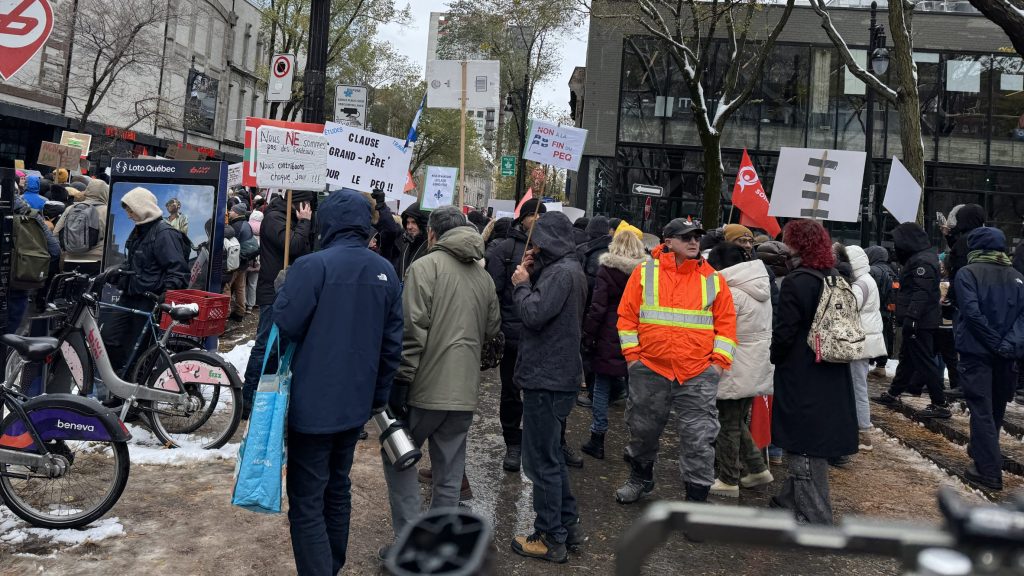
The professor specifically refers to the Quebec Experience Program (PEQ). The closure of this program last November sparked widespread protests across Quebec. It has been reopened for two years by the new Minister of Immigration, François Bonnardel.
“There have been negative effects not only on the labour market for employers, on the school side, but also on the side of the migrants themselves, and the citizens who interact with them. There is an image of Quebec that is being tarnished as well,” argues Blain.
It now remains to be seen what the various political parties will propose more concretely in terms of immigration during the election campaign.
–This report by La Presse Canadienne was translated by CityNews