‘Light at the end of the tunnel’: Montreal woman turns grief into helping others after brother’s suicide
Posted September 24, 2026 7:12 pm.
Content warning: This article contains sensitive subject matter, including talking about suicide.
If you or someone you know is thinking about suicide, support is available 24/7 by calling or texting 988, Canada’s national suicide prevention helpline, or Quebec’s suicide prevention helpline at 1-866-277-3553.
For Montrealer Vanessa Da Costa, September’s Suicide Prevention Month is a time to speak openly about suicide and to remember her brother Fabio for the life he lived.
Fabio died by suicide three years ago at the age of 30.
A chef who was passionate about his work, he was also someone Da Costa remembers for the way he connected with the people around him.
“He was super charming, very witty, full of life, super passionate about his work,” Da Costa said. “He was a chef. He was just a really brilliant person. Someone who cared about people who was really good at working a room and really just gave everyone 100 per cent. He made people feel very seen. And heard.”

Da Costa says she began noticing a change in Fabio during the COVID-19 pandemic. The siblings worked in the restaurant industry, where staffing shortages had become a challenge, and she knew he was experiencing bouts of depression.
She spoke with Fabio about her concerns and also raised them with her parents and their closest family and friends.
“I had no idea that he was suffering to the point of not really seeing any way out of it. And so when it happened, it was a huge shock,” Da Costa said.
“I tried to get him help and he spoke to a doctor and I really genuinely believed that we had made changes that would help him,” she added. “But I was wrong. I didn’t have the right resources to help him at the time.”
A loss that changed her life
Da Costa says the months and years following Fabio’s death were difficult, even as she leaned on family, friends and her husband for support.
For her, losing a sibling meant losing someone who had witnessed much of her life.
“I was really lucky to have a lot of family and friends and my husband who supported me,” she said. “But it’s really hard to sort of imagine living a life without someone who has been part of your life since you can remember and especially a sibling because they are the biggest witness to your life.
“And so it was really earth-shattering, to be honest. And it still is, but with time I’ve learned to sort of rebuild and move forward in my own way.”
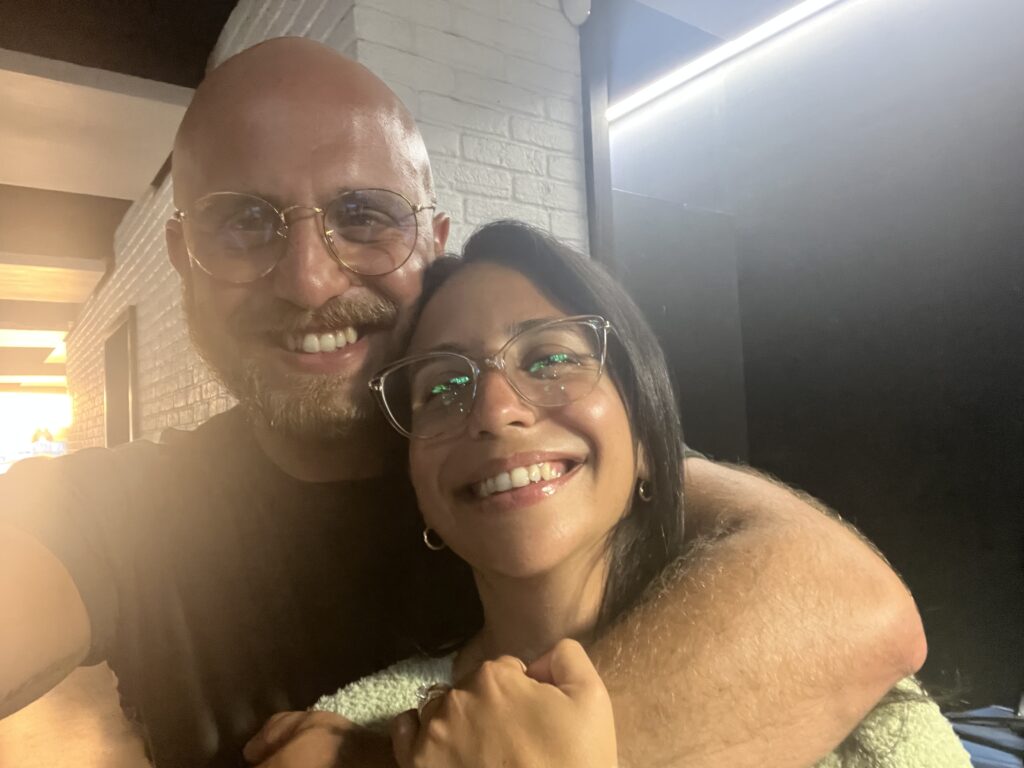
During that period, Da Costa reached out to the Suicide Prevention Centre of Montreal (SPCM), initially looking for a place to make donations in Fabio’s honour.
The centre told her it also offered services for family and friends grieving a death by suicide.
Da Costa was initially reluctant to seek that support, but eventually did. Her involvement with the organization grew from there.
She participated in one of its suicide prevention campaigns, later joined its board of directors and became a godmother for its “Reinforcement –Support in Community” project.
“My life would not be the same had I not reached out to them and had I not gotten the right type of help following my brother’s passing,” Da Costa said.

Preparing communities for suicide loss
The Reinforcement project is one of two major projects the SPCM is seeking to fund through a five-year major giving campaign.
The centre hopes to raise $4.5 million for the two projects, which are intended to support suicide prevention and other services for the greater Montreal community.
The Reinforcement project focuses specifically on postvention — the response and support provided after a death by suicide.
Its goal is to help workplaces, schools, organizations and communities develop protocols tailored to their particular settings, while providing leaders and practitioners with training and practical tools.
Brock Dumville, director of development at the SPCM, says the broader vision is for communities to have a plan in place before they need it.
“The Reinforcement Project describes our vision that every workplace, every school, every community in Montreal will have a tailored postvention protocol,” Dumville said.
“Postvention is everything that an organization does following a death by suicide to protect the members that are impacted by it to make sure that people are getting connected to the help that they need, including specialized grief services for anyone that might be grieving the loss of that person.”

The project also calls for communities and institutions with postvention plans to come together to share practices, experiences and resources.
The centre estimates an average of four people die by suicide every week in Montreal — a rate Dumville says has remained relatively consistent for roughly a decade to 15 years.
“We’re seeing a bit of a plateau in the rates,” he said.
Dumville says the organization wants to continue developing and expanding its programming to keep working toward suicide prevention in Montreal.
Continuing the work
Dumville says there have also been efforts across Quebec to improve access to mental-health services and reduce stigma around suicide and suicidal thoughts.
“Huge efforts were made to improve access to mental health services in Quebec as a province, as well as to destigmatize suicide as an issue to get people to talk about it, to expand resources like ours throughout the province,” he said.
“And we just want to make sure that that continues to happen. I think a lot has been done to destigmatize mental health and suicide and suicidal thoughts in the last few years. And our job is to make sure that that continues to happen and that we’re doing everything that we can.”
For people who are struggling, Dumville says help is available. He also says loved ones can play a role by asking directly about suicide.
“We want people to know that they’re never alone, that resources are out there, resources like ours, and there’s any number of organizations that can help them with the specific things that they’re navigating,” he said.
“We want their loved ones to know too that it’s okay to ask, are you thinking about suicide, to say the words, to break that silence and really reach out to people that they are worried about.”
“There’s always something that can be done and there’s resources out there for people. There’s always hope.”
The Suicide Prevention Centre of Montreal responds to calls to 1-866-277-3553, the provincial suicide prevention hotline that can connect people in Quebec with their local suicide prevention centre.
Remembering Fabio
For Da Costa, the work is closely connected to the brother she continues to miss.
She says part of the reason she speaks publicly about Fabio is to make sure people know the person behind the loss — and that his death does not define his entire story.
“His death is part of his story, but it is not the whole story,” Da Costa said. “He continues to be loved deeply, and there was so much life in him that deserves to be remembered too.”

Three years after Fabio’s death, Da Costa remains involved with the SPCM, helping advance work aimed at supporting people and communities affected by suicide.
And when asked what she would say to her brother, her answer is personal.
“If I could say one thing to my brother, it would be that I miss him very, very much and that I’m so grateful that I had the opportunity to be his sister,” she said.
Her message extends beyond her own family.
“I hope that people hear my story and my brother’s story and that they learn that there is a way out, there is light at the end of the tunnel, there are people who love you, you do deserve to be here,” Da Costa said.
“And I hope that it sheds a little bit of hope for anybody who’s going through a difficult time.”