Quebec premier announces new measures as Canadian counter-tariffs take effect

Posted September 8, 2026 6:46 am.
On Monday evening, the CAQ government implemented a series of measures to promote buying local, just hours before Canada’s new tariffs were set to take effect at midnight on Tuesday.
The Cabinet adopted a decree requiring the government to restrict bids to companies with a physical presence in Quebec and Canada.
The government may also require that goods be produced and processed locally and even grant a 15 per cent preferential margin based on Quebec or Canadian value added.
Christine Fréchette thus stepped into the role of premier for a cabinet meeting, taking a break on the 13th day of the election campaign, even as her opponents accuse her of exploiting the current trade crisis to boost the incumbent government.
Furthermore, for all contracts under $9.2 million, the Ministry of Transport, Santé Québec, and the Société québécoise des infrastructures (SQI) will be required to stipulate that at least 15 per cent of the value of materials and equipment be sourced from Quebec or Canada.
The $9.2 million threshold aligns with international trade requirements. For amounts exceeding this threshold, requirements could be imposed by decree.
State-owned enterprises will also be called upon to contribute. They will be required to adopt a “Buy Quebec” strategy and will be able to deviate from the current law governing public sector contracts.
And in the furniture sector, the government will be even more restrictive: it will source products exclusively from Quebec suppliers, since this industry is particularly affected by U.S. policies.
In addition, the government will set up a “task force” to help Quebec businesses replace their U.S. suppliers with suppliers from Quebec or elsewhere in Canada, as well as to find buyers, secure contracts, and so on.
There are also plans to consolidate purchases to ensure that supply prices remain just as competitive as when goods were purchased from the United States.
The government has also adapted its Offensive Fund for Economic Capacity Building (FORCE) program to facilitate access to financing for businesses facing difficulties during this period of trade tensions.
Fréchette met with the other party leaders to inform them of her decisions, with the exception of Conservative leader Éric Duhaime, who declined the meeting.
“I’m leaving there feeling anything but reassured,” said Liberal leader Charles Milliard, who lamented that he had not received “frank answers” and that Ms. Fréchette had not spoken with her counterparts from other provinces.
PQ leader Paul St-Pierre Plamondon expressed some disappointment.
“We weren’t told anything more than what was going to be published in the media that same evening,” he wrote on social media.
“I also note that during this meeting, we still did not receive the details of the list of Canadian counter-tariffs or the changes that had reportedly taken place in the last 24 hours—which was, after all, the purpose of the meeting.”
Confusion with Ottawa
Meanwhile, the CAQ leader’s campaign on Monday was completely dominated by the trade dispute and Ottawa’s response, which led to misunderstandings.
Earlier in the campaign, Fréchette had suggested that there were “problematic” elements in the federal countermeasures, but that she had secured the necessary changes.
“They took our requests into consideration and adjusted their approach,” Fréchette said at a press conference in Mirabel on the 12th day of the election campaign.
However, some federal officials contradicted this interpretation.
In a letter sent to Economy Minister Bernard Drainville and made public on Monday, Federal Finance Minister François-Philippe Champagne stated that the “list of countermeasures was developed with care,” detailing what had been planned without mentioning any additions or adjustments.
Federal sources have indicated that there have been no changes since Aug. 26—which could suggest that there have instead been clarifications or confirmations regarding the products covered and the assistance to be provided.
The letter sent by Champagne confirms that companies that must import goods and raw materials subject to new Canadian tariffs will be eligible for a federal rebate equal to the additional amount they are required to pay.
The businesses that will receive this support operate in the fields of public health, national security, steel products used in the automotive and aerospace manufacturing sectors, non-steel products used in the manufacturing, processing, and packaging of food and beverages, as well as in agricultural production in Canada.
Quebec has stated that it secured the federal government’s agreement to impose new Canadian tariffs on certain U.S. products that Quebec companies supply to the rest of Canada.
These include four types of copper wire, a byproduct of the dairy industry known as “fluid milk,” and cheese products.
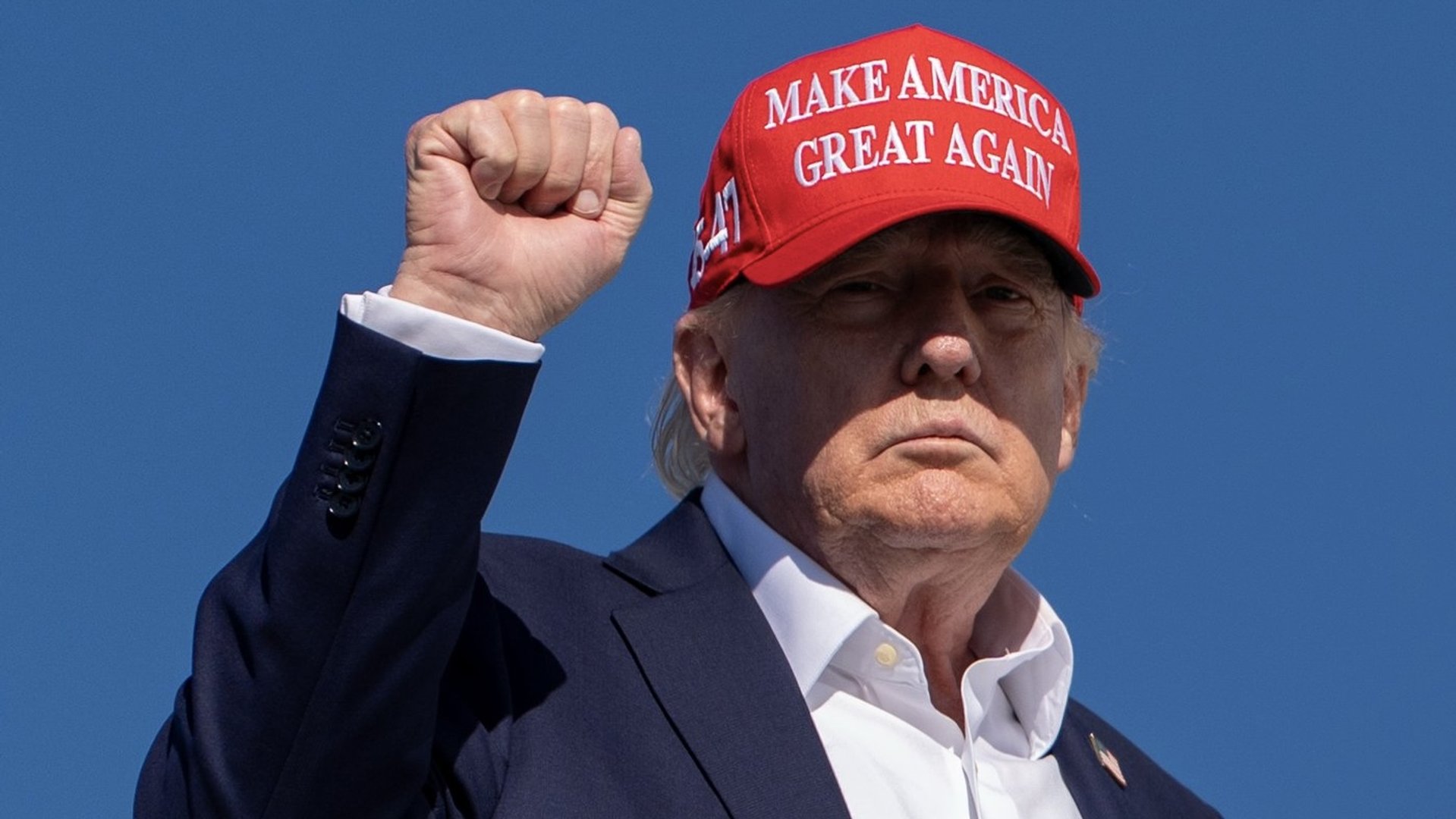
Furthermore, Fréchette said she fears another round of tariffs from the Trump administration.
“Will the Americans respond to these retaliatory tariffs? I have to tell you, I wouldn’t be surprised—so that, too, would trigger another round of tariffs, so we’ll have to wait and see,” she said.
As a reminder, on Aug. 22, the United States imposed 50 per cent tariffs on a large number of Canadian products, prompting the retaliatory measures that Ottawa is set to implement starting Tuesday.
Fréchette noted that these tariffs will impact Quebec exports worth $7.7 billion.
–This report by La Presse Canadienne was translated by CityNews