Quebec premier says new ‘buy local’ measures to inject $1.5B into economy as trade war with U.S. escalates
Posted September 8, 2026 9:24 am.
Last Updated September 8, 2026 5:23 pm.
The “buy local” measures implemented by the CAQ government on Monday evening — in the wake of the trade war with the United States — will inject $1.5 billion into Quebec businesses over four months, Premier Christine Fréchette stated on Tuesday.
For comparison, the government and public bodies awarded $26 billion in contracts in 2024–25 under the Loi sur les contrats des organismes publics.
In practice, the new protectionist measures adopted by the government will exclude fewer than 10 per cent of bidding companies that are American, she acknowledged.
‘A bully’
“Quebec is facing a bully,” she declared, referring to U.S. President Donald Trump, during a press conference at the Executive Council on Tuesday morning, following a special cabinet meeting.
“We have two choices when facing him. Either we bow down and end up on our knees, or we keep our heads high and stand tall. As premier, I have made my choice. I will stand tall for Quebec.”
The CAQ leader thus paused her election campaign to assume her role as premier as the trade war with the United States enters a new phase.
This follows the entry into force of retaliatory measures adopted by the federal government on Tuesday, a tit-for-tat response to the additional tariffs announced by the United States on August 22.
Consequently, the cabinet adopted a decree on Monday evening reserving certain calls for tenders for companies with operations in Quebec and Canada.
Requirements may also be imposed for goods to be produced and processed locally, and a 15 per cent preferential margin may be granted based on the level of Quebec or Canadian value-added content. Additionally, for all contracts valued at less than $9.2 million, the Ministry of Transport, Santé Québec, and the Société québécoise des infrastructures (SQI) will be required to mandate that at least 15% of the value of materials and equipment be of Quebec or Canadian origin.
The $9.2 million threshold aligns with international trade requirements. For contracts exceeding this amount, requirements could be imposed via decree.
Crown corporations will also be called upon to participate. They will be required to adopt a “Buy Quebec” procurement strategy and will be permitted to deviate from the current legislation governing public sector contracts.
The government will take an even stricter approach in the furniture sector, sourcing exclusively from Quebec suppliers, as this industry is particularly hard-hit by U.S. policies.
It has been reported that Quebec will prioritize awarding contracts in sectors where federal countermeasures are likely to have the greatest impact on Quebec businesses, and where local suppliers can step in to replace foreign ones.
“Contracts worth $1.5 billion could be affected by the measures we adopted yesterday (Monday),” Fréchette noted.
However, she acknowledged that, in practice, few companies would be excluded from the contract bidding process.
“It isn’t a very high percentage—under 10 per cent—but these are still companies that will find it harder to position themselves to win contracts, especially since we will be giving preferential weighting to bids submitted by Quebec companies.”
The premier indicated that the tariff measures implemented by the federal government would affect five per cent of Quebec’s imports from the United States, compared to 8.8 per cent for the rest of Canada. “This is the best data we have, given that the measures only came into effect at midnight tonight,” she noted, adding a note of caution.
Fréchette emphasized the concerns felt by Quebecers.
“I know that many of you are worried, worried about your jobs, your financial security, and the well-being of your families,” she pointed out.
Capitlizing on crisis?
Since the start of the campaign, her opponents have accused her of trying to capitalize on the current trade crisis by stoking voter anxiety, thereby garnering support for the government’s decisions and, by extension, for her party in the election.
They renewed those accusations on Tuesday.
“No, Christine Fréchette did not stand up for Quebec, as she claims this morning,” said PQ Leader Paul St-Pierre Plamondon. “Because if that were the case, Quebec’s request not to go into a generalized dollar-for-dollar approach would have been heard.”
“Did you notice that no other Canadian premier held a cabinet meeting last night, or any special meetings or major press conferences this morning? When people talk about exploiting a crisis, this is a clear example,” said Charles Milliard, leader of the Quebec Liberals.
“The other three leaders even, in some cases, appreciated the supporting role they were given. Think we made the right decision not to get involved in Madame Fréchette’s charade,” added Éric Duhaime, leader of the Conservative Party of Quebec.
“Even after Donald Trump, unfortunately, this state of instability we’re in will continue. And it’s important that we build on a strong economy,” said Ruba Ghazal, co-leader of Québec solidaire.”
The premier denied trying to turn the escalating trade war into a spectacle.
“If you speak to businesses, they will tell you this is no spectacle,” she argued.
Meanwhile, the government plans to establish a “task force” to help Quebec businesses replace their American suppliers with ones from within Quebec or elsewhere in Canada.
Pooling purchases is also being considered to ensure that supply costs remain competitive as when they were purchased in the United States.
Trump says no to Bombardier
It all comes a day after Trump posted on social media that he’ll block Bombardier sales in the United States.
Quebec-based Bombardier manufactures aircrafts and has some plants in the U.S.
“No more selling Bombardier in the United States – their products aren’t good enough. Over 50 per cent of their revenue comes from the United States,” the Truth Social post reads.
“If they want our market, they must build here and stop treating America like a ‘piggy bank.’”
Tran says preventing the purchase of Bombardier’s airplanes is going to be “very difficult.”
“First and foremost, they had their situation happening with Boeing with safety issues that came out on many years and that they’re actually paying fines, very recently on that,” he said. “So just shifting the whole supply chain will be very difficult and it will be affecting jobs and the economy of both sides of the border.”

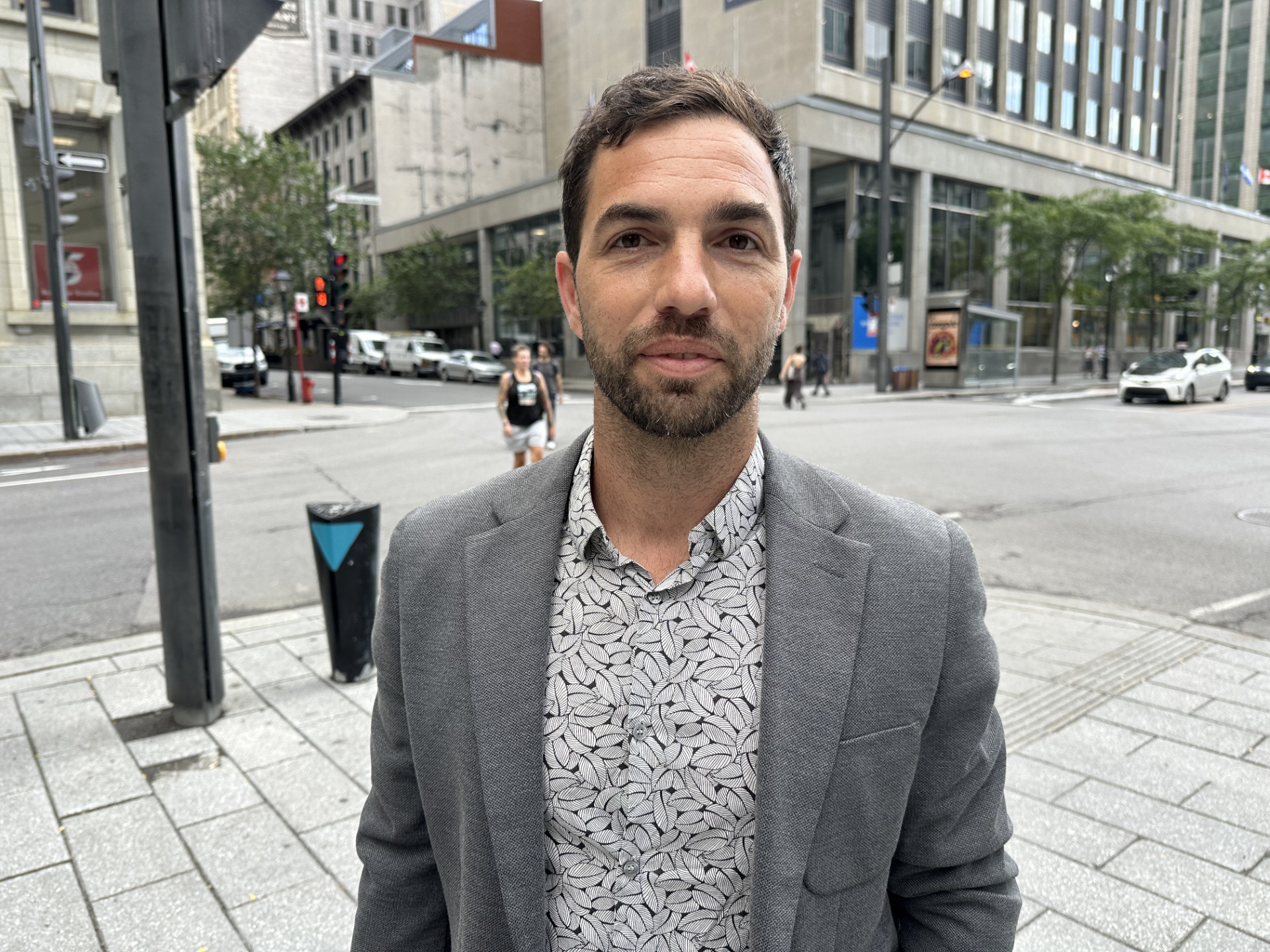


CityNews spoke to Montrealers about Bombardier being in Trump’s crosshairs.
“A lot of Bombardier’s planes are built in Canada, yes, but with parts originating from the U.S.,” said Lionel Sirerol. “So putting this tariff on, this banning actually Bombardier’s plane into the U.S. will be a disaster for American companies.”
“Honestly I think that Quebec should keep Bombardier within their walls just because it’s important for economic status and as well for jobs and overall just to make sure we don’t leave any turf to Donald Trump and to walk on us,” said Molly Desjardins.
“It doesn’t make sense,” added Prashant Baranwal. “These two countries, they have been together, they prospered together. I wouldn’t say they should fight on these petty issues. There are bigger wars to run, right… We have climate change, we have the Iran war going on.”
–With files from La Presse Canadienne, translated by CityNews