Pay more, get less: Advocates denounce cuts to public transit, demand more investment amid Quebec elections
Posted September 14, 2026 12:13 pm.
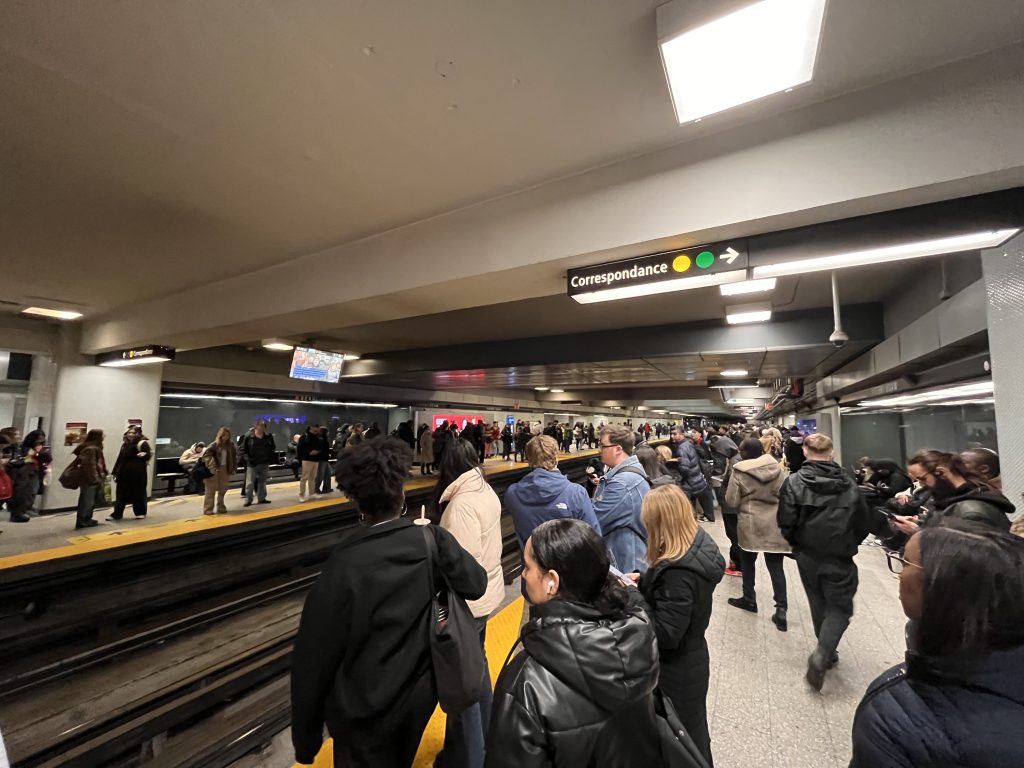
Public transit advocates are calling on the Quebec political parties to commit to increasing investments amid what they say are declining services.
An analysis by TVA showed that wait times for evening service on some STM routes in Montreal tripled over the last decade, even as ticket prices have gone up. The report also showing that the service was less frequent on many routes, with wait times on some routes like 121 more than doubling from 10 minutes to 24 minutes after 8 p.m., despite the STM calling the route the second busiest line.
Last year, the transit agency raised the price of a monthly pass to $110, by five per cent increase and double the inflation level, according to Trajectoire Québec, a public transit advocacy group.
“It is deplorable that users pay more and more every year to have less service than before the pandemic,” said Brian Nash, a spokesperson for Trajectoire Québec.
“The reduction in service is putting us in a dangerous spiral where the service is less attractive, meaning that fewer people will ride public transit, which means less revenue, which means we have to cut operations, meaning it’s less attractive, and so on. It is unacceptable,” Nash added.
STM’s annual report showed that the number of passenger trips on its network declined by 6.6 per cent in 2025 compared to the previous year. The agency attributed the decrease to population decline in the region as well as strikes by its workers.
In a statement to CityNews, STM said that variation in service levels over the years could be due to many factors.
“The transformation of certain areas, demographic shifts, the introduction of new infrastructure such as the REM and the SRB Pie-IX, bus network overhauls, and numerous construction projects throughout the region all have an impact on service coverage and operating speeds,” said Amélie Régis, a spokesperson for the STM.
Régis said that STM had only recovered to 80 to 85 per cent of the pre-pandemic ridership levels.
“The level of service in 2026 will be 95 per cent of that in 2019, for both buses and the metro,” Régis added.
In an open letter published last month, Trajectoire Québec asked parties to commit to dedicating 50 per cent of all transportation infrastructure investments to be on public transit infrastructure and to increasing funding to transit agencies every year by five per cent, reversing the cutbacks under the outgoing Coalition Avenir Quebec (CAQ) government.
“The provincial government is asking (transit agencies) to ‘optimize’ spendings, but we are now at the point where the STM and the other sociétés de transport in the province cannot optimise anymore without cutting the service,” Nash said.
“The provincial government abandoned public transit and the plan to improve it two years ago.”
The group also demanded investments in revamping STM’s metro system and the construction of transit corridor on Montreal’s East End and a tramway between Gatineau and Ottawa.