REM extension: New details, including schedules, for Deux-Montagnes line opening next month
Posted October 28, 2025 11:09 am.
Last Updated October 28, 2025 6:29 pm.
New information about the upcoming Deux-Montagnes branch of the Réseau express métropolitain (REM), which remains on track to open Nov. 17, was shared on Tuesday.
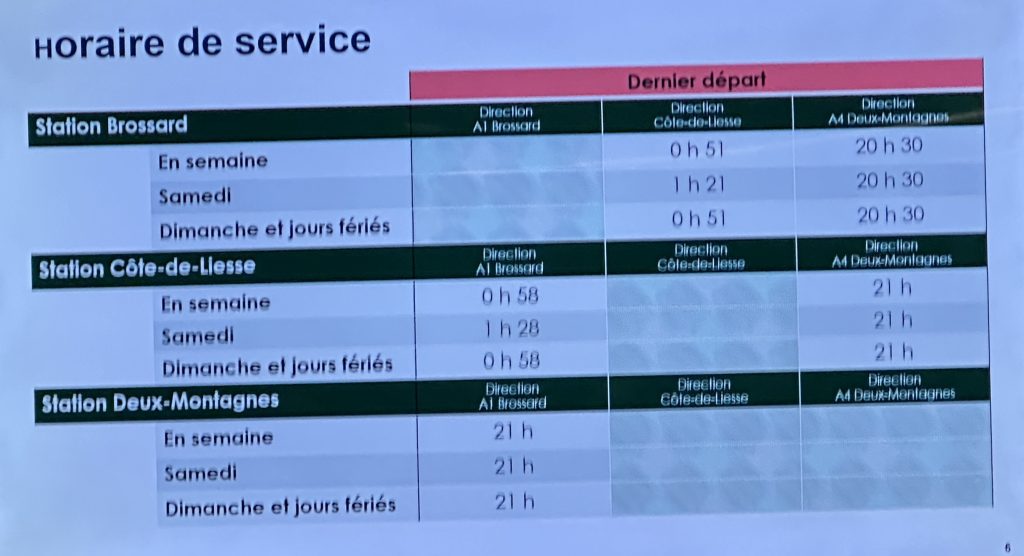
The Autorité régionale de transport métropolitain (ARTM) says the Deux-Montagnes segment, an extension of the existing Brossard line, will see its first trains depart those stations – Deux-Montagnes and Brossard – at 5:30 a.m.
The last REM train to Deux-Montagnes will leave Brossard around 8:30 p.m. and from the Côte-de-Liesse station around 9 p.m.
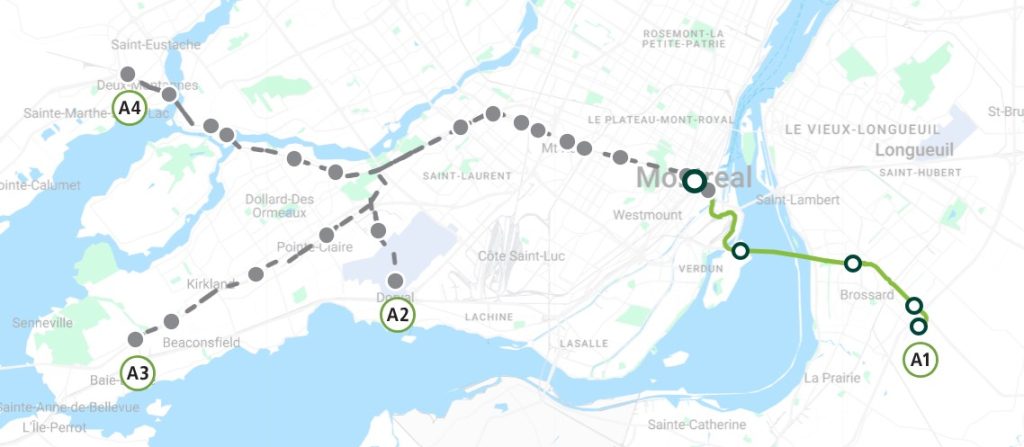
This will allow for testing on another segment – the Anse-à-l’Orme branch – scheduled to open next spring.
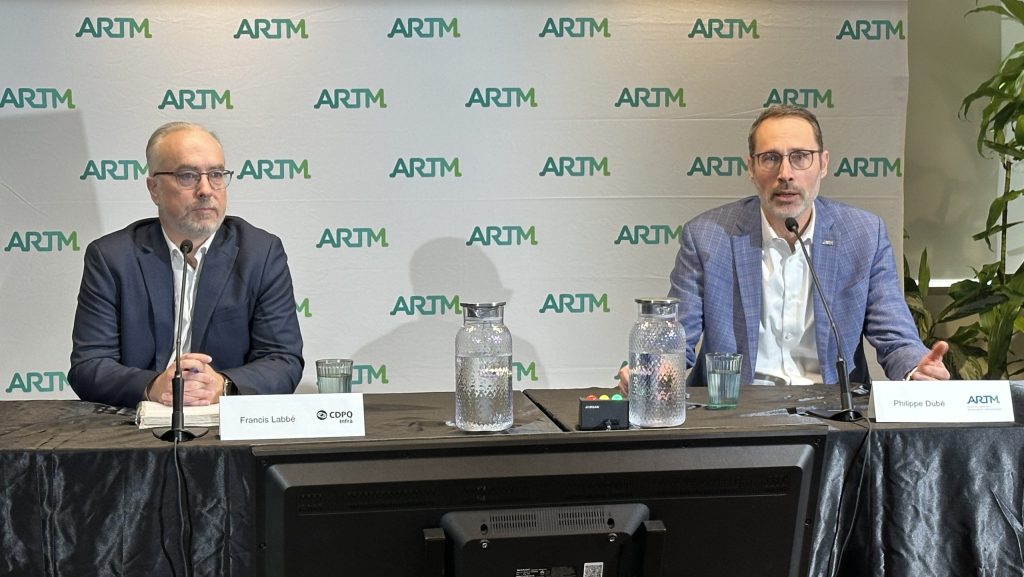
“If people have to commute towards their home after, let’s say, 9 p.m., there will be alternatives,” said Francis Labbé,
deputy director for media relations at CDPQ Infra. “But we ask people that they consult their transit planners like Chrono or Transit.”
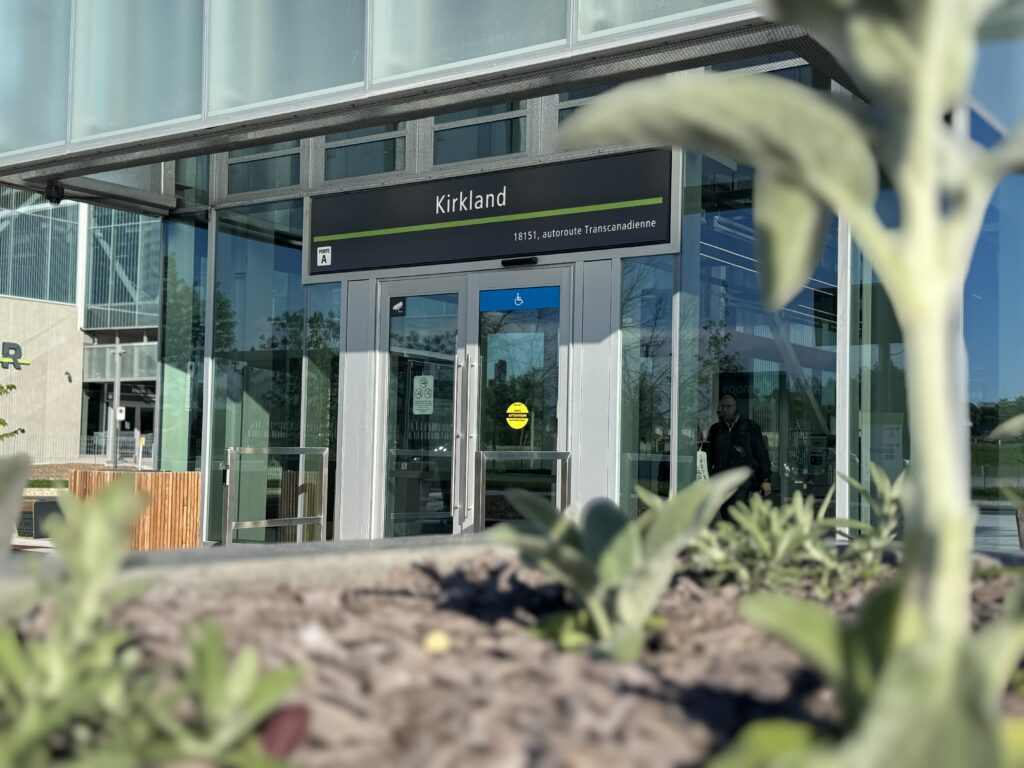
It’s all part of the northwest expansion of Montreal’s light-rail system. The new branch of the REM network includes 14 stations, three of which connect to the Montreal metro system – at Bonaventure (orange), McGill (green) and Édouard-Montpetit (blue).
The first five stations of the Brossard REM line opened in July 2023 and connect the South Shore to downtown.
Service will continue between Brossard and the Cote-de-Liesse station in Saint Laurent with the last departure at 1 a.m. The opening of these new stations comes after the first phase between downtown Montreal and Brossard that opened in 2023 had been plagued by a number of delays forcing commuters to find alternate modes of transportation.
“Two years ago, if an outage would occur, it would last, if the systems would have been necessarily rebooted, it would have lasted at least an hour and a half,” said Labbé. “The same thing that we did two years ago that took an hour and a half or two hours would take 20 minutes right now. There’s a lot of improvements that have been made on the equipment for our operators as well.”
“We think if it goes smooth on the launch, like the first week, there’s no shutdown, no problem, people will take the REM,” said Philippe Jacques, co-general manager and spokesperson for Trajectoire Quebec. “It’s a game changer. It’s very fast. It’s a lot of frequencies. When it’s reliable, it’s really a game changer for people to leave their car back home.”
Bus network
With the opening of the Deux-Montagnes branch comes a reworking of bus networks. The goal is to provide better coverage with increased frequency and extended operating hours, particularly in the evenings and on weekends.
Starting Nov. 10, exo will deploy its new network in the Laurentians sector.
For the Société de transport de Laval (STL), adjustments will be made to the bus network on Nov. 15.
The Presqu’Île sector, covered by the Société de transport de Montréal (STM), will see its bus routes redesigned in spring 2026 following the commissioning of the Anse-à-l’Orme branch of the REM.
ARTM says teams at those respective transit authorities will be on the ground to inform users during the transition.
Bus services to support transition
ARTM says the mitigation measures implemented since the closure of the Deux-Montagnes train line will be temporarily maintained once the REM opens. Those measures are bus services linking the Deux-Montagnes and Sainte-Dorothée, Pierrefonds-Roxboro and Sunnybrooke stations and Central Station or the Côte-Vertu metro station.
In the event of an unplanned REM service disruption, those bus routes will take over to provide alternative transport options
The interconnection with the Mascouche commuter train line will not be available upon the opening of the Côte-de-Liesse REM station.
Integrated fare system
To access the REM, users must have an All Modes A, AB, ABC, or ABCD fare card, which provide access to all modes of public transit within their fare zone. It will be possible to upgrade a monthly bus pass to an All Modes pass for use on the REM at metropolitan ticket offices, STM booths, and exo points of sale, for an additional fee.
Once completed, the 67-kilometre REM network will have 26 stations and is scheduled to cost $9.4 billion.
The final leg of the system, linking to Montréal-Trudeau International Airport, is scheduled to open in 2027.
Montrealers who spoke to CityNews say they’re excited for the upcoming changes.
“I’ll be able to take the REM from McGill directly to Université de Montréal where I go to university, so that’ll be really useful for me,” said Noam Boussard, Université de Montréal student.
“I’m from Bromont, but I’m staying right on Édouard-Montpetit for my studies, so it will be easier to get from Bromont to here because I can just get dropped off at Brossard and then take the REM and arrive right here,” said Alexandra Matte, Université de Montréal student. “So I’m very happy about that.”
“I think there’s so many people that are really happy about this development in infrastructure,” said Noam Boussard, Université de Montréal student.
–With files from The Canadian Press