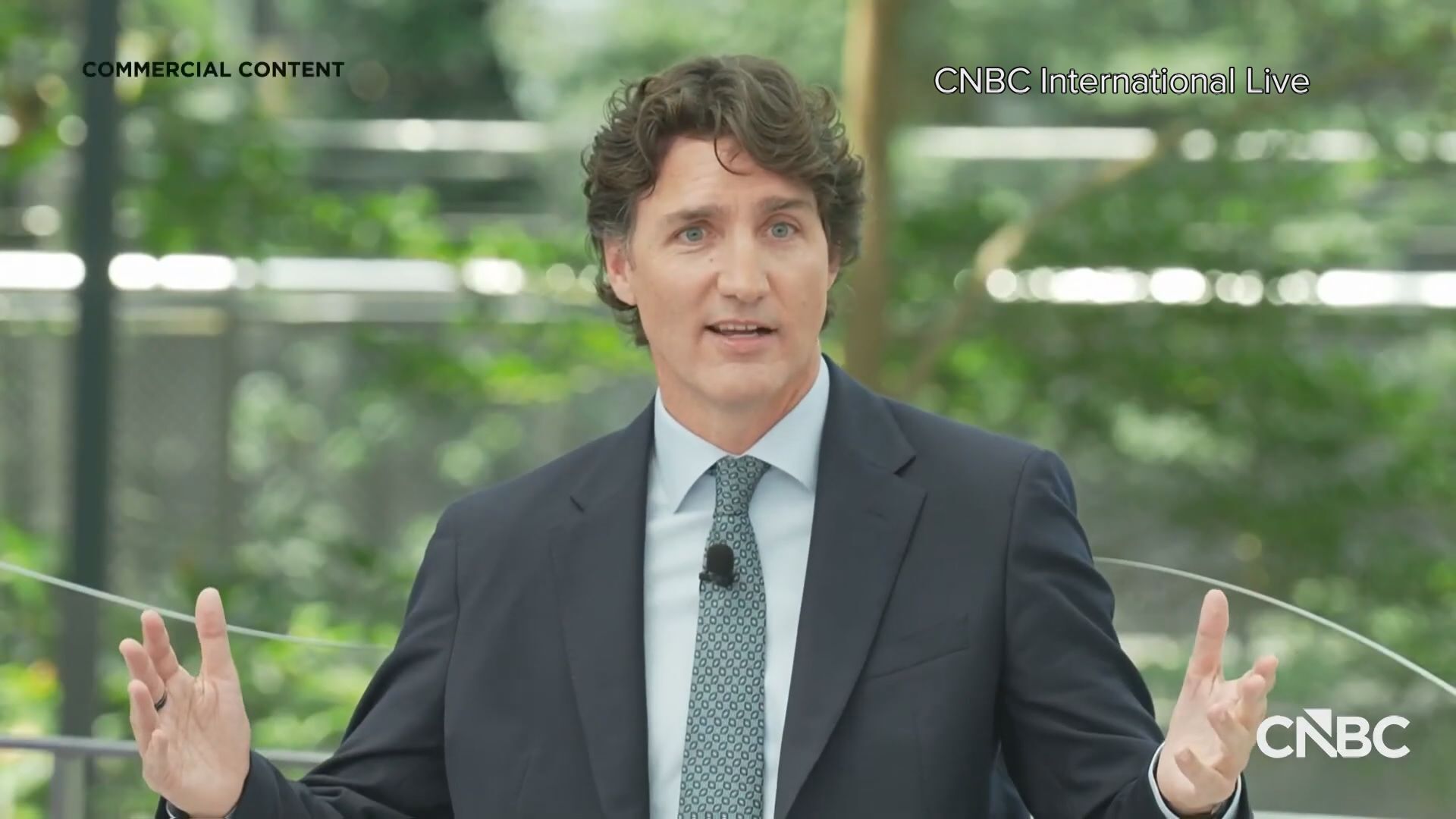
Quebec tables expanded secularism law; critics argue it will ‘deepen divisions within society’
Posted November 27, 2025 7:17 am.
Last Updated November 27, 2025 5:52 pm.
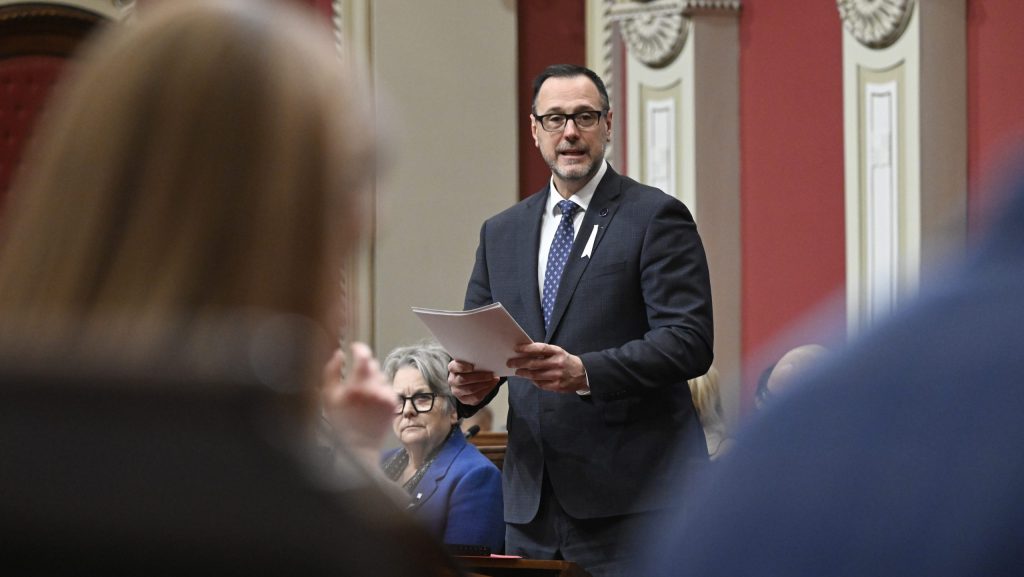
The Quebec government tabled legislation Thursday aimed at strengthening secularism in the province.
The bill, tabled by Secularism Minister Jean-François Roberge, extends Quebec’s religious symbols ban to people working throughout the education system, from daycares to CEGEPs and universities, as well as to private schools.
Roberge says a grandfather clause will apply “under certain conditions.”
The bill would also ban full face coverings, such as the niqab, for post-secondary students. It would ban prayer and other religious practices in public institutions, most notably CEGEPs and universities.
At a press conference Thursday afternoon, Roberge said that, if the bill passes, prayer rooms in educational institutions across Quebec won’t be permitted anymore.
“CEGEPs and universities are not temple or church or those kind of places,” Roberge said.
Roberge added that the CAQ government introduced the law to claw back some of the accommodations made for religious practices.
“Because we wanted to accommodate and accommodate and accommodate, we went too far,” Roberge said. “And people in Quebec said, ‘Really? We want this?’ And they said, ‘No, it’s not normal.’ So, we changed the rule.”
The new bill would also prohibit communal prayer on public roads and in parks unless it’s authorized by the municipality. People who defy the ban could face fines of up to $375, while groups could face fines of up to $1,125.
The legislation would also place some restrictions on government funding of subsidized private religious schools in the province. It says schools cannot be granted accreditation if they teach religion during school hours or if they select students or personnel based on religious criteria.
The bill invokes the notwithstanding clause of the Charter to shield it from some constitutional challenges.
“Even though Minister Jean-François Roberge’s bill stipulates that educators already in the profession who wear religious symbols will have acquired rights, it closes the door to thousands of women who wear the hijab. Because let’s be frank, it’s veiled women who are targeted by this bill,” said Sylvie Nelson, president of the SQEES-FTQ.
“These women aren’t proselytizing with children aged six months to five years; they’re educating them and offering an educational program. They do it well and are appreciated by parents.”

A sociologist at the McGill Institute for the Study of Canada, Daniel Béland, says the bill is a diversionary tactic by an unpopular government that has seen multiple high-profile scandals such as the SAAQclic and Northvolt.
“I think it’s more of a diversion attempt or an attempt to change the conversation or change the channel if you want, considering all the other problems that they have faced in recent years and recent months,” Béland said.
“The base of the CAQ, they love it. They want more secularism.”
Béland believes the bill being tabled ahead of next year’s provincial election shows it’s part of the CAQ’s electoral strategy to win back some of its voters who may have shifted towards Parti Québécois (PQ), as the Québec solidaire and Quebec Liberal Party, which have been critical of similar measures, are embroiled in infighting.
“The PQ is pushing hard the government for more measures on secularism and the PQ is ahead in the polls,” Béland said.
Critics say the measures unfairly target the Muslim community.
The Canadian Muslim Forum (CMF) says the legislation is a “significant setback for the fundamental rights and freedoms guaranteed to all Quebecers,” and that it undermines “the principles of equality, dignity, and social cohesion.”
The group argues the bill disproportionately impacts women, youth, and students
“The CAQ government must ask itself who truly benefits from targeting its own citizens’ rights and deepening divisions within society. These measures do not build cohesion, they erode it,” the CMF wrote in a news release.
“Suppressing personal religious expression contradicts the very foundations of a pluralistic and democratic Québec. Such policies send a discouraging message to young people that their identity makes them less welcome in public life.”
Muslim students at Concordia University say they are deeply troubled by the ban on prayer rooms in post-secondary schools.
They say the prayer room at Concordia is an important gathering place for the Muslim community, visited by at least 500 students a day. Some students say they chose to attend Concordia specifically because it has had a well-established prayer room for many years.
“The Quebec that I know is a Quebec that is inclusive for everyone, where everyone feels comfortable, everyone has freedoms,” said Maryam Laoufi, an advisor at the Muslim Student Association at Concordia University. “So I think that it’s very alarming to find ourselves in this situation.”
Ines Rarrbo, a first-year mechanical engineering student at Concordia, said she’s been using the prayer room every day since the beginning of the semester. “I feel like it’s a sense of community,” she said. “Every time I go in, there’s always people around.”
Samy Khelifi, the president of the Muslim Student Association, said the group numbers more than 5,000 students. “What happens to those 5,000 people if they all go pray out on random corners?” he said. “Muslims are being targeted and stigmatized for everything they do nowadays.”
Khelifi said the prayer room at Concordia is also used by students of other faiths, including Christian and Jewish students.
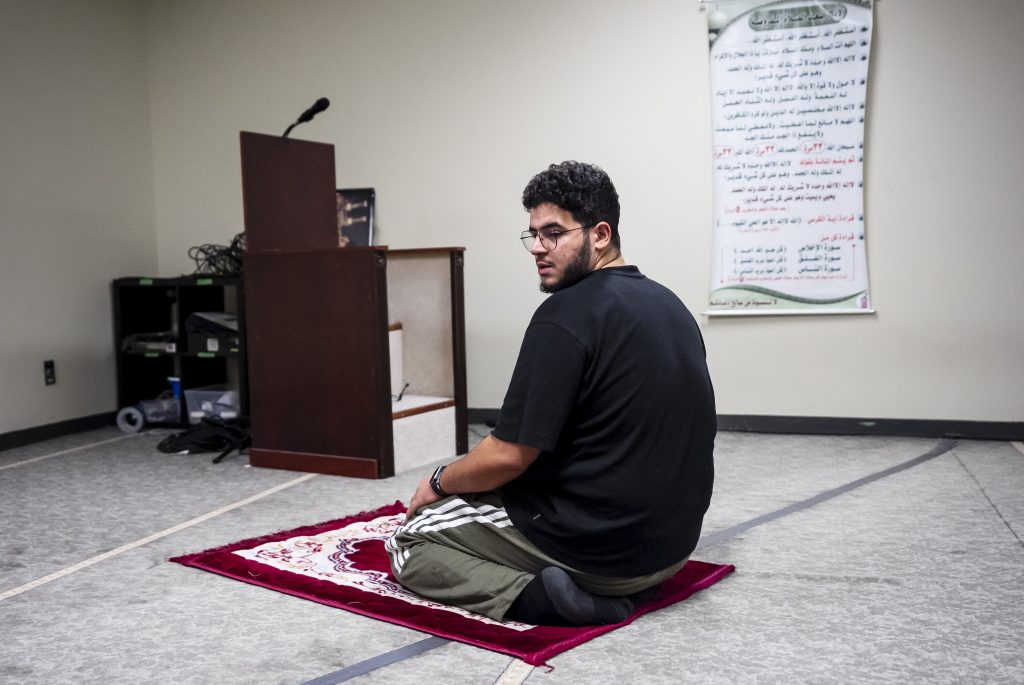
One metro station away, the president of Dawson College’s Muslim Student Association says Christian, Jewish, and Muslim students all share designated prayer spaces.
But under the new law, that setup could vanish overnight.
“You have a lot of people that are coming to the prayer space every single day and now they will have to find other places, undesignated places to pray,” Tehnoon Rizwan said.
Minister Roberge says he’s confident schools across the province will comply.
“The fact that we gave three years shows that we want the reflection to be done,” he said.
The legislation expands on Bill 21 from 2019, which prohibits the wearing of religious symbols for state employees in positions of authority, including judges, police officers and teachers.
The CAQ was prompted to expand the legislation following the Pelchat-Rousseau report, a response to last year’s Bedford School controversy in Montreal in which teachers were suspended for alleged toxic behaviour, including intimidating students and staff.
Quebec passed Bill 94 on Oct. 30, which was specifically aimed at strengthening secularism in the Quebec school system.
–With files from Zachary Cheung