LeoMed: Changing the way Quebecers receive home care
Posted January 3, 2026 8:59 am.
Last Updated January 3, 2026 9:28 am.
A Quebec-based health-care platform is transforming home care across the province, allowing patients to receive hospital-level support without leaving their homes.
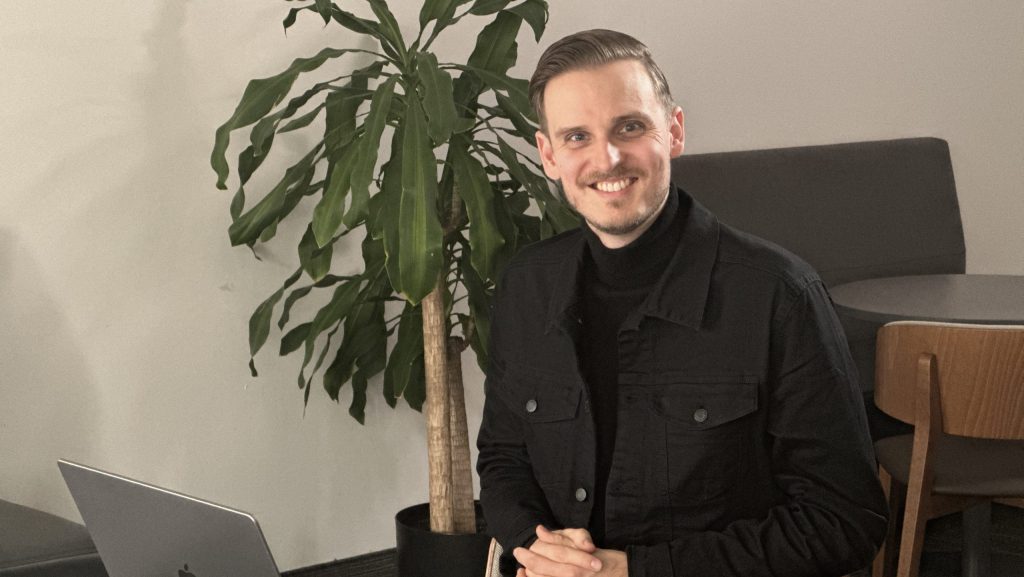
The platform, LeoMed, was created by Joseph Aubut, a medical graduate and tech entrepreneur whose own childhood hospital experiences inspired him to find better ways to care for patients.
“I knew that I wanted to do something to help other people,” he said.
Childhood hospital stays shaped his career
Aubut spent much of his youth in hospitals due to lung problems. He recalls his first major hospitalization in high school.
“I remember having this weird back pain that I didn’t understand. I Googled it, and it just didn’t make sense, and it kept getting worse and worse,” he recalled.
He remembers the sudden escalation from routine checkup to emergency care.
“I started coughing, and then I remember going to the family doctor with my mom. The family doctor listened, then moved more and more quickly, and then ran to the desk, writing a prescription saying, ‘You have to go right away to the ER. There’s a problem with your lung. You have a pneumothorax.’ Like, a what? A pneumo? And then I just went to the ER, and the surgeon came down between two surgeries, told my mom to go out, laid me on a table, and just put a tube in my chest because a pneumothorax is basically a hole in your lung.”
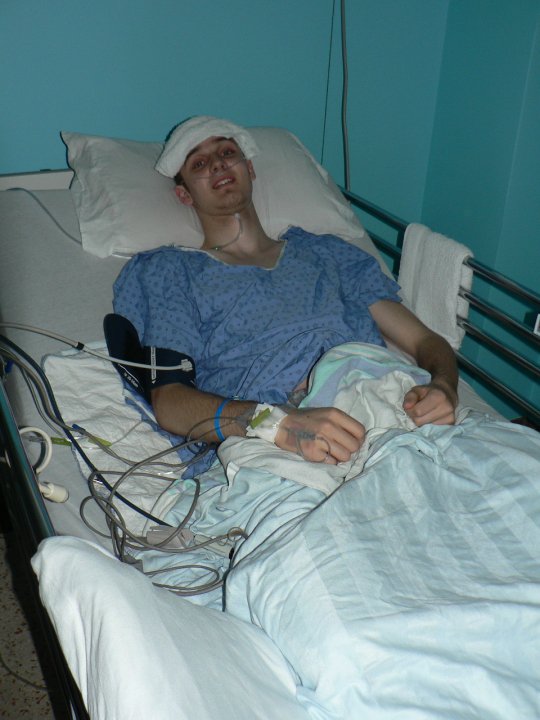
Aubut’s health struggles continued with repeated episodes, giving him a deep understanding of what it is to be a patient.
“All that uncertainty, and realizing how fragile health is, and how we take it for granted, but it can just, you know, go away quickly like that. And what happened is that I had it again and again and again — four different episodes, two on each side.”
These experiences informed his approach to health care.
“I’ve always said that every clinician, every health-care administrator, every person in government dealing with health care should at least be hospitalized once a year and remember what it is living that experience.”
From medicine to technology
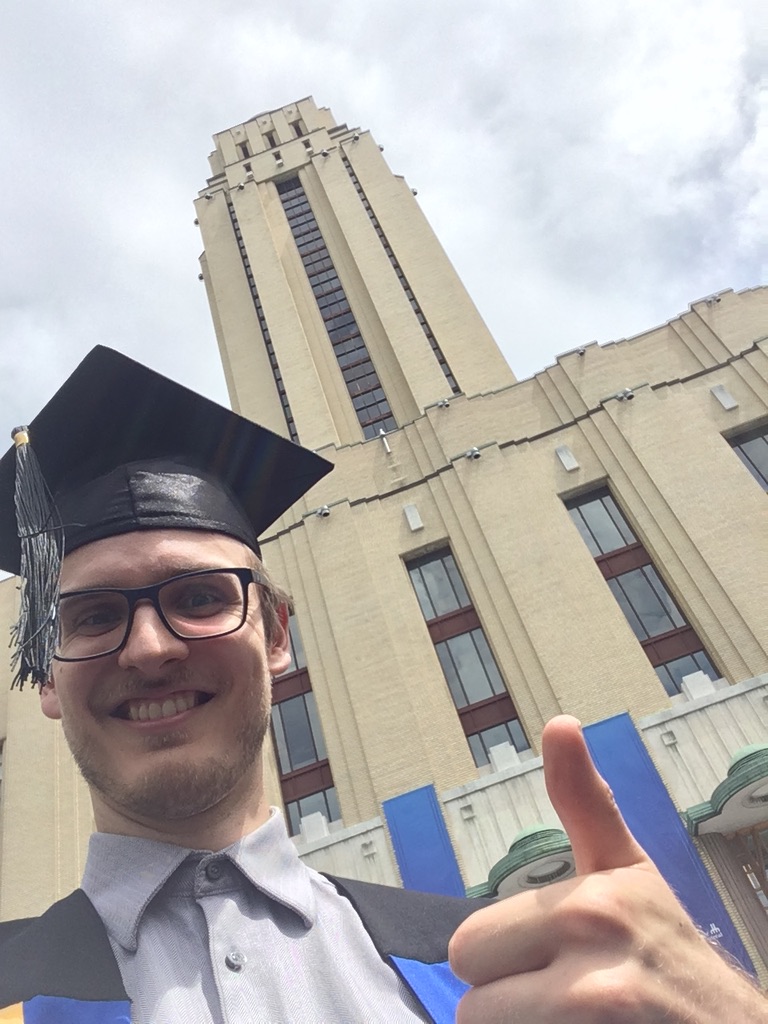
After earning his medical doctorate (M.D.) from the University of Montreal in 2017, Aubut shifted his focus to technology. He had long been interested in finding ways to improve health care through digital tools.
“I was very frustrated when I was doing my internship and part of my residency, when I saw that a lot of the tools we wanted to deploy, we didn’t have any control over them. Basically, they were very hard-coded. That means, in general terms, it is what it is. You can’t modify it, you can’t fine-tune it to your preference. And let’s say we wanted to add a form for pediatric patients, we had to wait on the vendor, on the software team, to develop it, and it could take six months or a year to finally have that feature. Our hands were tied,” he explained.
This frustration inspired the creation of LeoMed, a platform designed to give health-care teams more flexibility and control over patient care.
“LeoMed is, in one sentence, a care orchestration tool. It’s primarily targeted towards people in hospitals: nurses, physicians, and administrators.”
How LeoMed works
The platform combines remote patient monitoring, patient engagement, and care orchestration. Patients can track vital signs such as blood pressure or blood sugar from home, while clinicians can communicate securely through video calls, chat, and automated reminders.
“Basically they’re still hospitalized but they’re at home. And then you can follow up with them either through video conference, chat, forms, tasks, reminders, teachings, and that’s all automated for them. And that basically allows where we feel like we’re missing hospital beds, but in fact we have eight million hospital beds pre-built in our homes. Eight million in Quebec, 30 million in Canada, they’re all available.”
Aubut stresses that the platform is highly adaptable to different hospitals and patient needs, from chronic care management to short-term, acute care. Patients receive guidance on pre- and post-surgery care, medication management, and more.

Early results and impact
LeoMed has been implemented in more than 20 hospital departments across Quebec. The platform has improved both efficiency and patient outcomes.
“In terms of being able to assist the team, there was a team of nurses that was reduced because there were medical leaves and all that. So, even at a reduced team, they were able to have 125 per cent output than what they had before. So, at 70 per cent of the team, they had way more output just because we were able to do a lot of the manual work of data collection from the patient for them and they really sift through it and identify which patients were the best to prioritize. There’s been in one study up to 20 per cent less family doctor visits after being followed up, up to 30 per cent less of re-hospitalization, 30 per cent less of re-admission in the ER, and there’s been lots of different financial gains in terms of the additional beds that are added for the hospital home.”
Clinicians report the platform has made their work more manageable.
“I remember showing that to an anesthesiologist here in Montreal and him getting like water-eyed and saying, ‘Do you realize how you’ve just democratized IT for me? IT has always been this black box that I could never touch. And now you sort of just like brought it into my life and I can have an impact on how I’m following my patients. Like I don’t think you realize what you just did.’ And me feeling like, wow, it’s going like full circle on what I’ve always wanted to be and to do.”
Looking ahead
Aubut believes that home-based care will continue to grow in Quebec, particularly with tools that allow hospitals to personalize patient care.
“There’s a lot of changes happening in the province, and we believe that having the tools that allow them to personalize that change can really expand this care-at-home-at-scale, and giving them the tools for all kinds of different departments, either before, during, after, automate lots of different manual tasks and help them really follow the patients acutely and chronically. So, there’s a lot of things happening here, and I think it’s quite exciting.”
For Aubut, the platform represents the culmination of his personal and professional journey.
“I could see myself and them, right? And see, wow, I’m basically having this privilege of participating in this change that I always wanted to have from the get-go. The care, the support that I didn’t have and where I felt lost in the health system is now a reality for a lot of those patients. They’re able to go back home and celebrate their wedding anniversary with their family and their wife, and even while being hospitalized, or just feeling this support and this secure system there to help them, all of them.”
Reflecting on the bigger picture of health care, Aubut emphasized the importance of seeing it as a shared responsibility.
“I think it’s easy to forget that we’re all patients one day or another, right? Health care isn’t just an outside problem. It’s a problem that will affect all of us — our parents, ourselves, our loved ones, our children, our friends — and to try to move from a ‘me’ mentality and switch it to a ‘we’ mentality, where we can try to work together. I think that there’s a lot of goodwill in all those different parties, and I think we’re getting there, and I’m quite optimistic.
“But we must not forget that change in health care is a change for everyone, and it’s something not to be underestimated.”