Kirkland blue-collar workers go on strike Wednesday, Thursday

Posted March 2, 2026 11:30 am.
Last Updated March 4, 2026 3:05 pm.
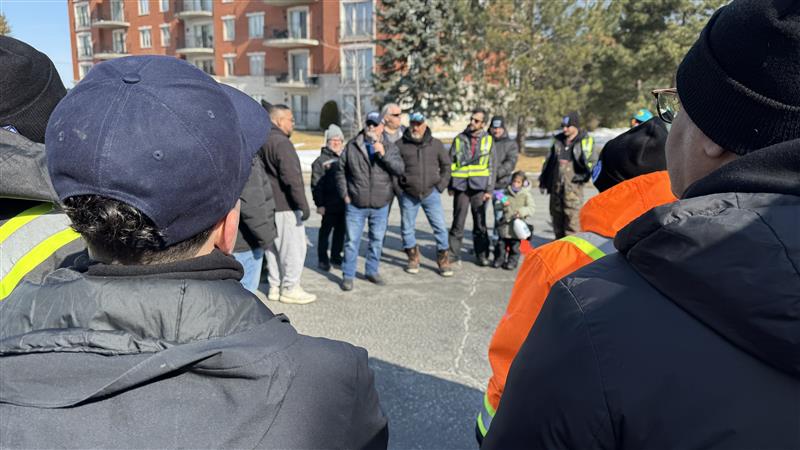
Blue-collar workers in the City of Kirkland will hold a two-day strike on Wednesday and Thursday this week.
The strike by these blue-collar workers, who are members of the Syndicat des cols bleus regroupés de Montréal, is scheduled to take place from March 4 at 12:01 a.m. to March 5 at 11:59 p.m.
“Our members are proud to serve the citizens of Kirkland, but they cannot tolerate continued impoverishment and a lack of respect for their vital contribution,” said Jean-Pierre Lauzon, President of CUPE 301. “This strike mandate sends a strong signal to the City: it is time to bargain in good faith and reach a fair collective agreement.”
He said the union is seeking improved work-life balance and competitive wages.
“We’re bargaining in good faith and asking for work-family balance,” said Lauzon. “We’re asking for fair wages, and negotiations are stalling because we’re seeking a four-day workweek, like elsewhere.”
“Workers here deserve the same as other blue-collar workers across the province, especially on the Island of Montreal, where we negotiate under the same union,” he added.

Essential services will be provided. The Administrative Labour Tribunal (TAT) ruled that these services, which had been agreed upon by the parties, were sufficient.
“The union expresses its sincere regret for any inconvenience caused to the population of Kirkland, which depends on these workers on a daily basis for the proper functioning of the community,” said Lauzon.
In its decision, TAT noted that garbage, compost, and recycling collection are provided by subcontractors.
It also took into account the fact that this strike will take place in winter.
“If the city continues to hold its position, there could be an escalation in pressure tactics,” concluded Lauzon.
The agreement guarantees the availability of on-call workers who will be able to perform various tasks, such as spreading abrasives or clearing sidewalks and streets, depending on the amount of snow or ice.
This on-call availability of employees also applies to major water main breaks, “filling holes that are dangerous to traffic,” and picking up debris that affects road traffic “in a dangerous manner.”
–This report by La Presse Canadienne was translated by CityNews