Rare manuscript fragment among new heritage acquisitions at Université de Montréal
Posted July 9, 2026 8:08 pm.
Last Updated July 9, 2026 9:29 pm.
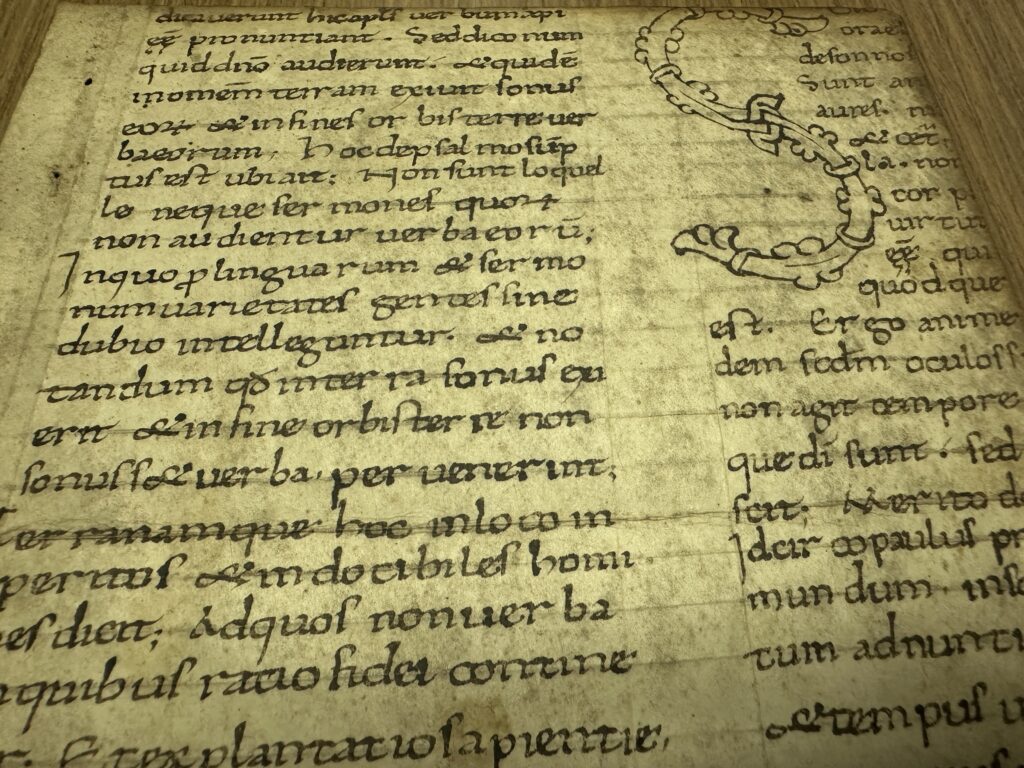
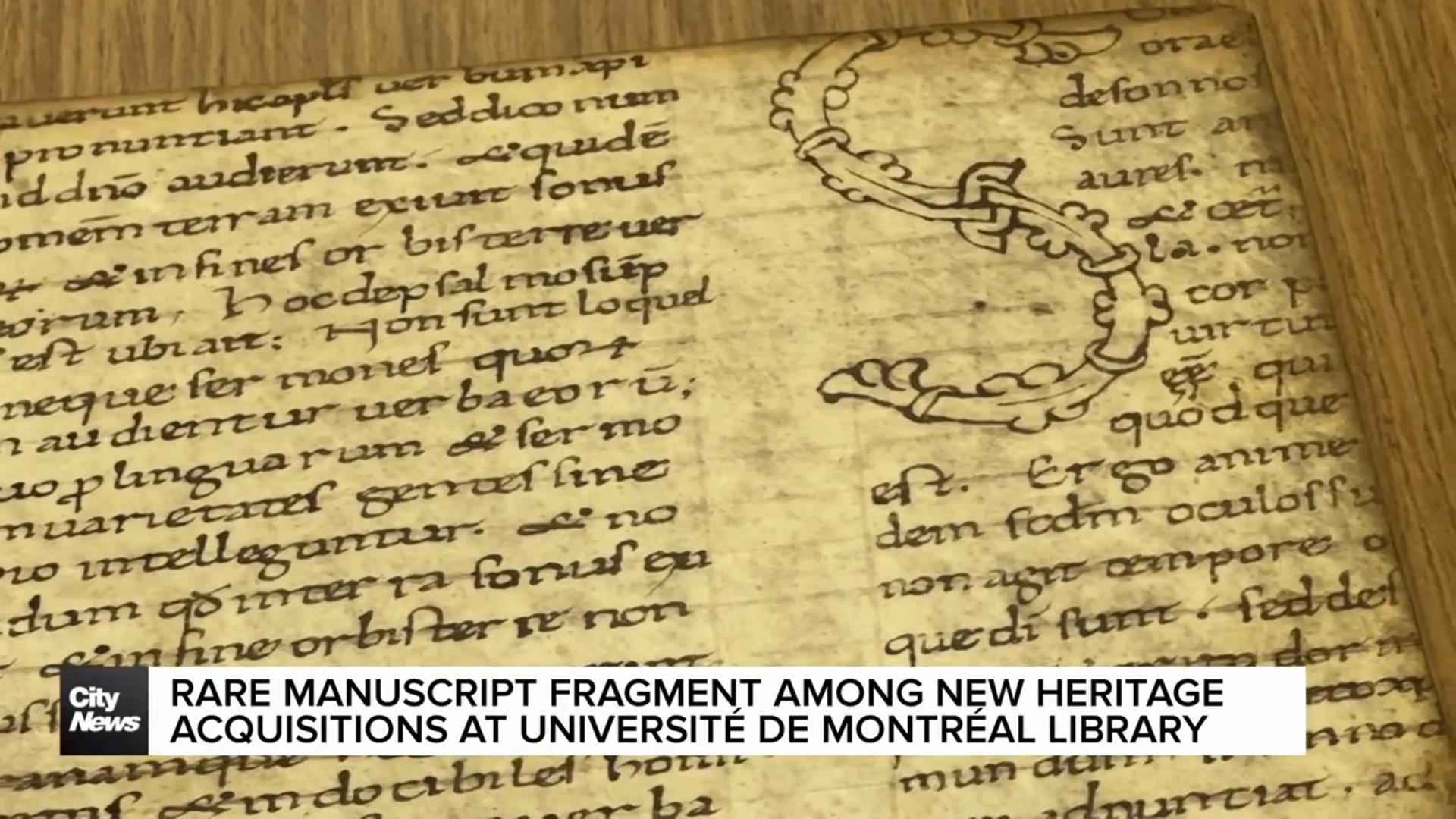
L’Université de Montréal has expanded its heritage collection with seven rare acquisitions spanning more than 1,000 years of history, including a manuscript fragment dating to around the year 900 that is now among the oldest documents preserved by a Montreal university.
The works, acquired through a $250,000 endowment fund supported by donations, have been added to the university’s Rare Books and Special Collections Library, which houses about 150,000 documents.
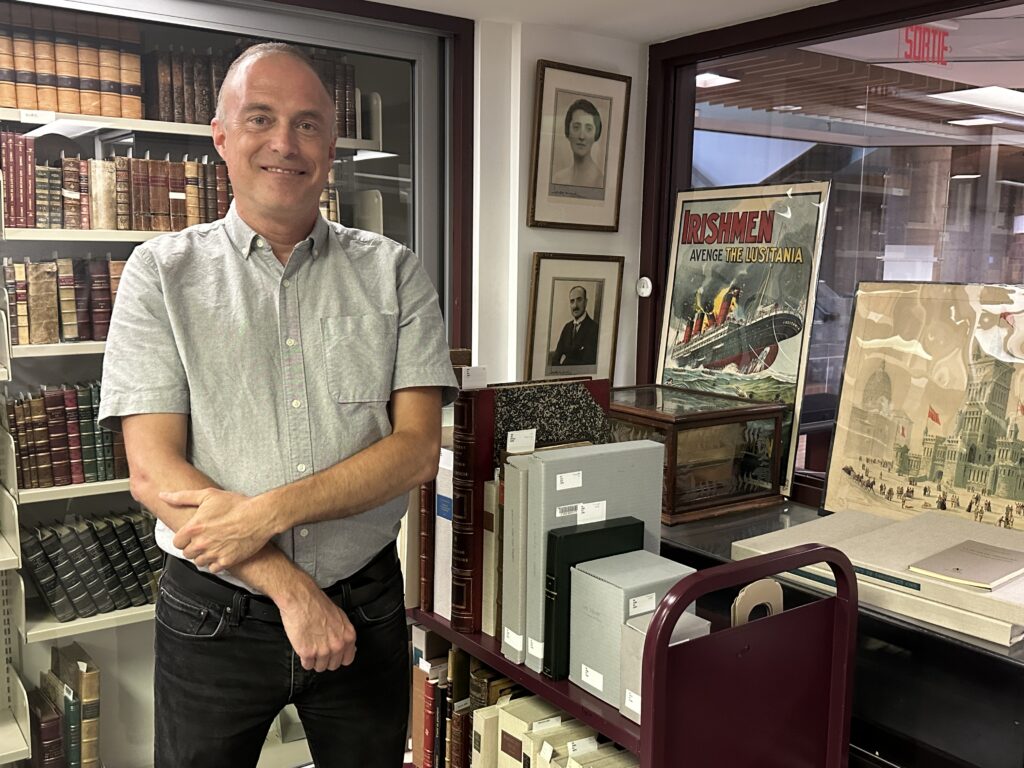
“We recently acquired seven very valuable documents thanks to the generosity of donators, of philanthropists, of people who are interested in books,” said Mathieu Thomas, librarian at the Université de Montréal’s Rare Books and Special Collections Library.
Together, the acquisitions offer a glimpse into how knowledge was created, preserved and shared across centuries — from medieval handwriting and early printing to the evolution of medical illustration.

Medieval fragment offers glimpse into Carolingian writing practices
The parchment fragment, written in Latin on animal skin, dates to around the time of Charlemagne. Its importance lies in what it reveals about the evolution of writing and manuscript production more than 1,100 years ago.
The fragment survived in an unusual way: it was reused centuries later as part of the binding of another book.
“It’s just one piece of parchment on two sides, like flesh and hair side that we call,” Thomas said. “It was actually part of a binding of a later book. And in those days, they reused parchment just to solidify the binding. So somebody discovered it in the binding of that book and took it out. And now it’s purchased as a standalone document.”
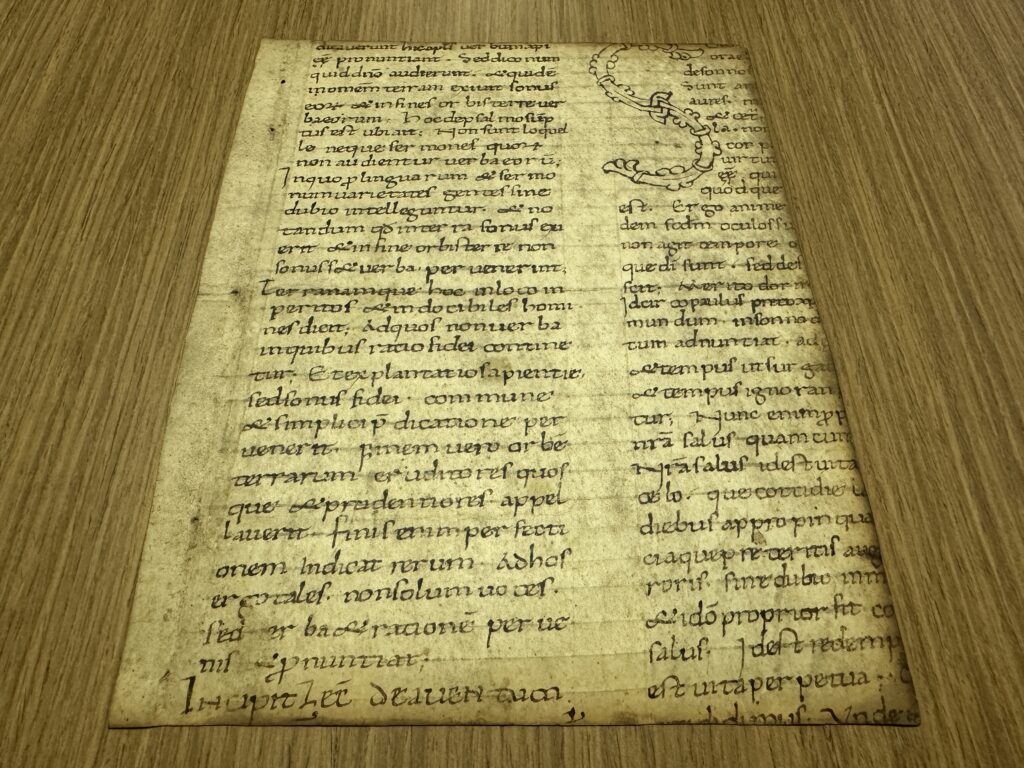
For researchers, the fragment provides a rare opportunity to study the development of medieval handwriting.
“It helps us get a sense of the evolution of script,” Thomas said. “Around those times, around the times of Charlemagne, that’s when you had what they call the Carolingian minuscule. It’s the small way of writing letters that really looks like our current way of writing. So it was like a standardization of writing in those days.”
The ability to study the original document is what makes the acquisition so significant.
“For us, for the students and professors to have a first-hand copy, not a copy, not a digitized version, just the real thing, to have it in our hands and be able to study it, it’s very, very interesting and very rare,” Thomas said.
A rare acquisition made possible through donations
The arrival of the collection marked an unusual moment for the library team. Most of the works were purchased from European booksellers.
“It was very exciting. It was kind of a bit like Christmas,” Thomas said. “When you open those boxes, and because most of them were purchased from booksellers in Europe, it really felt special just to take them out of the boxes. You smell them, you look at them, and we’re very excited because it’s not something that happens every day.”
Works spanning centuries of history
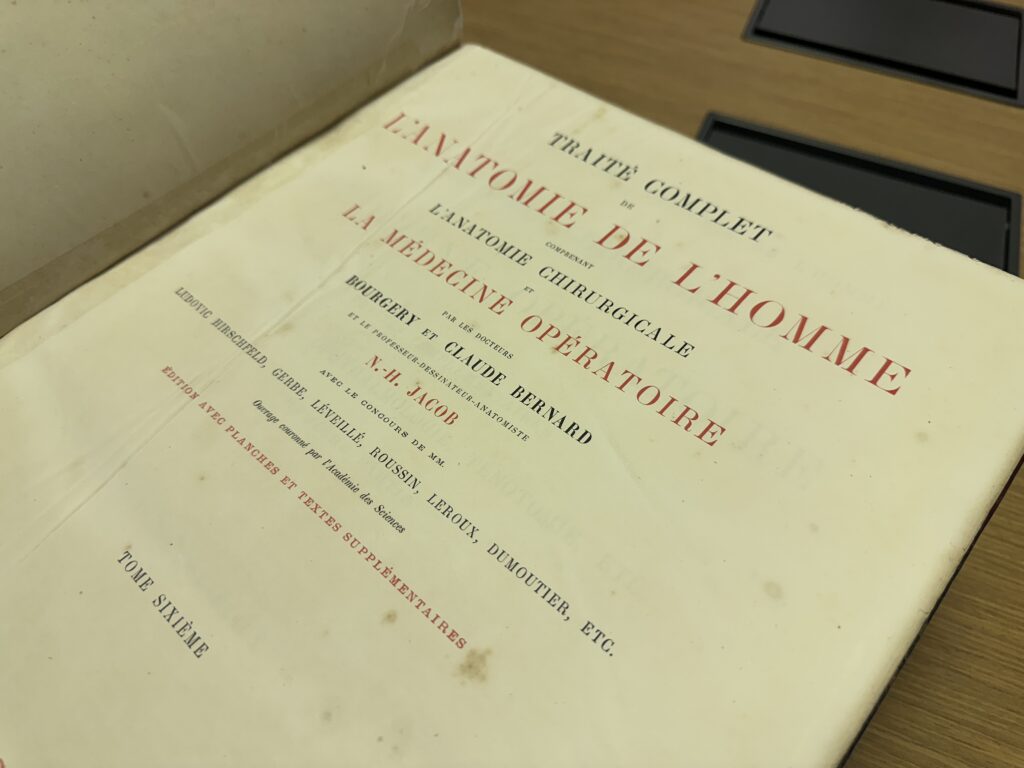
The acquisitions span centuries of history, including richly illustrated Books of Hours, an illuminated psalter, a rare French-language incunabulum — one of the earliest printed books from the first decades of the printing press — and a nine-volume French anatomical atlas containing more than 700 hand-coloured lithographs.
Thomas said the French-language incunabulum is particularly rare. The library already holds about 50 incunabula, but this work is one of only two in the collection that are not written in Latin.
The book examines legal and political questions surrounding the balance of power between the pope and the monarchy.
The final acquisition comes from a very different field: medicine. The anatomical atlas, produced in France in the 1860s, contains hundreds of detailed illustrations that were hand-coloured before photography transformed medical publishing.
“The images that are in that volume are just incredible to look at,” Thomas said. “Sometimes a little scary too, because they’re so realistic.”
More than museum pieces
The rare works were not acquired simply to be displayed.
The university intends for them to become resources for students, professors and researchers studying subjects ranging from medieval history to the physical construction of books.
“Mainly its purpose is to help for teaching and research,” Thomas said. “And we have professors that are specializing in medieval studies, medievalists.”

For medieval scholars, access to an original manuscript fragment from around the year 900 is particularly significant.
“To have access to such a document, which is very uncommon in North America — usually you would have to go to Europe to have access to those kinds of documents — so to have one, a real one here in Montreal is something really, really, really special,” Thomas said.
Why the original still matters
In an era when more historical documents are available online, Thomas says the value of original materials has only become clearer.
“There’s nothing that compares to having the original document in your hand,” he said. “The materiality of documents is also something that is studied now, not only the content of the text, but also the physical support, the actual page, or animal skin that it was written on.”
Researchers increasingly study not only what books say, but how they were made — the materials, craftsmanship and physical evidence left behind over time.
“Very often the format of a document has an influence on the content,” Thomas said. “The actual material that you’re using, be it like a manuscript that was written by hand or colored by hand, or the early printed books, they definitely have an effect on what information you can put forward.”
As digital collections continue to grow, Thomas believes original documents offer a connection that cannot be replicated on a screen.
“As we are turning more and more to digital sources, it’s as if we’re rediscovering the value of physical books and what they have to tell us.”
A collection open to the public
The Rare Books and Special Collections Library is primarily a resource for students, professors and researchers, but members of the public can also visit.
On the first Tuesday of every month, the library offers general visits showcasing some of its treasures.
“We’re open to the public,” Thomas said. “We’re not a museum; we’re a library; we’re here for people to use our collections and consult them.”