36th International First Peoples Festival opens in Montreal with world premiere of ‘Nitassinan’
Posted August 4, 2026 10:23 am.
Last Updated August 4, 2026 10:57 pm.
The 36th International First Peoples Festival (FIPA) opened Tuesday in Montreal, bringing together Indigenous arts, cultures and stories through film, music, theatre, dance, visual arts, literature, installations and performances.
Taking place from Aug. 4 to 14, 2026, the festival celebrates Montreal’s Indigenous roots and its history as the site where the Great Peace of Montreal was signed in 1701, when Indigenous nations from across the Americas gathered to establish a historic peace agreement.
For festival director André Dudemaine, that history remains central to FIPA’s mission, with this year’s festival marking the 325th anniversary of the Great Peace of Montreal.
He said the festival also carries the symbolism of the Tree of Peace, a powerful image connected to that historic agreement.
A festival celebrating Indigenous creativity
Dudemaine describes FIPA as a place where Indigenous artists from different regions and cultures can share their work.
“This is a multidisciplinary festival about Aboriginal culture, and it presents the arts and creation of Aboriginal artists, mainly from the Americas but also from elsewhere in the world.”
The festival includes a large delegation of Māori artists from Tahiti, along with a major focus on Indigenous cinema.
Opening night features world premiere of ‘Nitassinan’
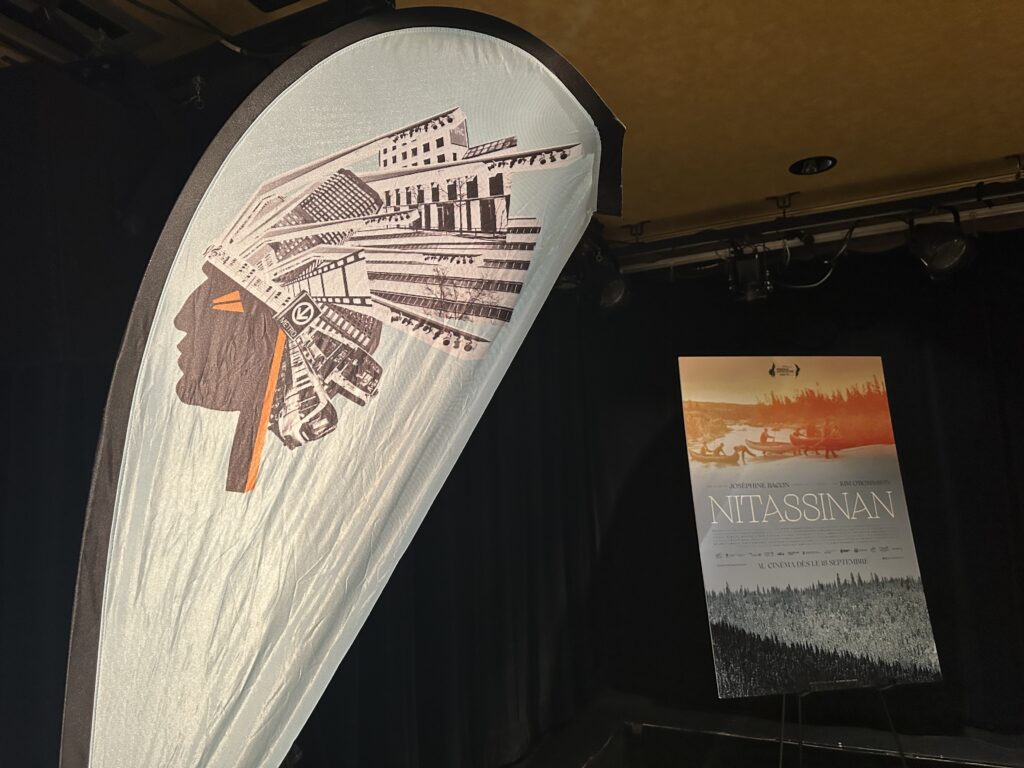
The festival opened with the world premiere of “Nitassinan,” a feature-length documentary co-directed by Innu poet and author Joséphine Bacon and filmmaker Kim O’Bomsawin.
The film is described as an act of love for the land and a tribute to the Innu people, exploring the deep relationship between the Innu and Nitassinan, their ancestral territory that has shaped their language, history and identity.
Bacon says the film examines how the territory now known as Nitassinan has been shaped by history and politics. She says she believes the film’s premiere is a natural fit for a festival dedicated to Indigenous peoples.
“I think it’s great because it’s an Indigenous festival. Today, Indigenous peoples are being honoured. So why shouldn’t the film’s premiere be honoured at the same time, as part of a festival celebrating Indigenous peoples.”
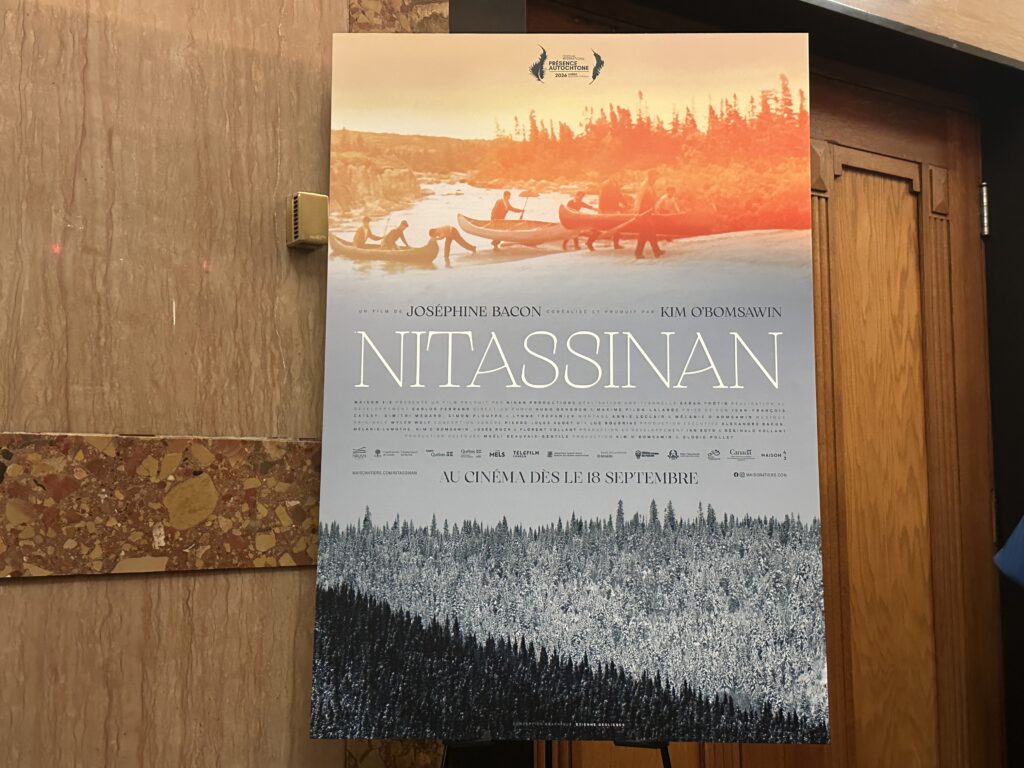
Bacon will headline both the opening and closing ceremonies of FIPA 2026. Following the premiere of “Nitassinan” on Aug. 4, she will also take part in the festival’s closing celebration, the grand concert “Here Stood the Tree of Peace” on Aug. 14.
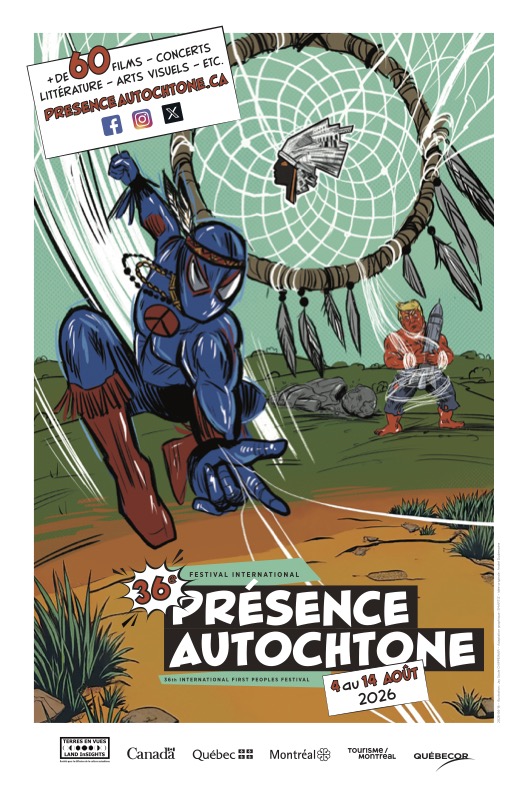
Enukunnu, the Spider Innu, represents peace and creativity
This year’s festival is guided by Enukunnu, the Spider Innu, an allegorical figure representing dreams, creativity, reconciliation and the power of imagination.
According to organizers, Enukunnu embodies the ability to weave new possibilities through art and storytelling, while encouraging people to imagine a world shaped by peace and harmony.
Indigenous cinema and arts take over Montreal
A large tipi will serve as a central gathering place at Place des Festivals, where visitors can experience celebrations featuring drums, performances and artistic presentations throughout the festival.
Dudemaine said the space is meant to represent the festival’s presence in Montreal.
“This is the signature of our presence in the city and, of course, the signature of the festival on this huge spot dedicated for artistic activities.”
He said the goal was not simply to occupy the space but to create a welcoming environment.
“We are not there to take the place; we are there to respect the place, and we will install a beautiful site where people can come and feel how we can feel safe on indigenous land.”
The program brings together a wide range of artistic disciplines, including Indigenous cinema, music, theatre, dance, visual arts, literature, installations and participatory creations.
“There will be a series of concerts by contemporary Aboriginal artists, and this is the place to discover new artists with brand new songs and brand new styles but all connected with their ancestral culture.”
Indigenous cinema remains a major focus of the festival, presenting works from around the world and offering audiences an opportunity to discover stories connected to Indigenous experiences, territories and perspectives.
This year’s program also highlights international Indigenous voices, including Tahitian poet Flora Aurima Devatine, a leading figure in Tahitian literature and the revival of the ancestral Polynesian language. A documentary dedicated to her will be presented during the festival.
A space for dialogue and connection
Through its programming, FIPA continues to create a space for reflection, cultural transmission and celebration of diversity, bringing together peoples, languages and artistic traditions.
Dudemaine says the festival’s message is connected to Montreal’s responsibility to carry forward the legacy of the Great Peace.
“We have to make this place a place of happiness and a place where we respect each culture and each person.”