Airport worker dies after being struck by aircraft in Montreal
Posted August 25, 2026 6:57 am.
Last Updated August 25, 2026 9:46 am.
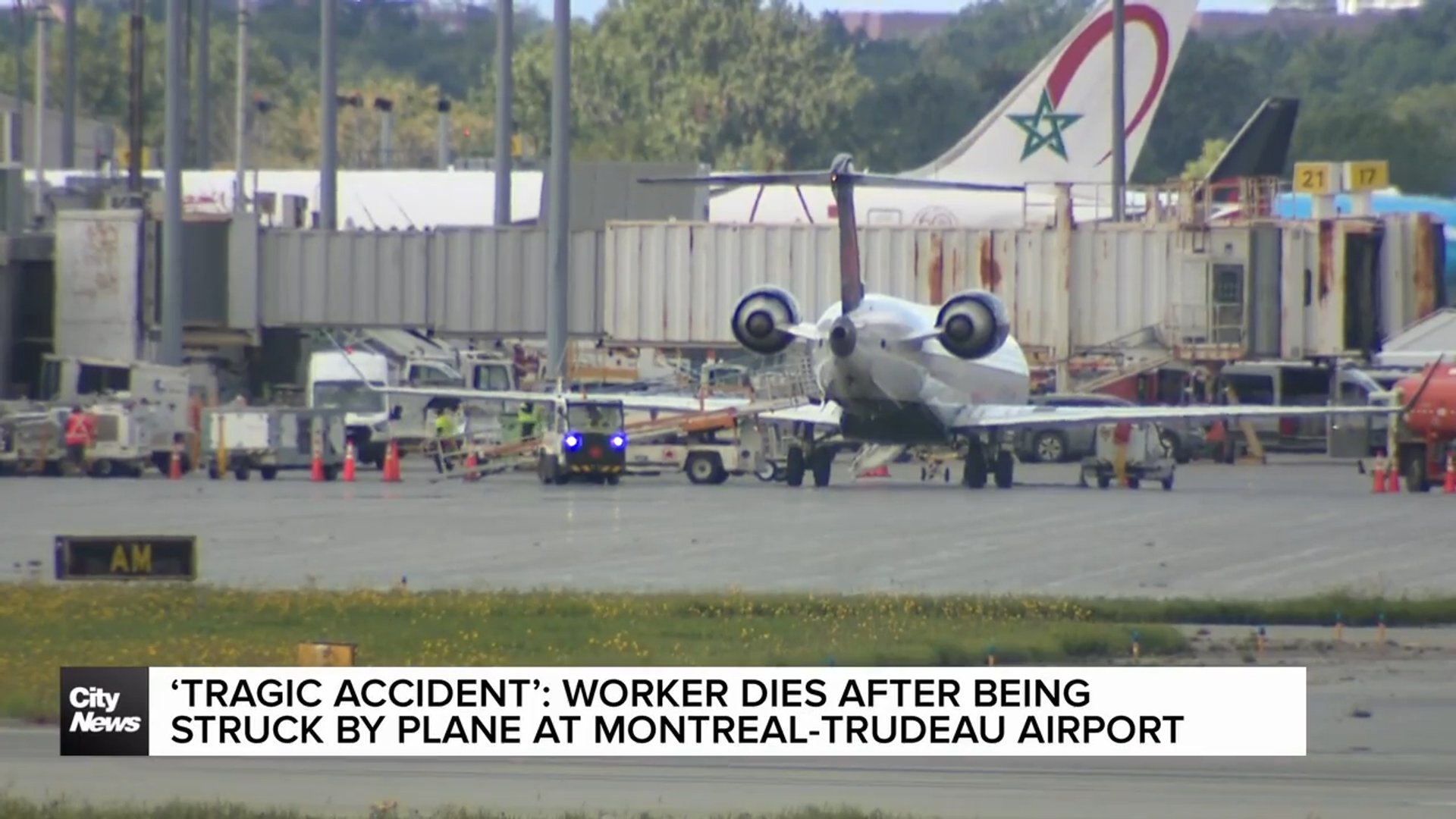
A ground crew worker has died after being struck by an Airbus 350 aircraft that was reversing on a runway at Montréal-Pierre Elliott Trudeau International Airport on Monday evening.
Emergency services were called to the airport around 7:30 p.m. The victim was taken to hospital and later pronounced dead.
Montreal’s airport authority, Aéroports de Montréal (ADM), said the worker was an employee of Samsic, a ground handling company that operates at the airport.
“The loss of a member of our airport community affects us all deeply,” said Yves Beauchamp, president and CEO of ADM. “During this difficult time, our thoughts are with the employee’s family, loved ones and colleagues, to whom we extend our heartfelt sympathy and sincere condolences.”
The worker was struck by a French bee flight that was preparing for departure to Paris. The airline company wrote in a statement the accident involved the aircraft and a pushback vehicle being used during ground operations. French bee says it is fully cooperating with Canadian authorities.
The coroner’s office was notified of the worker’s death and is mandated to investigate the causes and circumstances. Authorities are checking with the coroner’s office to determine whether the identity of the worker can be released.

Montreal police say the investigation has been transferred to Employment and Social Development Canada (ESDC).
“The investigation will determine if the employer, Samsic Assistance Canada Inc., acted in compliance with their obligations under the (Canada Labour Code), which requires federally regulated employers to protect the health and safety of their employees while at work,” an ESDC spokesperson told CityNews.
The Transportation Safety Board of Canada is also deploying a team of investigators. “The TSB will gather information and assess the occurrence,” a brief statement reads.
ADM says it’s implemented support measures for employees and passengers who witnessed the accident and has been co-operating with authorities since the investigation began.
Training protocols will be analyzed: expert
Describing it as a “very rare incident,” aviation expert John Gradek from McGill University’s aviation management program, explains what typically happens when a plane is being guided from the terminal onto a taxiway.
“For those minutes that are involved in pushing an airplane back in reverse, back to the taxiway, you need wingmen to basically provide guidance to the tractor who’s pushing his airplane back to provide information about what’s going on around it and to signal to the tractor driver that the path is clear,” Gradek said. “And I don’t know the specifics of what happened in this incident, but I believe it was one of those wingmen that got hit by the aircraft.
“And whether that was distraction, whether that was because the individual wasn’t paying attention, it wasn’t the aircraft’s fault, it wasn’t the pilot’s fault, it really was really a question of how the airplane was guided back that caused this incident to happen.”

Gradek says the ground company Samsic has been operated at the Montreal airport for three years now. He says part of the investigation will look into the company’s training protocols.
“The amount of time this person spent in training and the results of the training, how this person was qualified, did this person have the right training to do the work that he was asked to perform last night,” he said. “So that all is going to be part of the investigation. Yes, but there are some very, very specific and very intensive training programs and refresher programs that are in place to ensure that people who work airside at an airport involving ground equipment, airplanes, and people walking around that they’re very much aware of what’s going on and how best to do it.
“There is no radio communication with everybody. It’s all by hand signals.”
Gradek adds any lessons learned from the investigation will be shared with airports around the world.
“To make sure that we don’t have repeats of this type of incident, we all learn from the situation that happened last night, and that we adjust our training programs, adjust our dispatch programs, adjust our ground handling programs to make sure that this incident does not repeat itself,” he said.
“Airports are very dangerous places to work in, especially on airside, which is where this incident took place. You have aircraft that are constantly moving around, you have ground equipment and you have people walking around. So there has to be a very heightened level of situational awareness by individuals that are operating equipment or walking around a terminal airside.”
–With files from The Canadian Press