Quebec police chiefs call for ‘robust mechanisms’ to end corruption
Posted December 9, 2024 12:12 pm.
Last Updated December 9, 2024 5:43 pm.
Quebec’s police chiefs are vowing to continue working towards ending corruption in the province.
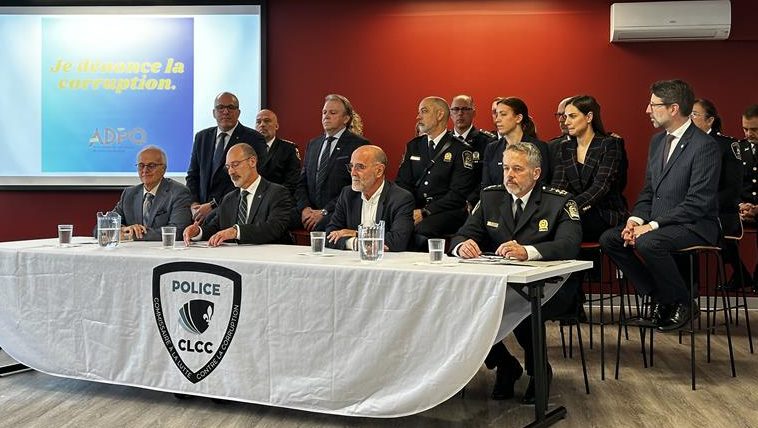
The Quebec Association of Police Chiefs (ADPQ) and Commissioner for the Fight Against Corruption (CLCC) held a joint press conference Monday on International Anti-Corruption Day.
“People who are aware, people who are seeing things, or hearing things, without this information we cannot conduct our investigation,” said Eric Rene of Unité Permanente Anticorruption (UPAC).
“We need the information from the whistleblowers because these crimes are not public, it’s behind closed doors.”

The conference highlights International Anti-Corruption Day, A day that’s been observed annually since the passage of the United Nations Convention Against Corruption in 2003. The groups are calling for a “united front” to encourage transparency and justice.
They are also asking that “robust mechanisms” be established to uphold integrity in public administration.
“The delays are quite long, for example, we have had 14 different investigations where we had to wait for over a thousand days just to access the information that we had seized,” Rene said.
The ADPQ says success is combating corruption relies on police investigators, investigative journalists, citizens and anti-corruptions organizations.
Didier Deramond of the Association of Police Directors of Quebec (ADPQ) says a new modernized framework is suggested for procedures to improve accountability for those who commit these crimes, demanding heavier sentencing.
“Corruption is still going on, that’s an ongoing process so everybody is adjusting to the new reality and we need to do the same thing,” he said.

“What we’re trying to say to the government that there is an urgency to act actually and we do need some actionable plan to change the criminal code to be more realistic to the work that we need to do.”
Rene explained that the Jordan decision in 2016, where the Supreme Court set strict rules for an accused to be tried within a reasonable time, is in part a reason where delays persist. In corruption investigations officers now seize electronics and servers containing millions of files.
The latest whistleblowing report from the CLCC showed there were 278 reports of misconduct received from Jan. 1 to Sept. 30. Thirty-eight per cent of those were deemed “serious enough to warrant investigation.”
“The victims, the victims are pretty much impact actually,” Deramond said.
Their recommendations cited cryptocurrency as an example of a crime that out dates the current criminal code, with other examples including the forgery of COVID-19 passports during the pandemic.
“While partial, this report illustrates the ongoing mobilization of authorities and citizens in this critical effort to restore public trust,” the ADPQ said in a news release.
Other participants at the news conference were the Inspector General of Montreal (BIG), the Integrity and Compliance Office (BIC), the Autorité des marchés financiers (AMF), the Autorité des marchés publics (AMP), the Permanent Anti-Corruption Unit (UPAC), and the Laval Integrity and Ethics Bureau (BIEL).
“If you see something, say something,” Deramond urged. “[And] there is no such little information, every information is good actually, a lot of information put together can lead to a major investigation.”