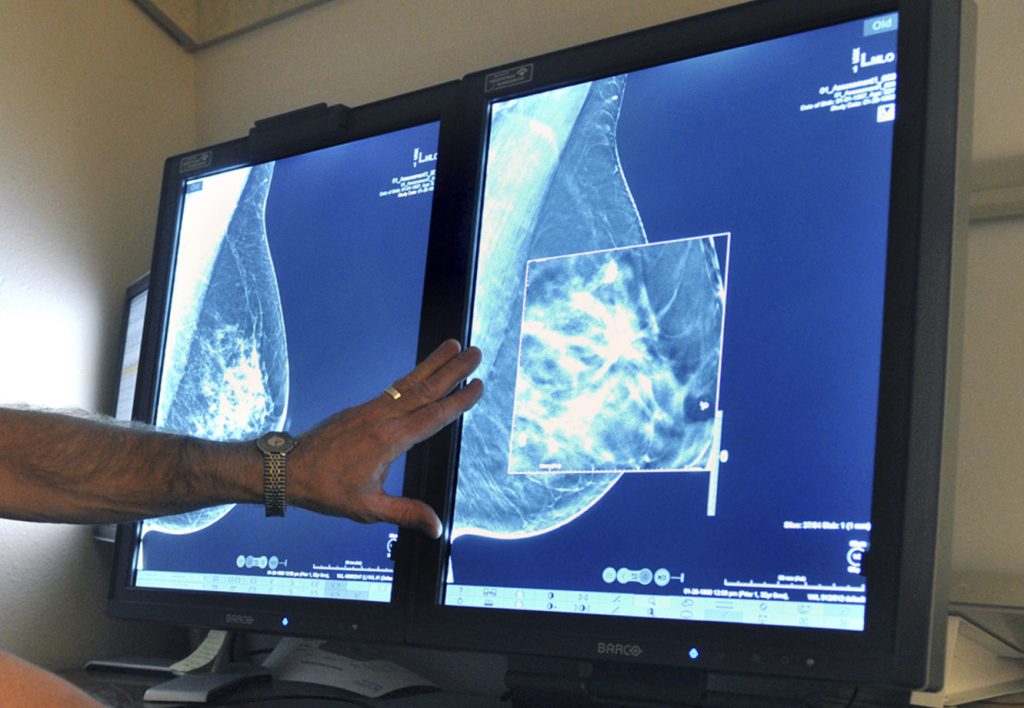
New home test in Quebec could help detect risk of breast cancer
Posted February 24, 2025 11:24 am.
Last Updated February 24, 2025 5:56 pm.
In an effort to detect breast cancer earlier in women, the Quebec Breast Cancer Foundation hopes that a new test, which it describes as revolutionary, will soon be available in homes across the province.
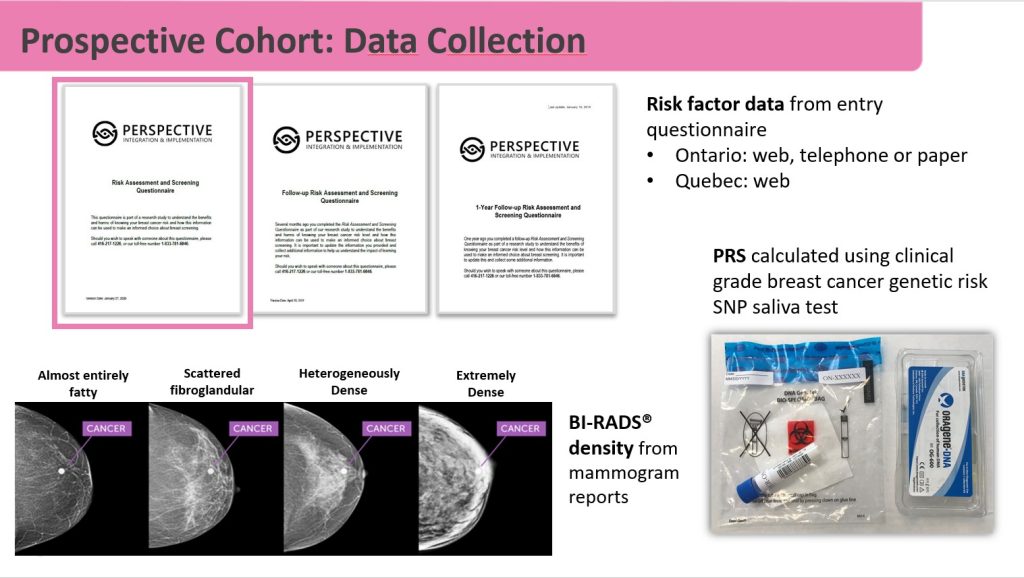
The test comes from the PERSPECTIVE study, which evaluated a new screening strategy that takes into account each woman’s risk. The tool developed as part of the study combines saliva analysis with a questionnaire to calculate each woman’s breast cancer risk in a personalized way. The questionnaire takes into account factors such as family history, breast density, hormone exposure and body mass index.
After being clinically studied on approximately 4,000 women, the tool is ready to be deployed to the population. The Quebec Breast Cancer Foundation expects the test to be approved by the end of 2025. After this stage, the tool will first have to undergo a pilot project in one region before it is available to all of Quebec.
Researcher at the CHU de Québec-université Laval research, Jacque Simard says the aim is to help capture the disease before it’s too late.
“All the goal of this is, of course, prevention, but also primarily early detection because we know that detecting breast cancer at stage one, currently the statistics say that the survival after five years, it’s about more than 98% in contrast to a stage four, which is about 20 to 25%,” he said.
“It’s to offer the best tool to be able to have a multi-factorial risk assessment taking into account not only the age, family story, mammographic density, but also these genetic components,” Simard added.
Currently, access to breast cancer screening is based solely on age. When they reach age 50, Quebec women are invited to have a screening mammogram every two years. However, one in six cancers is detected in women under 50.
“If we detect breast cancer early, at stage zero, the less chance we have of dying from it. The survival rate for cancer detected at stage one is between 98 and 100 per cent, while at stage four, it’s 23 per cent. We think that makes a difference and that this tool would allow us to equitably detect breast cancers earlier,” says Karine-Iseult Ippersiel, President and CEO of the Quebec Breast Cancer Foundation.

Once they know their risk factor, women will still have to have a mammogram to find out if there is cancer or not. Ippersiel adds that it is a choice to want to know your level of risk or not. “It’s like the breast cancer screening program; only 63 per cent of the population participates even though they are entitled to it,” she says.
“Our breast cancer screening program works well… from ages 50 to 74,” said Ippersiel. “We don’t want to change the screening method. We want to make this tool accessible so that women can know their cancer risk and make informed decisions earlier.”
Better use of resources
Breast cancer is the second leading cause of cancer death among Canadian women. By 2024, the Canadian Cancer Society estimates that 30,500 women will be diagnosed with cancer, representing a quarter of all new cases of cancer in women.
Once the saliva test is done and the questionnaire is completed, the woman will be able to know if she has a low, intermediate or high risk of developing breast cancer. From there, depending on her result, she can be followed more closely by her doctor, go for regular screening or have other tests, for example a magnetic resonance imaging (MRI) if she has significant breast density.
“We truly believe that there are reasons for hope because by this approach, we will be identifying women at younger age, and those who are at higher risk will have the best screening approach and maybe the best modality, which are frequently more sensitive,” Simard said.
The test has the potential to prevent mastectomies and save lives. “Earlier testing means less invasive procedures, faster recovery and a return to our most normal lives,” Ippersiel said.
It is also a cost saving for the health system. “A cancer at stage zero costs less than $15,000 to treat, while a stage four cancer costs $370,000. The system would be a winner all round in addition to saving lives,” emphasizes the CEO.
She also said a shortage of imaging technicians makes it difficult to access mammograms that can take months in some areas. The new test would help prioritize cases with high-risk factors.

“When you have a high risk of breast cancer, it’s almost certain that you’ll get breast cancer in your life. The key is to find it as early as possible to move on and not die from it,” explains Ippersiel.
The Quebec Breast Cancer Foundation would like women in Quebec to have access to their breast cancer risk score starting at age 30. Ippersiel says government authorities are well aware of the PERSPECTIVE project, but she wants to keep them on their toes to ensure they move forward with the test rollout.
“When we know that catching it at an earlier stage can actually save their life because it has a 98% survival rate. So we’re just trying to make a difference.” Ippersiel.
—
The Canadian Press’ health content is funded through a partnership with the Canadian Medical Association. Editorial choices are solely the responsibility of The Canadian Press.
–This report by La Presse Canadienne was translated by CityNews