Héma-Québec asking Black communities to donate blood for sickle cell anemia
Posted February 26, 2025 10:36 pm.
Last Updated February 27, 2025 2:32 pm.
Hundreds of patients in Quebec live with sickle cell anemia, a common hereditary blood disease that can be fatal.
Black communities have been affected particularly hard and often suffer in silence as one Black person in 10 carries the disease’s gene, making blood transfusions more difficult.
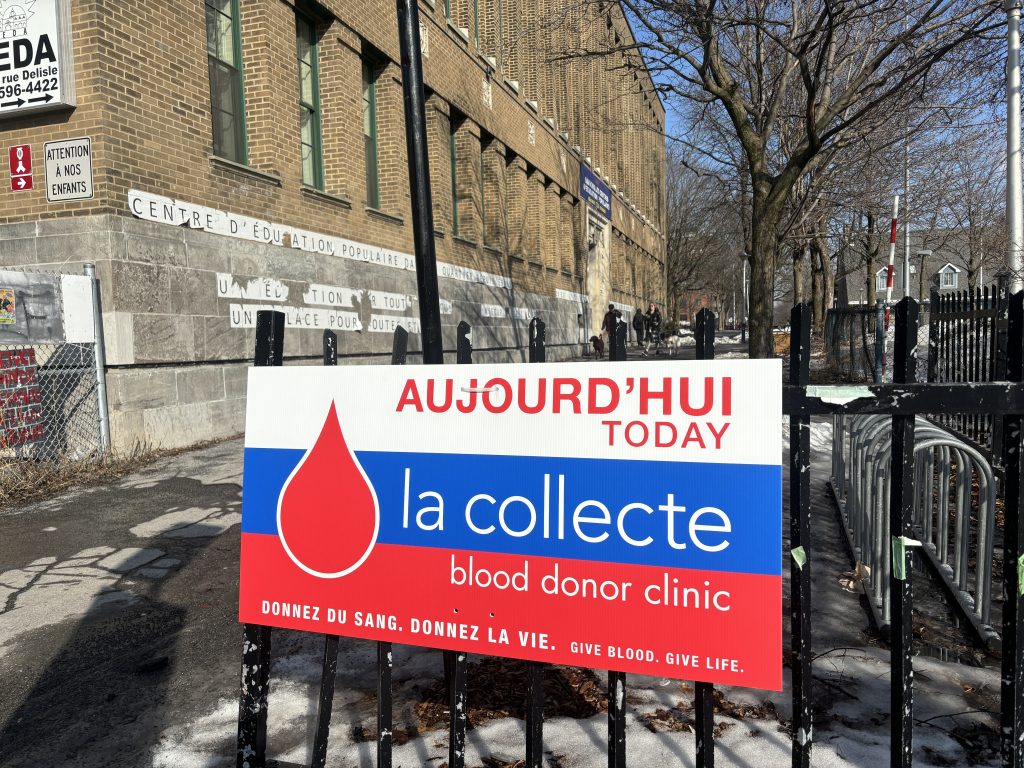
Héma-Québec and the Sickle Cell Anemia Association of Quebec are coming together during Black History Month to bring light to this issue and give a voice to those suffering and in need of blood donations just to survive.
With 130 blood donations needed for every patient with sickle cell anemia needing regular blood transfusions, the need is dire. Experts estimate that with the current yearly 26,000 donations, there is still a shortfall of 16,000 donations.
“Day to day, I have about eight medications that I take every morning just to make sure that my system is okay,” said Teddy Homère, a Montreal patient living with sickle cell anemia. “There’s this new medication I’ve been on for like maybe five years now, and it’s a game changer, so it helps me and it makes me live better.”

Often confused with anemia, an iron deficiency in the blood, easily cured with the right medications, sickle-cell anemia is an incurable hereditary disorder that patients must endure for their entire lives.
“Sickle cell is really a blood disorder of your red cells, that are deformed that are more rigid and also that you have less than regular people and that brings you multiple complications. When you have a crisis, it can cause a blockage in your blood vessels, which is going to cause you to have really painful moments that you have to go to the hospital and take morphine and such medications,” said Daphnée Gousse, the vice president Sickle Cell Anemia Association.
RELATED:

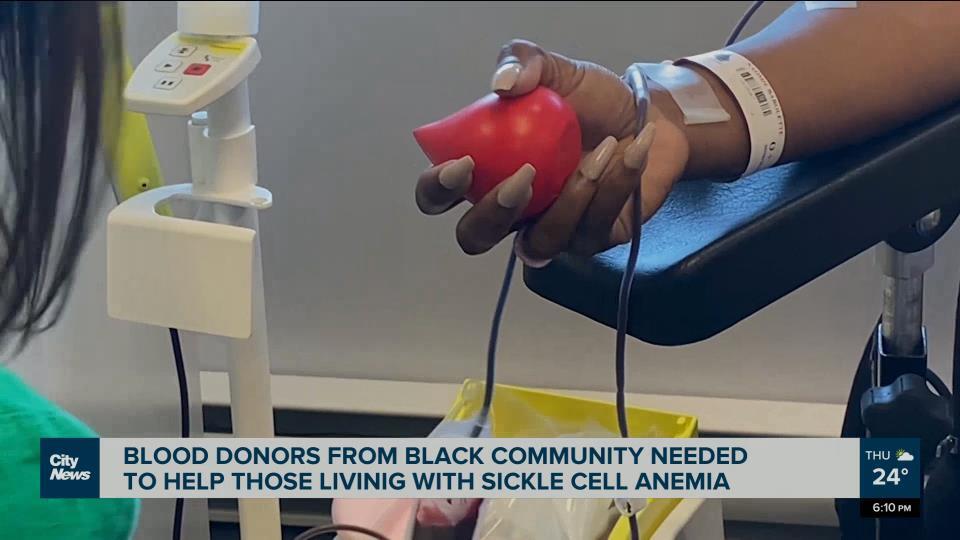
For patients whose symptoms don’t simply subside with medications during hospital visits, they are forced to turn to blood transfusions, and in some cases, transfusions become permanent in order for the person to live.
“Blood has saved my life, people who gave blood in the past have saved my life. If it wasn’t for those people that gave blood, I wouldn’t be with you talking to you today, so it’s very very important to give blood,” said Homère.
Naderge Ceneston, cultural communities development counselor with Héma-Québec says there are around 200 recipients who are a part of the program that need blood regularly.
“The thing is when we have to have the blood receiving blood regularly, we need to make sure that you are, like, to consider the characteristics between the donor and the recipient,” Ceneston explained.
“So we needed to find the perfect match and it’s like greater for those recipients to receive blood from their own community because they’re like sharing the same background genetic. So, so that’s why so we really wanted the black community of Quebec to come and give blood for helping those recipients with that disease that needed blood regularly.”
For every patient with sickle-cell disease, Héma-Québec says they need 130 blood donations — but while blood donations are extremely important — Gousse says that other efforts such as identifying the disease early on in children, planning fundraisers to raise funds and having initiatives to raise awareness on sickle-cell anemia are just as necessary.

“The thing that we’d love to do, we call it The Big Seduction, where we go directly to the school where doctors and nurses are being trained and talk to them about the sickness because while they’re still studying nursing or to become a doctor, the knowledge of sickle-cell even though its one of the most present blood disorders. It’s barely spoken about,” said Gousse.
As for Homère, after having accepted his disease, he now speaks openly about it and has joined Héma-Québec for their digital awareness campaign on the subject.
“I was born with sickle cell to be able to talk about it and be them I would not say the figure, but somebody who will contribute and make sure that this is going forward.”