Around half of young people in Quebec support sovereignty: poll

Posted June 26, 2025 9:44 am.
Last Updated June 26, 2025 5:26 pm.
October will mark 30 years since Quebec’s second referendum, where 50.58 per cent voted “No” on the province becoming sovereign. But it seems the independence movement is gaining ground, with more and more support coming from youth.
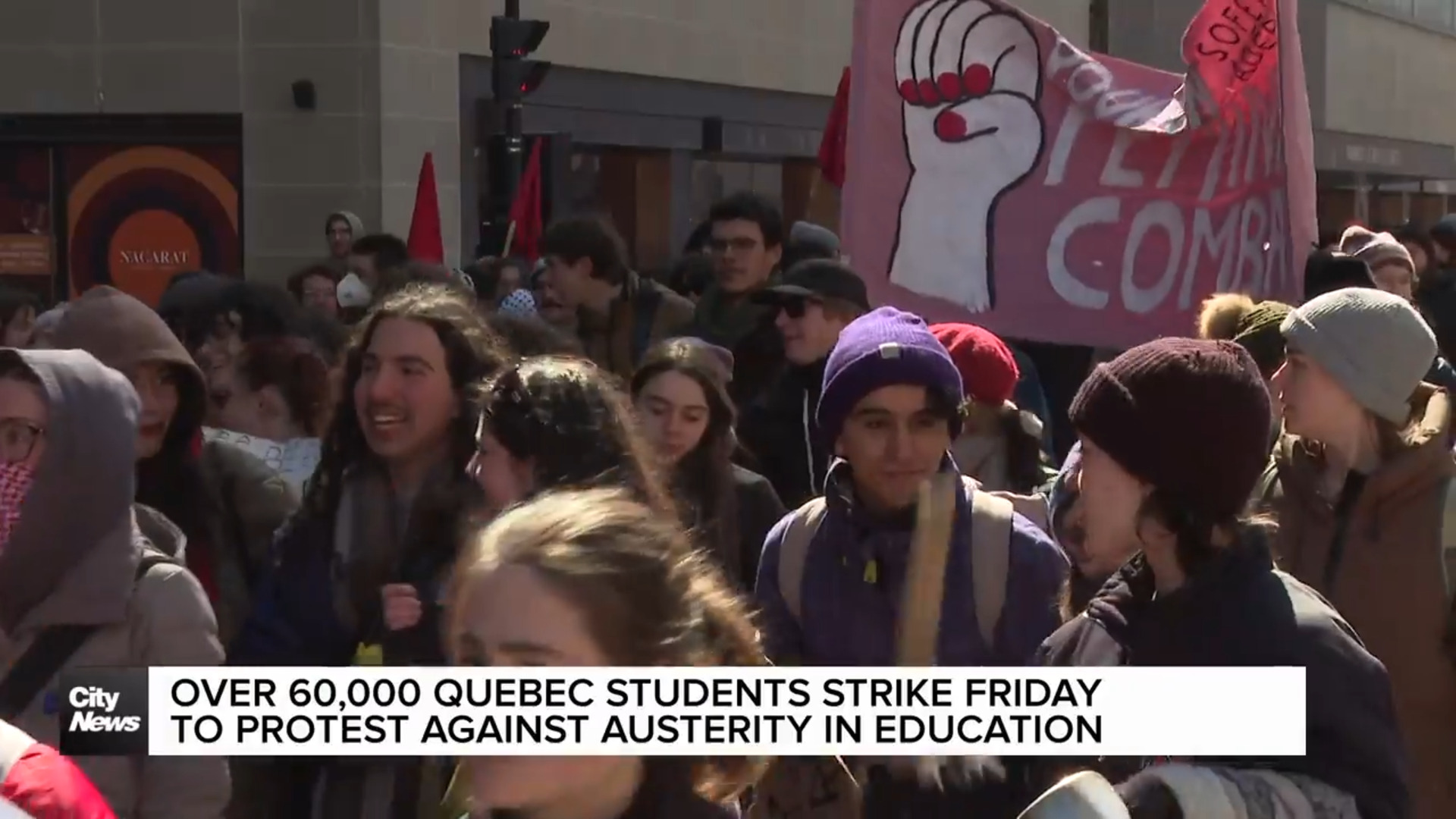
Just under half of young people aged 18 to 34 in Quebec support the idea of provincial independence, marking a near-20 per cent increase over the past year, according to a new poll by Léger.
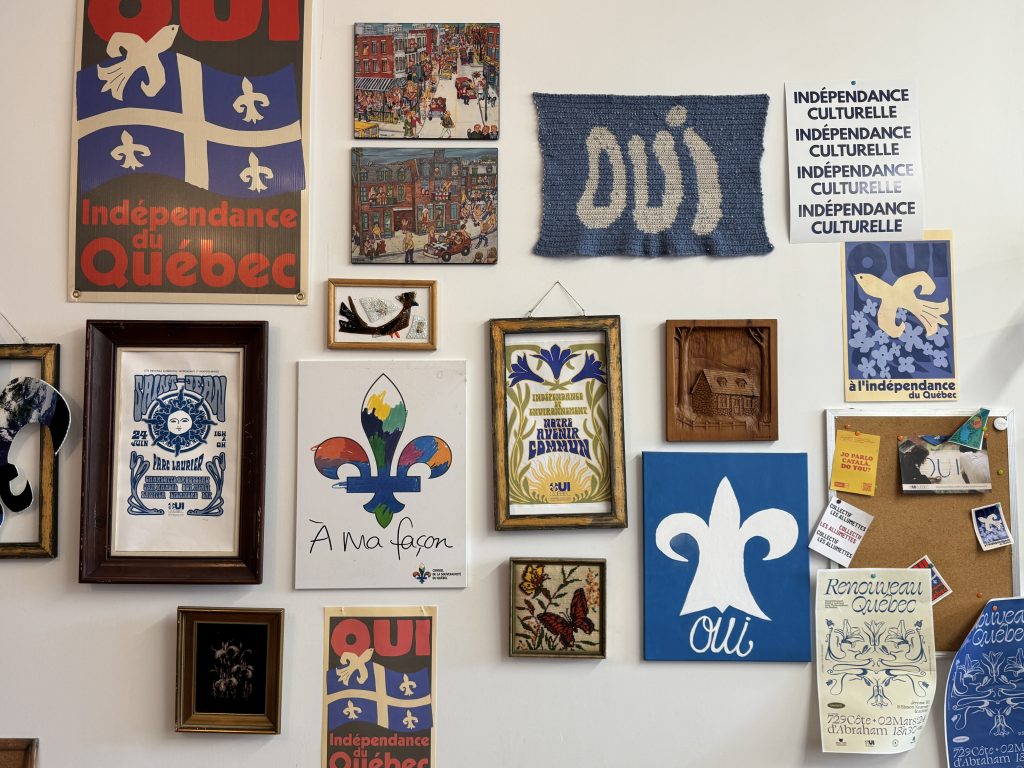
“Over the past three years, we’ve really seen an appetite growing among young people,” said Camille Goyette-Gingras, president of sovereigntist advocacy group, OUI Quebec. “But it’s happening almost hidden from view because they’re mobilizing mainly on social media.”

The poll, conducted from June 20 to 22 with 1,056 respondents, also shows that 36 per cent of citizens as a whole would support making Quebec a country.
This comes as premier François Legault’s Coalition Coalition Avenir Québec (CAQ) party falls to third place with 17 per cent of voting intention. Polls suggest that it would be a fight between Pablo Rogriduez’s Liberals and poll frontrunner Paul St-Pierre Plamondon of the Parti Québécois (PQ).
Goyette-Gingras said that the new spark in the province’s independence movement traces its roots to online culture, adding that the separatist sentiment has been bolstered as more and more youth are looking to consume Québécois content.
“Young people are also looking to connect with Quebec content on TikTok, on Instagram. So we see that the two feed off each other,” she said.
Such is the case for Hochelaga resident Myolïnn Belley-Pichet, who feels like voting “yes” in a potential referendum is a surefire way to protect Québécois culture — something she feels is distinct from the rest of Canada.
“I feel personally more attached to Quebec than Canada and I think we would benefit from being our country,” she said.
Montreal resident Mehdi Ali, who comes from Algeria, said that he shares the sentiment of independence given the history in his home country.
“We have a history with colonization and and wanting to have our own country and not being able to,” Ali said. “So we really want to support anyone who thinks that he wants to be its own part and not being part of a bigger country as Canada.”
However, some Montrealers cite economic concerns as the reason why it may not be the right time to call the province to call for separation.
“I think like we need to fix up some other things in the province before we start discussing that,” said Montreal resident Abdel Raouf. “However, I don’t mind really people saying like, they believe in a free Quebec.”
Polls reveals that if elections were held today, the Parti Québécois would form a majority government, with 30 per cent of voting intentions, due to its strength among the French-speaking electorate.
The party is promising to hold a third referendum by 2030.
According to Daniel Béland, director of the McGill Institute for the Study of Canada, voters will have to wait until several polls on the issue are published to truly determine whether the separatist movement is catching fire.
“One poll doesn’t tell the whole story,” he said.
However, he said that the Liberals could see an upswing in popularity even if support for sovereignty surges. Béland said that it would give the federalist party the opportunity to strongly communicate itself as the anti-independence option to voters.
The Liberals are snapping at the heels of the PQ with 28 per cent of voter intention and gains among Francophones.
“If (the PQ) stick to that promise of a referendum by 2030 and form government then that may give ammunitions to the Liberals to gain even more ground in the polls based on their opposition to the idea of a third referendum,” Béland said.
But for Goyette-Gingras, the promise of a third referendum would be indispensable for mobilizing voters for separation, adding that it would “force people to form an opinion.” She said that ideas must first enter Quebec’s parliament before they can truly pick up speed amongst voters.
“Once the ideas reach the National Assembly, they have to germinate in Quebec society,” Goyette-Gingras said. “And we see that the sovereignist movement is taking root in Quebec society.”