Ombudsman lifts veil on other failings in CHSLDs
Posted October 2, 2025 1:58 pm.
Last Updated October 2, 2025 6:42 pm.
Quebec’s Ombudsman notes a decline in empathy in the health and social services network, including in seniors’ facilities (CHSLDs), where staff sometimes stop listening to users and their loved ones.
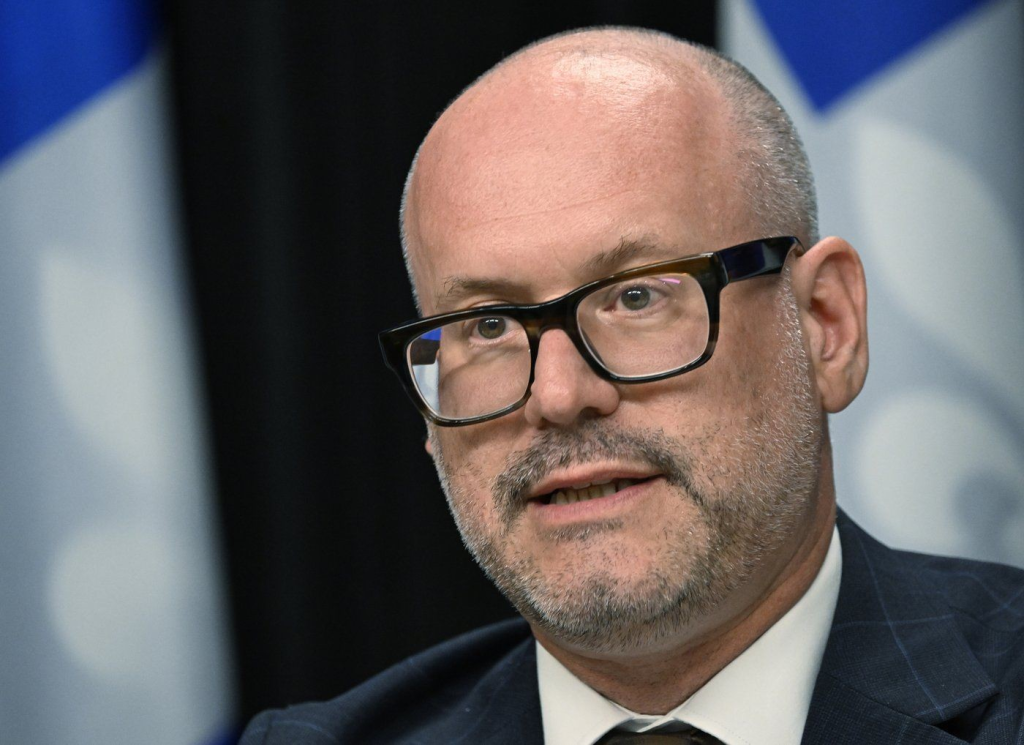
On Thursday, Marc-André Dowd presented his 2024-2025 annual report to the National Assembly, in which he notably addresses the case of a woman in a CHSLD who suffered a stroke with after-effects without the staff even noticing.
In the days leading up to the stroke, her daughter had alerted the nurses that something was wrong. She demanded that her mother be seen by a doctor. She was told she was on a waiting list to see the CHSLD doctor.
The woman would not be seen for another 10 days.
Throughout the wait, while she was experiencing severe pain and her health was declining, an on-call doctor was available, the Quebec Ombudsman points out in his report.
This isn’t the first time the watchdog has highlighted shortcomings in CHSLDs: last year, it deplored the fact that employees were serving meals to residents “automatically,” talking to each other, while the television was playing at full volume.
“Listening to citizens, truly listening to them, (…) may seem like a given. However, our surveys show that this is far from being (…) part of the practices of public organizations,” he declared Thursday at a press conference at the National Assembly.
Even in 2024-2025, more than 65 per cent of complaints against CHSLDs were justified, a “particularly high” proportion, he said.
Dowd is also concerned about the impact of budget cuts. “We hear a lot (…) saying: ‘There will be no impact on services to citizens.’ There is always an impact on services in the end,” he stated emphatically.
“Even if the cuts are positions that don’t provide direct service to citizens, they support colleagues who provide direct service to citizens. So, that has an impact.”
COVID: Delays due to Santé Québec
Is Quebec ready to face another pandemic? Six of the 27 recommendations that the Quebec Ombudsman made to the Ministry of Health and Social Services after the COVID-19 pandemic have not yet been implemented.
These include the need to “equip” CHSLDs so as not to keep them in a “blind spot” of preparations, and to provide them with sufficient “qualified and competent” staff.
It should be remembered that COVID-19 has caused at least 5,000 deaths in CHSLDs in Quebec.
“We have an entity, Santé Québec, that has just arrived. So, it’s not very clear who will take on which mandates,” said Assunta Gallo, Deputy Ombudsperson for User Services and Special Mandates.
“Certainly, the arrival of a new player (…) has led to delays,” added Dowd, who does not see this as “bad faith.”
“Everyone is working, but (…) there is a new division of roles and responsibilities, we have to tie up the knots, there are new contacts, we have to make sure who does what. We’re in that process right now,” he explained.
It is Santé Québec that will have to finalize and publish the National Integrated Viral Pandemic Preparedness Plan, which was initially scheduled for release in the fall of 2023.
–This report by La Presse Canadienne was translated by CityNews