Montrealers Vote 2025: One-on-one with Transition Montréal leader Craig Sauvé
Posted October 17, 2025 1:28 pm.
Last Updated October 29, 2025 10:04 pm.
Montréalers head to the polls on November 2 to elect their next mayor.
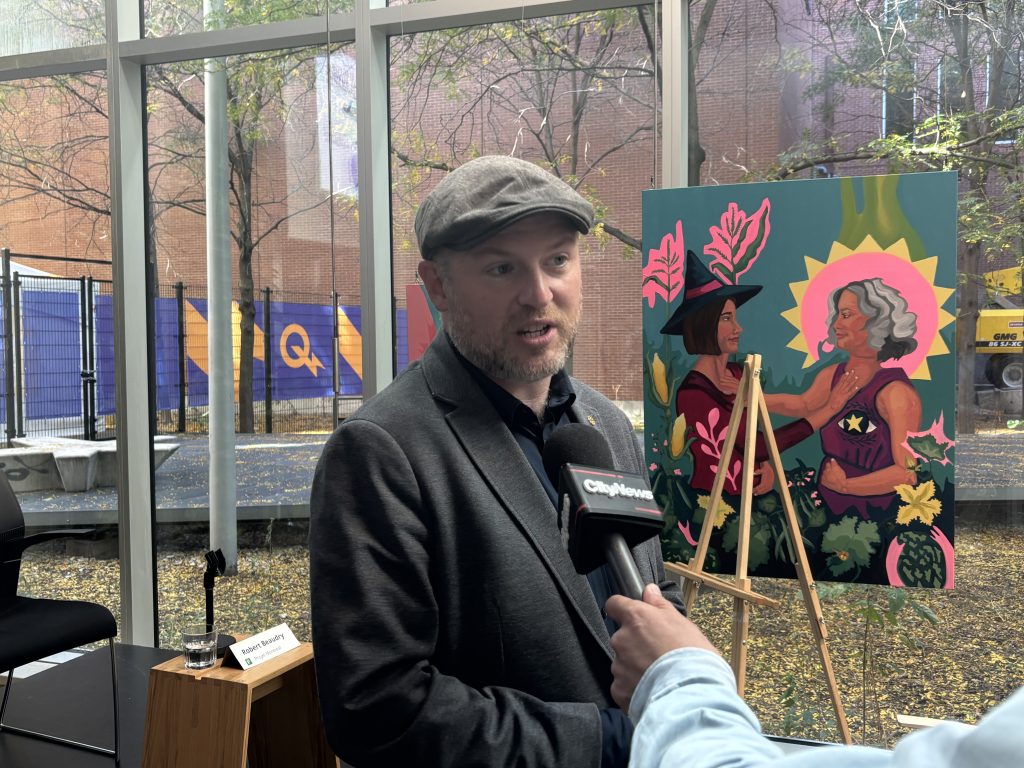
Craig Sauvé, leader of Transition Montréal and mayoral candidate, joined CityNews for a one-on-one interview about the upcoming election in Montreal. Sauvé spoke on why Montrealers should vote for him and his plans to address homelessness and housing within the city.
Let’s just start off, we’re looking at the polls, there’s a new poll that’s come out by Segma Research poll. Ensemble Montréal continues to be in the lead, now up to 26 per cent. Projet Montréal is up to 18 per cent. But Transition Montréal is down to 5 per cent down from 8 per cent last week. What do you attribute this decline in voter support to?
CS: There’s something wrong with this poll, I believe honestly, because there’s no way we’re at 5 per cent. I’ve been campaigning for 20 years, and this is not a campaign of 5 per cent. We’re getting lots and lots of support everywhere on the ground. I mean donations are up, volunteering’s up, we’re on the doors to our own our own data saying that we’re doing a lot better than that.
There are still a third of Montrealers who are undecided; they don’t know who to vote for. We’ve got almost two weeks to go to the election. How are you going to ensure you get that support from the undecided voters?
CS: Well, there’s three major debates happening next week, Radio-Canada, CBC, and Urbania, and I’ll be at all three. So that’ll be really important for undecided voters, and our teams are knocking on the doors and all the boroughs of Montreal, too. So they’re hitting the doors with volunteers, they’re talking to people, we’re talking about our ideas, our propositions, we’re very much on the proposal side of things and less on the bashing of other parties, which I think is important. I think we need to have inspirational politics these times when times are tough, it’s not the time to muddy the waters with more, you know, sort of attack-type politics or American-type politics. So we’ve been on the positive side, and we’ll have more to say over the next few weeks.
You’ve been a city councillor in Montreal for many years, also with Projet Montréal and then independently, why did you decide to make this new party and what do you think this new party offers that maybe the other long-standing parties don’t?
CS: In fact, it was a citizen movement that began before I got there. It was something they wanted to have other options at the city of Montreal, something that’s boldly progressive, something that’s proposing a new type of vision for Montreal. So when I got contacted by this party, I was really intrigued. We put together an offering that I think that was completely missing from the other two parties taxing the ultra-rich, bringing more work in-house, and you know, supporting and building our public infrastructure, democratic reform, police reform, lots of things that the other parties won’t even touch. So we’re having an offer right now, which I think is stimulating a lot of intrigue, and Montrealers are excited about these new offerings, so our job now is to communicate that to the rest of the city.
Montrealers have a lot of worries heading into this election, be it affordability, housing, but also just the quality of life in the city. If you’re elected, what would be your top priority first thing that you would do in office?
CS: Housing and homelessness are the that is the main issue right now for so many people so we need to start building a lot more community cooperative housing that’s what’s missing in the housing offering right now on the city that would also be a good solution to help people get off the streets but we like I said we do want to have a tax on the ultra-rich and take all of the money received from this tax on the ultra-rich and put it towards initiatives to fight homelessness which means support staff which means all more sorts of resources in the street workers shelters whatever’s needed to help people this is the way we’re going to solve the problem we need to radically work with the people that are on the streets and build the housing stock that is non-profit housing stock so that’s where we’re going to go that’s our main focus that’s our that’s our offering to Montrealers.
You touched a lot on homelessness, just that, but with regards to housing, there are a lot of families a lot of people who feel it’s no longer affordable to stay in the city so they’re looking elsewhere – they’re looking to move out of the city – how do you intend to retain those people that may not want to stay?
CS: Well that’s it I mean it’s going to have to pass by cooperative non-profit housing that’s the only way we’re going to get there the private market isn’t providing the solutions that we need you know the private markets it just let us do our magic and then magically the prices are going to come down it’s never happened in the history of modern real estate that that’s happened it only happens during a crash and nobody wants that so we have to do is follow the model of Vienna you know Amsterdam and Copenhagen that’s massively built off-market housing and this can be really attractive affordable housing for all sorts of people for artists for seniors for students for families there are really interesting housing models that can provide long-term affordability stability and a great community environment.
Another big issue for Montrealers is economic development in the downtown core. A lot of businesses feel they’re suffering, that they’re constantly fighting bureaucracy. How do you intend to support downtown businesses and merchants?
CS: I’ve got to say, our party is part of a new left movement, and the new left is saying relentless bureaucracy for its own sake is not useful, it’s not helpful. I think the new left doesn’t appreciate this type of governance. We’re also a party that wants to get rid of old bylaws that are useless and just make companies jump through hoops for nothing. Of course, we always want environmental and safety norms, but there are a lot of old bylaws that exist for micromanagerial reasons. We want to get rid of that and help small businesses do what they do best. We want to see more terraces, more services on our streets, so we have to move forward with that kind of initiative. And I mean, economic development is social development as well. If we don’t have the social development component, people get left behind, and the economy becomes more and more unequal, that’s where disparities grow. So our party is strongly centred on social development, like I mentioned, social and non-profit housing, services to help people, and taxing the ultra-rich. These are ways we’re going to fix this.
Another big issue we’re looking at right now is construction, mobility, and our transit system. People have faced strikes, rent breakdowns, road closures, and often don’t even know when there’s construction happening in their own boroughs. How do you intend to better communicate with residents and also alleviate traffic flow in the city?
CS: To alleviate traffic, we need more public and mass transit initiatives. We want to extend the metro, the orange line north toward Laval, and the green line west toward Lachine. We also want to move forward with the tramway in the east and fully support those projects. But in terms of construction sites, one of our main proposals is Infra Montréal, a new agency that will allow more work to be done in-house by the public sector. Most construction sites we see on our streets are run by private companies that take on 30 or 40 contracts at the same time and work at their own pace, not one that makes sense for citizens. Having publicly funded and operated construction to do paving, sidewalks, and similar work means we can control construction better. We can deploy our employees where it makes sense for the city, not for the private sector.
Something else you’ve touched on in your campaign is revitalizing culture and nightlife in Montreal. Many venues have shut down over noise complaints, places like La Tulipe and Blue Dog, institutions for many Montrealers. How are you going to protect those spaces while still respecting residents?
CS: The vast majority of space in Montreal is residential, but we do have nightlife zones, and we have to support them. Montreal’s nightlife is a point of pride — when we travel and say we’re from Montreal, we’re proud because our city is cool, it’s fun, it’s full of culture. That’s what makes us different. So we’ve got to stick up for it. The nightlife culture we have now isn’t guaranteed, it’s fragile, and we have to protect it. From the very beginning, we’ve said we’re taking the side of nightlife. We’ll protect it and treat it like the cultural heritage it is, that means making space, allowing some noise, and celebrating. Most of the city is residential anyway, so nightlife isn’t happening there. But where it does exist, we’re going to prioritize it.
Before we finish, I want to touch on the Ville-Marie issue. When a mayor is elected in Montreal, they automatically become the mayor of Ville-Marie. You’ve spoken a lot about the importance of residents there being able to elect their own representative. Why do you think that’s important?
CS: Democracy is a fundamental right, and each voter should have the same rights as everyone else. The only reason there’s no mayor of Ville-Marie right now is because of an old squabble between past mayors and a desire to control parts of the city from downtown. Being a good mayor also means sharing power and giving more power to citizens. If you live in Ville-Marie, you deserve to vote for your own mayor. There are neighbourhoods in Ville-Marie that aren’t getting attention from a part-time downtown mayor who’s focused on the whole city. Those local residents deserve better representation.
If you’re elected mayor, what do you want Montrealers to wake up to in four years’ time?
CS: I want Montrealers to wake up to a city that’s more affordable, that feels good about itself, that’s celebrating itself a little more and that’s seeing the long-term vision of affordable housing, safe neighbourhoods, and a thriving culture. A city where the vibrancy we love continues for decades to come.