Montreal braces for month-long STM strike: Only essential services will be maintained, businesses warn of strain
Posted October 29, 2025 1:06 pm.
Last Updated October 30, 2025 10:10 pm.
NOTE: The strike was initially scheduled to begin Oct. 31 at 10 p.m. It’s now beginning Nov. 1.
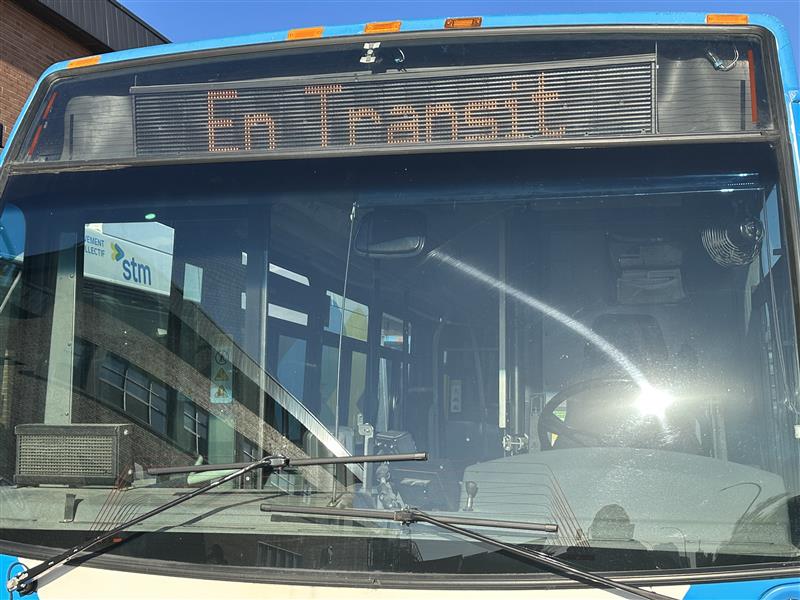
Montrealers are preparing for a month-long transit disruption as unionized maintenance workers at the Société de transport de Montréal (STM) plan to strike from Nov. 1 until Nov. 28. Services will only be maintained during peak hours.
The Tribunal administratif du travail (TAT) rendered its decision Wednesday, saying it “considers essential services sufficient to ensure the health and safety of the population.” This means service will be maintained during rush hours, with some late-night service also preserved, as in previous strikes. Paratransit services will be fully maintained.
Metro schedule:
- From 6:30 a.m. to 9:30 a.m.
- From 2:45 p.m. to 5:45 p.m.
- From 11 p.m. to closing
The metro will gradually close after the morning rush hour at 9:30 a.m. and again after the afternoon rush hour at 5:45 p.m. Stations will close as the last trains run.
Bus schedule:
- From 6:15 a.m. to 9:15 a.m.
- From 3 p.m. to 6 p.m.
- From 11:15 p.m. to 1:15 a.m.
Buses that start a departure during these time slots will complete their journey to the terminus.
Earlier Wednesday, the STM said it was continuing negotiations to avoid a strike while maintaining financial stability and service levels.
“A few days before the start of one of the longest strikes in the history of the STM, we are putting all our energy into reaching a satisfactory agreement. If the STM maintains a hard line, maintains its rigidity and continues to sit on its hands, it will be the only one responsible for this strike that could be avoided,” said Bruno Jeannotte, president of the Syndicat du transport de Montréal-CSN.
“This strike, which will last 28 days with services maintained during peak hours, would have a major impact, we are aware of that. But after more than 115 negotiation meetings and faced with an employer that shows no intention of settling the labour dispute, we must continue to increase the pressure,” Jeannotte added.
Drivers and metro operators represented by the Syndicat des chauffeurs, opérateurs et employés des services connexes (SCFP 1983) have also filed strike notices for Nov. 1, 15 and 16. The TAT will render its decision later this week on that case.
“At that time, the STM will once again inform its customers of the potential impacts on its bus and metro services. It should be noted that the STM has not received an official strike notice for Nov. 15 and 16 from the union,” the STM said in a press release.
The elections
Monday’s hearing focused on the STM’s request to extend the morning and afternoon blocks of essential service hours to allow as many voters as possible to exercise their right to vote in the municipal elections on Nov. 2.
The STM wanted a block of essential services of five hours in the morning instead of three, and a block of the same duration at the end of the afternoon to coincide more closely with the opening of polling stations, from 10 a.m. to 8 p.m.
Administrative judge François Beaubien did not accept the STM’s request. He considered the list of essential services agreed to with the employer sufficient, except for the issue of municipal election day, which had remained unresolved.
“Contrary to what the STM claims, in terms of essential services, the role of the Tribunal is not to balance the exercise of employees’ right to strike with citizens’ right to vote,” said Beaubien. “Rather, it must ensure that public health or safety is not endangered by the strike by ensuring that essential services are maintained while infringing as little as possible on the right to strike.”
“Although the Tribunal understands the STM’s concerns regarding the conduct of municipal election day, it does not show how public health or safety would be endangered by the strike,” he added.
“Even if we lend ourselves to the exercise of balancing rights as proposed by the STM, the observation is that the strike will not prevent citizens from exercising their right to vote. The person who has to travel that day to get to the polling station will be able to do so by imposing a little planning in order to minimize the inconvenience that the strike could cause,” concluded Beaubien.
Businesses feel the pressure
Montreal business owners say the strikes create real strain on staff and customers.
Joseph Francis Espinosa, manager at Ciccio’s in downtown Montreal, described the challenges of getting employees to work.
“It’s a twofold thing because obviously in today’s society we want to make sure that those who take care of us are getting what they deserve,” Espinosa said.

He added the uncertainty of service has a direct impact on employees.
“The way it impacts us definitely, you know, causes a lot of strain on different people’s lives, you know, over here in our kitchen. We have people from all different walks of life that are trying to get to downtown Montreal from all different parts of the city. And it definitely causes a lot of strain in the morning, even knowing that there might be some days that there’s no Metro at all.”
Espinosa said businesses must take extra steps to keep operations running.
“Much movement has to be done on our side of an employer. Do we get them ubers? Do we pay for taxis? You know what I mean? Like how do we make it possible for us to run with the least amount of strain on our team as possible? So that becomes a real, real issue, obviously.”

Customer traffic is also affected.
“We’ve seen the downflux during the last strikes of how little people are walking around,” Espinosa said.
“It took us a little while here to change the kind of momentum or the vibe on this little block for people to stop and come in and see us because it’s very transitory before people going from Sainte-Catherin to PVM or vice versa. And yeah, it definitely kills things for a lot of business out here. We’re not alone. There’s lots of different spots out here that could really really, really feel the pain.”
Looking ahead, Espinosa said society is going through a period of readjustment when it comes to strikes.
“It’s really tough in this day and age because I think everybody has these ideas of what they believe they deserve. Is it aligned with the general collective, like the human collective I’m talking about is the harder question. But I think you see it across the board right now with Canada Post, the STM, lots of different strikes that are happening everywhere. It’s an readjustment period in society itself. I hope they get it right. But if any data that we’re looking at represents anything, we know that this is probably going to happen again. So steadfast for everybody for real.”
“Public transit is essential to the smooth functioning of Montreal and the vitality of its economy. Every day, nearly one million trips are made using the STM metro network, and more than 70 per cent of these trips converge on the city center,” Isabelle Dessureault, President and CEO of the Chambre of commerce of the metropolitan Montreal. “At a time when we are all working to revitalize our downtown core, a historic 28-day strike would be tantamount to cutting off the lifeblood of our economic arteries and slowing down this recovery. The Chambre calls for a swift resolution to the conflict in order to preserve mobility, public confidence, and the continuity of economic activity in the metropolitan area.”
Commuters face disruption
Montrealers say the strike will make travel stressful and expensive.
“The STM strike is going to affect me and a lot of other people,” one commuter said. “You know, we have to plan ahead and there’s no room for error or else you’re going to get stuck. And it’s going to cost you like $50 to get back home.”
He expressed frustration but also sympathy for workers.
“It’s a roaring trust in the public eye. And you know, I’m really, really, really disappointed. Hopefully this will be resolved soon and we can go back to some normalcy.”
Another commuter said, “I just hope it gets resolved quickly. We need transportation. We also need these guys to make a decent living.”
“It’s a pretty big inconvenience because we have to get to work somehow. So it creates congestion. But again, I feel for them too,” he added.
—With files from The Canadian Press, first published in French and translated by CityNews