Quebec softens family-doctor reform, boosts funding and drops penalties
Posted December 12, 2025 9:16 am.
Last Updated December 12, 2025 4:58 pm.
The removal of color-coded performance labels, volume-based performance indicators, and a new target of 500,000 new patients are some of the main changes that will be made in the new version of Law 2, which is due to come into effect on Feb. 28.
“Hundreds of thousands more Quebecers will have access to a Family Medicine Group if the agreement is ratified. So, it would be another extraordinary gain if we succeeded,” said Premier François Legault.
Under the revised proposal, physicians would no longer face a 13 per cent penalty for failing to meet patient-access targets, a provision that had sparked strong pushback from the medical community.
Initially, Law 2 was scheduled to come into effect on Jan. 1. However, this Friday is the last day elected officials sit in the National Assembly before the holiday recess. It would therefore no longer have been possible to amend the law before its implementation in early 2026.
The changes come after the Quebec government and the Fédération des médecins omnipraticiens du Québec reached an agreement in principle, prompting Health Minister Christian Dubé to table a new bill delaying key parts of Bill 2.
Dubé said the delay was necessary to revise the legislation and respond to concerns raised by physicians, noting that the bill will also repeal Chapter VIII of Act 2, which included sanctions tied to concerted actions affecting access to care.
The government is instead proposing a substantial financial boost, a 14.5 per cent increase to the overall envelope, worth $434 million, plus a $75-million lump sum.
“As students, we’re just happy to see that there is a conclusion to negotiations, that there was in the end, both the Fédération des médecins omnipraticiens du Québec and the government coming together and being able to come up with a proposition that is now proposed to their doctors,” said Ryan Kara, the executive president of the McGill University Medical Student Society.
“At one point, you could say that family doctors, seeing more vulnerable patients, will help alleviate the specialist portion, where they’ll be able to see more acute patients. But on the other side, it’s hard to actually see if it’s feasible, because family doctors already see as many patients as they can see right now. This is why it’s hard to comment on if it’s actually going to work. But as an idea, it is obviously a good idea. Every doctor in Quebec wants to be able to see every patient in Quebec.”
The province is also withdrawing other enforcement tools, such as sanctions for doctors who choose not to participate in the reform.
Quebec still plans to introduce the payment model, where compensation is tied to taking responsibility for a set number of patients.
But physicians would have the choice to participate alone or within a group, with the finer details still to be negotiated.
The agreement in principle reached Wednesday maintains the objective of changing the way physicians are paid.
From now on, with a few exceptions, physicians’ salaries will be divided as follows: 50 per cent capitation, 30 per cent fee-for-service, and 20 per cent hourly rate.
The government says the changes will support its goal of attaching 500,000 Quebecers, including 180,000 vulnerable patients, to a family doctor.
“We have heard the concerns,” said Health Minister Christian Dubé in the House, who was criticized during negotiations and did not commit on Friday to completing his mandate.
The target of 500,000 patients is a step backwards for the Legault government, which had promised that the entire population would be affiliated with a healthcare setting.
“You have 180,000 patients vulnerable, for which I would have wanted them to be registered automatically,” said Paul Brunet, the Chair of the Council for the Protection of Patients. “They are the ones who are afflicted with a lot of illnesses, chronic diseases, so they need to be supported better.”
Adding, “If the tariffs are being respected as they were before, why would they have to leave on a financial plan anyway. I don’t see why they have to leave if they’ve gotten the money that was there before.”

That target would be voluntary and tied to a 2.5 per cent incentive for those who meet it.
“In my opinion, doctors in Family Medicine Groups are capable of taking on hundreds of thousands more Quebecers by next summer,” said Legault.
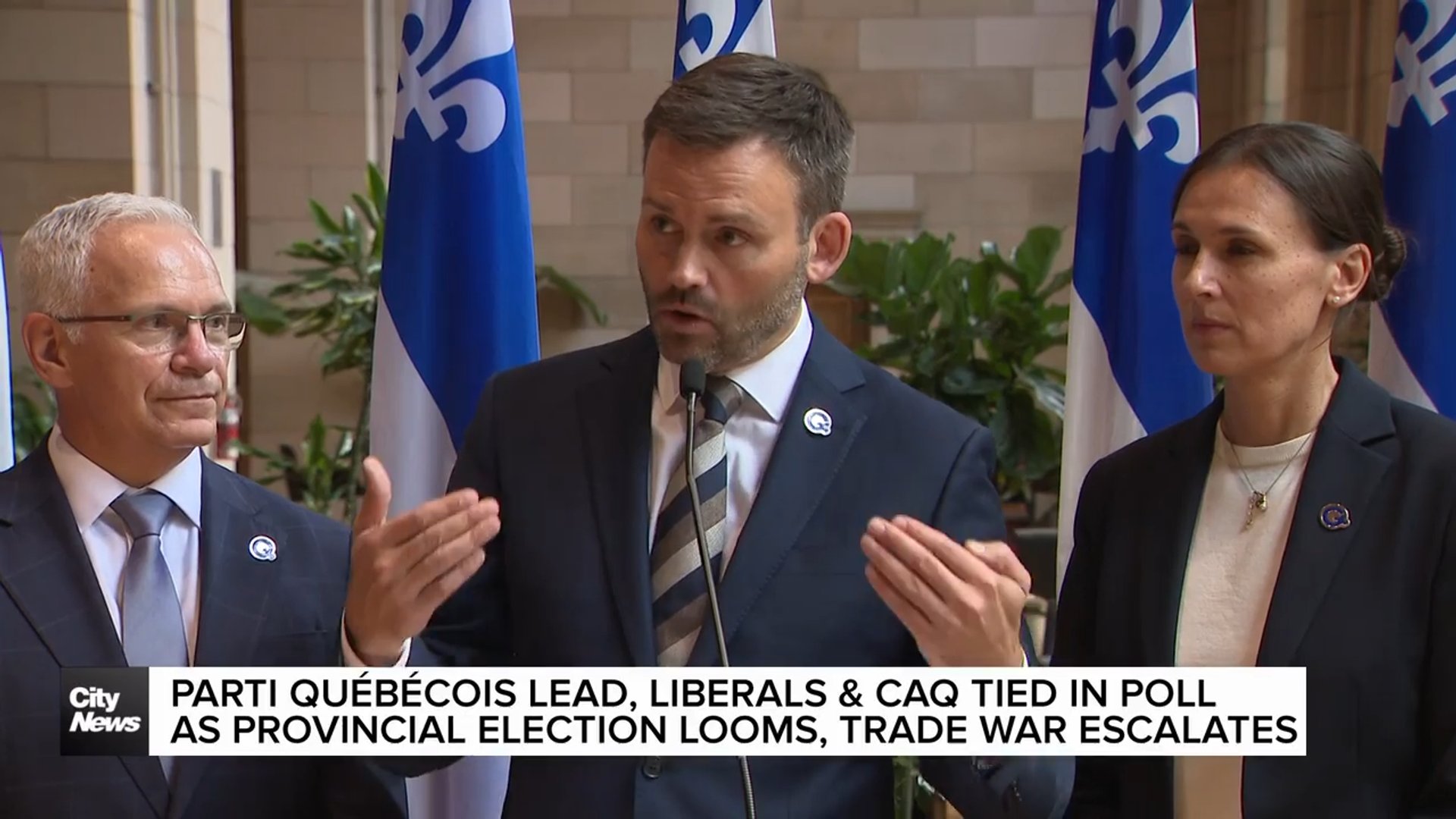
During question period on Friday, Legault was accused by the Liberal Party and the Parti Québécois of having caved in to doctors.
“He has capitulated across the board,” insisted the PQ health critic, Joël Arseneau.
Legault defended himself by saying he had always been “firm on principles, but flexible on the details.” He congratulated himself on having had the “courage” to change the compensation method.
“The Liberals lacked courage for 15 years,” he exclaimed.
“In the coming months, hundreds of thousands of Quebecers will finally have access to a family doctor, to a GMF, something that never happened with the Liberals,” he added.
Speaking to the media, Treasury Board President France-Élaine Duranceau was unable to name a single concession made by doctors.
“This morning, I’m not talking about either side backing down. I think that in a negotiation, you have to find common ground,” she argued.
The bill passed on Friday should rather be called “Act repealing 78 articles,” mocked Liberal health critic Marc Tanguay.
Financial incentives will also be provided for general practitioners who work during off-peak hours. The same applies when referring patients in categories P4-P5 (non-urgent medical problems).
“Obviously, we still want to see how it’s going to happen, and we also want to see how the FMSQ is going to react. And if this is actually going to be feasible, and if what we understand from what we’ve heard is what is actually going to be done,” said Kara.
Family physicians are holding two virtual meetings on Friday to review the agreement in principle. They will then vote on whether or not to accept the amendments to Law 2.
–With files from The Canadian Press