STM drivers and operators vote in favour of tentative agreement
Posted December 15, 2025 6:35 am.
Last Updated December 15, 2025 9:09 am.
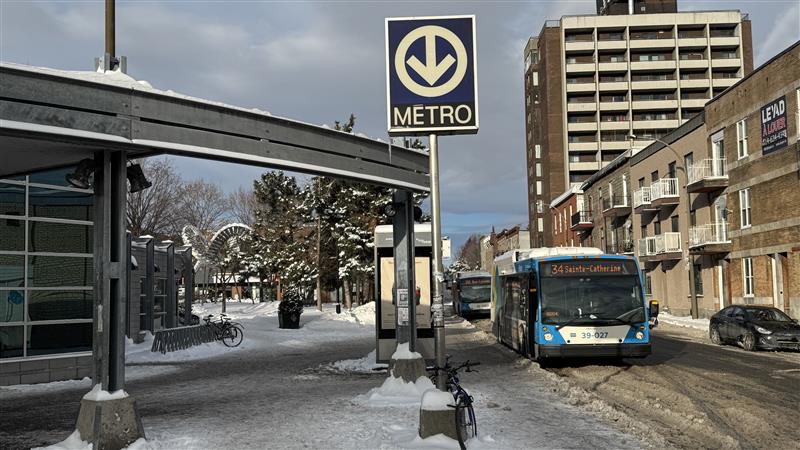
Bus drivers, metro operators, and station agents at the Société de transport de Montréal (STM) have a new employment contract after approving the tentative agreement reached with their employer.
Union members ratified the tentative agreement in two votes held on Sunday.
The accepted offer provides for a 17.5 per cent wage increase over five years—2.5 per cent in 2025, 4.5 per cent in 2026, 3.25 per cent in 2027 and 2028, and 4 per cent in 2029. Workers will also receive a lump sum payment of 2.5 per cent for the year 2025.
The union representing the 4,500 drivers, operators, and station agents is a local branch of the Canadian Union of Public Employees (CUPE), affiliated with the FTQ. It is also the largest of the six unions at the STM.
Its members walked off the job for only one day, on Nov 1. It was their first strike in nearly 40 years.
The union members were preparing to walk off the job again on Saturday and Sunday, Nov. 15 and 16, when a tentative agreement was reached at the last minute on the previous Friday to renew the collective agreement.
In their case, the dispute centered on wages, schedules, and work-life balance.
As this is the first union to have reached a tentative agreement with the STM, and above all the largest, it is customary for it to lead the way for others in terms of wages.
The second union to reach a tentative agreement, representing 1,300 administrative and technical employees—also a CUPE local—has already ratified its tentative agreement by a margin of 75 per cent.
On Monday morning, STM announced in a press release that its board of directors has already ratified the tentative agreement.
“This is the second group of employees to sign a new collective agreement, which reflects the efforts of the negotiating teams to reach a negotiated agreement that meets the needs of both parties and is in line with our financial framework,” said STM CEO Marie-Claude Léonard.
Léonard had previously indicated that the transit agency’s financial framework was set and must be respected. Therefore, in order to obtain more generous wage increases, union members had to find ways to finance them from their other working conditions.
“Thanks to the identification of significant self-financing opportunities with the union, we were able to offer our employees an improvement in our financial framework,” the press release said.
Other gains listed by the union include “the creation of a cumulative time bank, the addition of break time on short routes, payment for extended shifts, and greater flexibility for work-life balance.”
The STM is facing a difficult financial situation. Léonard has already said that she needs to generate savings of $56 million by 2026.
In a press release, union president Frédéric Therrien said he was “satisfied with the outcome of this round of negotiations,” but he denounced the lack of funding for public transit in Quebec.
“The crux of the problem is underfunding. As long as the main stakeholders do not make public transit a priority, we are doomed to see history repeat itself,” he warned.
Therrien said that the union will continue to fight against “the privatization of the STM’s paratransit service.”
Negotiations with the maintenance workers’ union and the professionals’ union are still ongoing.
“I now invite the other employee groups to continue discussions in good faith in order to reach the same outcome for the benefit of all,” Léonard said.
— With files from The Canadian Press