Quebec family doctors approve Bill 2 deal as Health Minister Dubé announced resignation
Posted December 19, 2025 9:49 am.
Last Updated December 19, 2025 5:09 pm.
Members of the Quebec Federation of General Practitioners (FMOQ) have voted 97 per cent in favour of an agreement in principle with the government reached on Dec. 11 to modify Bill 2.
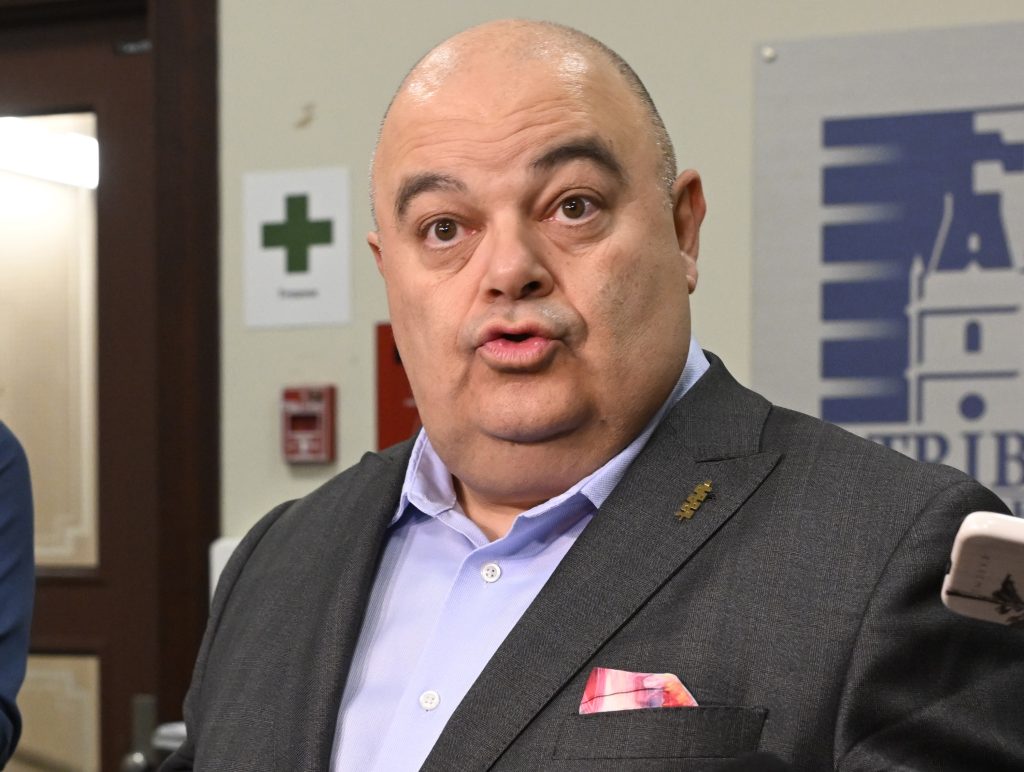
The vote, made public Friday, comes amid political fallout at the National Assembly, with Health Minister Christian Dubé announcing his resignation a day earlier. He is the second minister to step down over the law.
Lyne Couture, president of the Laurentides–Lanaudière Association of General Practitioners, told CityNews that the months-long standoff between doctors and the province have made for an “awful fall,” and that doctors across the province will be “on our guards” going forward as the dust settles.
Even after reaching an agreement, Couture said, the negotiations themselves have resulted in damages that have already thrashed the province’s healthcare system.
“Unfortunately, we’ve lost a few family physicians in the run,” she said.
However, she said she’s still hopeful that an “era of collaboration” is in store for Quebec’s doctors going into the future.
The agreement in principle stipulates that several elements of Bill 2, which doctors strongly opposed, would be removed. These included performance-related penalties and the colour coding of patients based on their level of vulnerability.
Instead, the deal offers incentives for family doctors to collectively enroll 500,000 new patients by June 2026.
As well, the new deal maintains changes to the method of remuneration for physicians, but removes the threat of heavy fines for doctors who take “concerted actions” to oppose the law.
The implementation of Bill 2 has been delayed until February after the CAQ adopted legislation last week to allow the law be amended to reflect the agreement endorsed by doctors.
In a statement, the FMOQ said the deal reflects “a clear desire to transform primary care,” while allowing physicians to continue providing quality care and stabilizing clinics that depend on the GMF program.
The federation also confirmed with CityNews that the agreement includes a 14.5 per cent pay increase, totaling roughly $434 million through 2028, with an optional additional 2.5 per cent if the enrollment target is met.
“The agreement will notably allow for changes to the remuneration of family physicians, improved funding for telemedicine, and stabilization of clinics that depend on the GMF program,” the federation wrote. “Family physicians will therefore be able to continue practicing quality family medicine and focus on what they do best: caring for the population of Quebec.”
What is to be done next?
But even as doctors across the province breathe a sigh of relief, Couture said the agreement only just keeps physicians’ heads above water.
“We haven’t had that many gains,” she said. “We did not even meet inflation over the last five years.”
That view is shared by doctors like Mark Roper, head of the family medicine group at Montreal’s Queen Elizabeth Hospital, who added that the absence of doctors who left amid the showdown between the FMOQ and the government is something the deal did not address.
According to Roper, Queen Elizabeth Hospital will receive 2,000 orphan patients in the wake of Bill 2 as one of their top family doctors is set to leave the province. One urgent care doctor had already left in response to the bill previous to this.
“It’s unfortunate that the government had to propose this law,” he said. “What’s happening to our clinic is being replicated throughout the province.”
In October, many Quebec doctors were reported to have left the law after the provincial government passed special legislation that would fine physicians $20,000 per day if they protested against the law through pressure tactics.
The College of Physicians and Surgeons of New Brunswick confirmed at the time that it had received 40 license applications from Quebec, with the College of Physicians and Surgeons of Ontario having confirmed they received 70.
At the Queen Elizabeth Hospital, Roper said they face bottlenecks because the number of doctors they are allotted is based on the population number in the region.
“We’re told we have sufficient physicians in our region but we see about a 100,000 people who live outside of our region that they don’t account for,” he said.
Fellow Queen Elizabeth family doctor Craig McCullough told CityNews that the next steps in mending the healthcare system will have to involve hiring more allied healthcare professionals like nurses, psychologists and physiotherapists.
“In order to not decrease the quality of the service that we offer, we need to be able to, when appropriate, defer to other professionals,” he said. “It’s still very hard to access those professionals in the public system, so that’s somewhere where I’d like to see the government do a bit better in their offer.”
Health Minister Dubé steps down
The agreement was reached as Minister Dubé announced Thursday he would step down and leave the CAQ, saying he disagreed with several key elements of the deal and arguing it largely maintains the “status quo” in Quebec’s healthcare system
He continue to represent the South Shore riding of La Prairie as an Independent MNA until the end of his mandate, he said in a post on Facebook.
“I acknowledge that we have made mistakes. The tone adopted at the beginning of discussions has not always encouraged a constructive exchange with doctors,” Dubé wrote. “We have not always been able to clearly vulgarize the objectives of Law 2, neither to patients nor to doctors.
“I fully assume my share of responsibility for this situation.”
Dubé had been benched during negotiations with the FMOQ last month, with talks ultimately having been concluded between Premier François Legault and the union.
In a statement penned on X on Friday morning, Legault admitted that Dubé’s resignation was “another tough blow to take.” But he defended his decision to intervene personally in negotiations with doctors.
“As premier, I judged that we had gone far enough and that it was time to reach an agreement with doctors to avoid further damaging the health system,” he wrote.
On Friday, Sonia Bélanger, who had been serving as minister responsible for seniors and social services, was sworn in as Quebec’s new health minister. She will be retaining control on her previous files, in addition to overseeing the province’s healthcare system.
Dubé is the second minister to resign over Bill 2, following then-Social Services Minister and physician Lionel Carmant in October. Bélanger had also assumed Carmant’s responsibilities at the time of his departure.
“Politics is tough on a human level,” Legault said. “When you’re premier, the interests of Quebec and Quebecers must come first.”
–With files from La Presse Canadienne