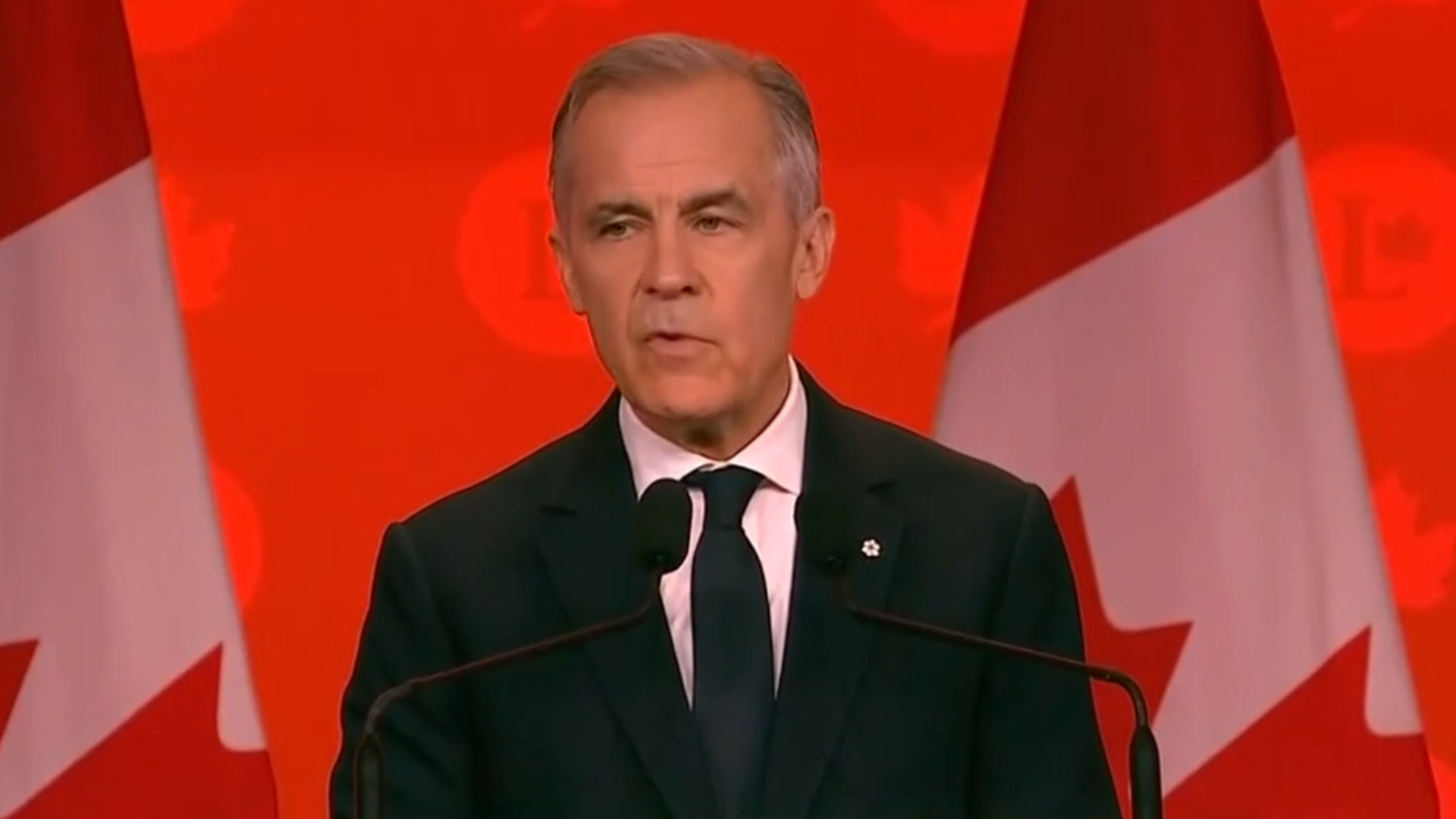
Montreal Mayor Soraya Martinez Ferrada completes 100 days in office Saturday
Posted February 18, 2026 5:05 pm.
Last Updated February 18, 2026 6:06 pm.
There’s been a blitz of activity at Montreal City Hall in the run up to 100 days since Mayor Soraya Martinez Ferrada took office.
As a candidate, Martinez Ferrada promised a “bold vision” and “real change” on the campaign trail last fall.
From tackling homelessness and housing crises, rationalizing bike paths and better managing construction projects and using of AI, the Ensemble Montréal candidate made several promises in the first 100 days.
As the milestone approaches this Saturday, has Martinez Ferrada made a dent in fixing the problems facing Montrealers?
“She still has a long way to go,” said Montrealer Nadia Amedee when asked about the mayor’s impact on the city during the past 100 days.
“In 100 days she can’t do much at this stage… but I hope she will continue to work on her promises,” said Sophie Baniel.
“Well, it’s just started, so we’ll see how it goes, but in my opinion, I hope it’s going to be better than it was,” added Marie-Gabrielle Sakho.
Here’s a look at how the new mayor has fared against her own platform promises:
1. Roundtable of borough mayors
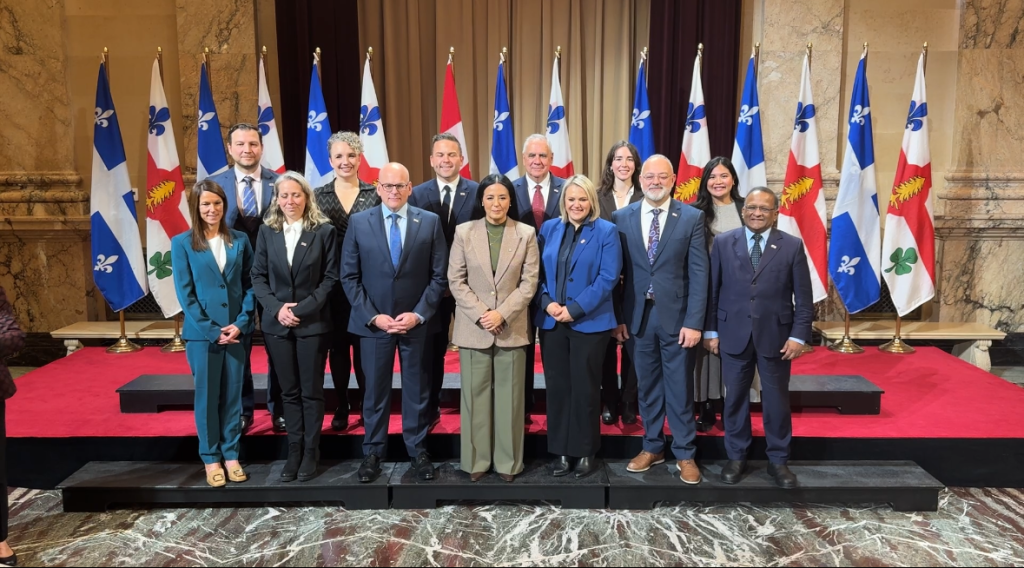
On the campaign trail, Martinez Ferrada stood alongside 17 borough mayoral candidates including L’Equipe LaSalle’s Nancy Blanchet as they criticized former mayor Valérie Plante for centralizing power in the City Hall. They said the City failed to increase the transfers to boroughs despite increasing property taxes and not keeping up with inflation.
Martinez Ferrada promised a better working relationship between the City Hall and the boroughs if she was elected. Within the first 100 days, she said she will set up borough mayors’ roundtable and begin the process for reforming how the boroughs get funded.
In a press release Feb. 16, the City announced the creation of the mayors’ forum and said they had already met twice this year.
LaSalle mayor Blanchet, who stood with Martinez Ferrada as she made those promises, and Villeray–Saint-Michel–Parc-Extension Mayor Jean-François Lalonde of rival party Projet Montréal were named co-leads the borough mayors’ roundtable.
However, beyond signalling intention to improve collaboration and share expertise between boroughs, it’s unclear if any concrete actions have been during by the mayors’ roundtable, especially on the financing reforms as Martinez Ferrada had promised.
“What I’m hearing in the first 100 days, is that we have an administration that’s been very accessible and that’s listening a lot,” said Martinez Ferrada.

2. Public registry of vacant land and buildings
As housing and homelessness took centre stage in last fall’s election, candidates promised to invest and build more affordable housing. Martinez Ferrada committed to release City-owned buildings to spur construction in the first 100 days.
There is no public registry yet.
However, on Jan. 23, the mayor announced that the City has identified 80 City-owned sites — about half of them ready for construction — to be used for off-market and mixed-use housing projects. The list of sites is expected to be made public March 1.
3. Repeal and replace ’20-20-20′
The 20-20-20 bylaw, the Règlement pour une métropole mixte (RMM) introduced under former Mayor Valérie Plante, required new property development to set aside 20 per cent of the units each for families and social and affordable housing.
Even before the elections, the bylaw drew criticism from real estate developers and the mayoral candidates even though Plante administration had made changes to ease the regulation.
The mayor kept her promise by eliminating the bylaw on Jan. 23. She said the City would offer financial incentives to encourage affordable housing.
“By relaxing the regulations for a mixed-use metropolis, focusing on off-market housing, and making use of City-owned land, we are removing barriers to construction and giving stakeholders the means to take action,” Martinez Ferrada said.
4. Tactical intervention group on homelessness
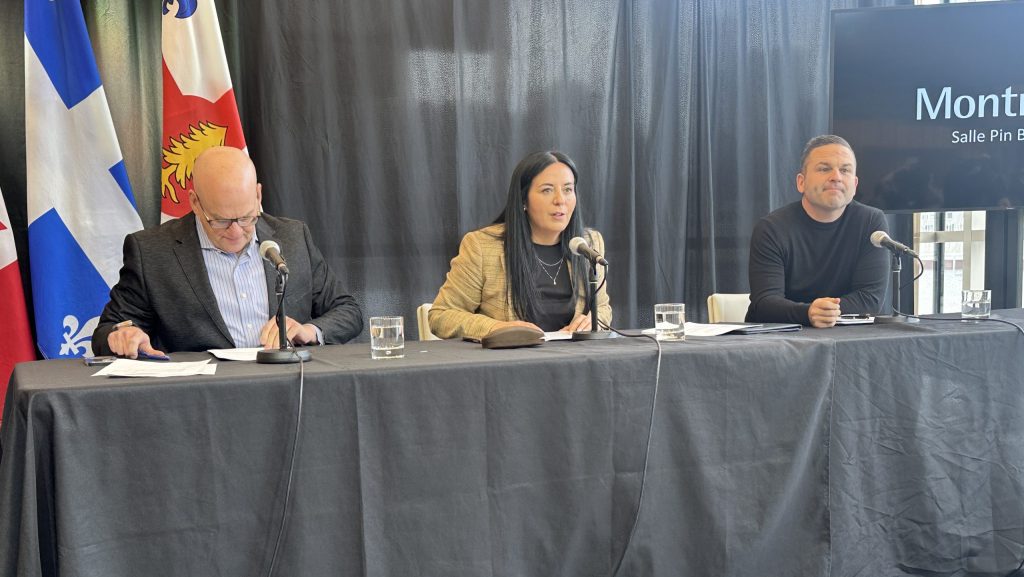
During the campaign, Martinez Ferrada flanked by fellow candidates Claude Pinard and Benoit Langevin committed that she would create a tactical intervention group on homelessness (GITI) in the first 100 days to “coordinate field interventions and plan future operations, as well as a protocol for managing encampments, in collaboration with community organizations and city services.”
On Feb. 17, she announced the creation of GITI composed of 12 members, including Quebec health minister Sonia Bélanger, and Montreal public health’s Mylène Drouin, Welcome Hall Mission CEO Sam Watts, in addition to Pinard and Langevin.
The intervention group will be chaired by Pinard and will meet every two weeks starting next week. It will be tasked with identifying operational obstacles and opportunities, optimizing resource utilization, and ensuring proactive risk management, particularly during seasonal situations.
5. Increase funding for homelessness and housing crisis
A third campaign promise by Ensemble Montréal related to housing and homelessness was to triple the funding to $30 million annually, for shelters and social services for dealing with homelessness.
As the city was hit with early winter storms and extreme cold gripped the region, Montreal opened 500 additional beds and several emergency warming centres.
The 2026 budget tabled in January, allotted $29.9 million for community organizations working directly with people experiencing homelessness or supporting cohabitation. Montreal also committed $578.7 million over 10 years to acquire buildings for social and affordable housing, including $100 million tied directly to homelessness-related housing needs.
Martinez Ferrada said her administration was prioritizing six major development zones to build nearly 75,000 housing units by 2050. In total, these projects will see a $47.6 million increase in investment.
The new administration also committed $1.5 million over three years on investments in tenant rights organizations, comprising of $500,000 in 2026.
“We are already working on the next budget,” Martinez Ferrada said. “This first year will have two budgets in the same year, so there’s lots to do in the next few months.”
6. Committee on neighbourhood security
During the campaign, Ensemble Montreal’s Martinez Ferrada said Montrealers hesitate to visit certain parks, public spaces, or metro stations at specific hours due to rising insecurity and criminal activity.
She said her administration would create a neighbourhood security committee in partnership with Montreal police withing 100 days of coming to power.
Her other promises include increasing funding to youth violence prevention projects to $60 million, surveillance cameras in public spaces and a voluntary public registry of private security cameras.
Last week, SPVM confirmed that it was studying the creation of the registry modeled after a program by the Trois-Rivières police department.
However, there is no committee on neighbourhood security yet.
7. Relaunch Montreal Cultural Metropolis Office
Montreal’s arts and culture sector generates more than $9 billion a year and draws millions of tourists, according to the city, with nearly 40 per cent visiting specifically for Montreal’s cultural scene.
On Feb. 9, the “Montreal, Cultural Metropolis,” an initiative launched in 2007 was brought back with a partnership among municipal, provincial and federal governments as well as the Chamber of Commerce of Metropolitan Montreal, Culture Montreal, and Tourism Montreal.
The mayor says attracting tourists is a big-money endeavour, especially with Canada’s biggest city just a few hours away.
“We’re competing (with) other cities in Canada,” she said. “Just Toronto, when you look at what Toronto had in the past few years, big events, 78 in 2024, I think. We had two in Montreal.”
8. Inventory construction projects and bike paths
The infamous Montreal orange cones and caustic debate over bike paths figured prominently during the campaign. While Projet Montréal mayoral candidate accused Martinez Ferrada of contributing to a polarized political debate on bike paths — one of former mayor Plante’s signature policies, Martinez Ferrada denounced the administration’s “phantom projects” which she said led to a proliferation of orange cones.
On Feb. 10, the City announced that it will review four existing bike paths on Meilleur Street (Ahuntsic-Cartierville), Rachel Street (Plateau-Mont-Royal), Côte-Sainte-Catherine Road (Outremont) and de la Commune Street (Ville-Marie).
It will also review bike path projects already under study or in the design phase “to ensure they meet best practices in safety, allow for smooth mobility, and are adapted to everyone’s needs.”
On Feb. 12, Martinez Ferrada announced the City will a Downtown Laboratory that will use artificial intelligence (AI) to study urban innovation and test solutions to reduce the impact of construction work on residents, businesses and motorists.
The Martinez Ferrada administraton has yet to make public any inventory of public projects as promised in the party platform.
9. Launch municipal efficiency, tender AI projects
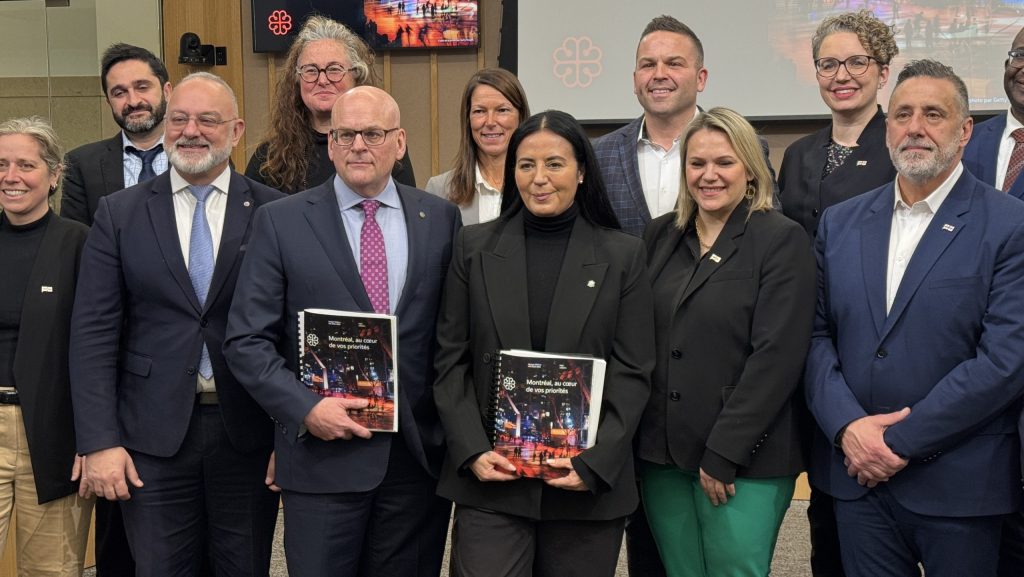
Denouncing an increase of 3,000 employees on City’s payroll in the eight years under Plante, Martinez Ferrada promised to cut the workforce by 1,000 employees by the end of her four-year term.
A week after taking office, Martinez Ferrada froze hiring and appointments of white-collar jobs in the City Hall.
On Feb. 11, the City announced that it was conducting a review aimed at eliminating 1,000 positions leading to savings of $16 million for 2026.
“We really have to see the whole way that she operationalized it because ultimately if there’s a thousand positions cut and it does impact the services of Montreal, that’s not a good news,” said Daniel Tran, the director of communications and governmental affairs at Casacom.
10. Mobilize partners to make Montreal attractive globally
On Wednesday, Martinez Ferrada held the inaugural meeting of Partners’ Roundtable on International Outreach and Attractiveness at City Hall.
The City said the partners’ forum brought “together key players from the institutional, economic, cultural, academic, and sports communities” for strategic consultation to improve Montreal’s global brand.
Ahead of the meeting, the City said it had surveyed over 40 partner organizations.

What comes next?
Political analyst Tran says the mayor’s accessibility and active communication have helped her early image, but the real test is still ahead.
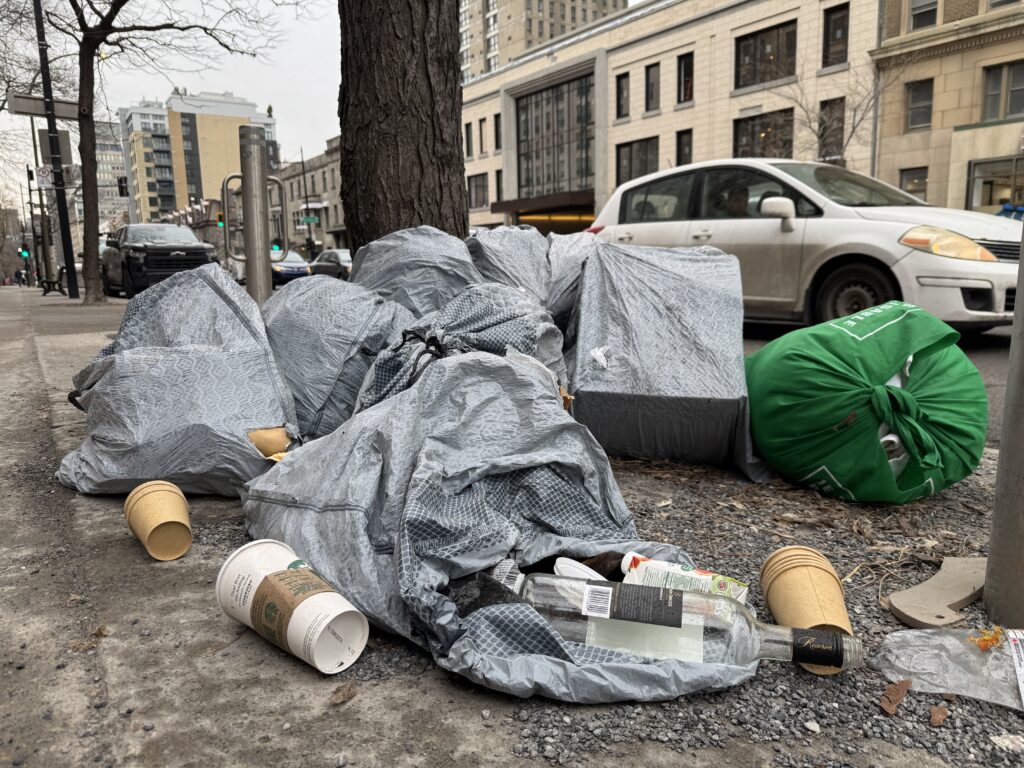
As spring arrives, melting snow will expose long-standing issues – from potholes to street cleanliness – putting pressure on the administration to deliver visible results.
“When spring comes, snow melts, potholes comes out and a lot of surprises come out in the streets too,” Tran told CityNews. “So one of the other issues that will come out in spring is cleanliness.
“The 100 days comes with a period that people will give the benefit of the doubt. But now the real work really starts. Spring is coming. Snow will be melting. There’s going to be a lot of challenges.”
Montreal’s mayor acknowledged the spring will mean new tests.
“We have a lot to do in order to be ready for spring, in order to be ready for next winter, even though the winter seems far away, we need to be ready,” she said.
Potholes indeed remain a top concern for Montreal drivers, with complaints up sharply compared to last year. Since the mayor herself suffered flat tires earlier this winter, the city has launched an eight-day repair blitz.
Many residents hope fixing the roads becomes a priority for the next 100 days.
“My car is in the shop right now because I can’t drive it in the potholes and everything,” Juan Alvares said. “But I don’t see any difference really.”
“Montreal is riddled with construction and potholes and the roads are in complete disrepair all the time,” added Merlin Matthewson. “So if she really follows through on that, I would be very happy.”
–With files from Lola Kalder