24 Indigenous communities in Quebec join CHUM’s telehealth service for substance abuse
Posted May 31, 2026 6:58 pm.
Last Updated May 31, 2026 7:00 pm.
Telemedicine is constantly evolving. An innovative project by the CHUM, which offers telehealth addiction services to Indigenous people, is gaining momentum. Already, 24 Indigenous communities in Quebec have joined the program, and soon some villages in Nunavik could join as well.
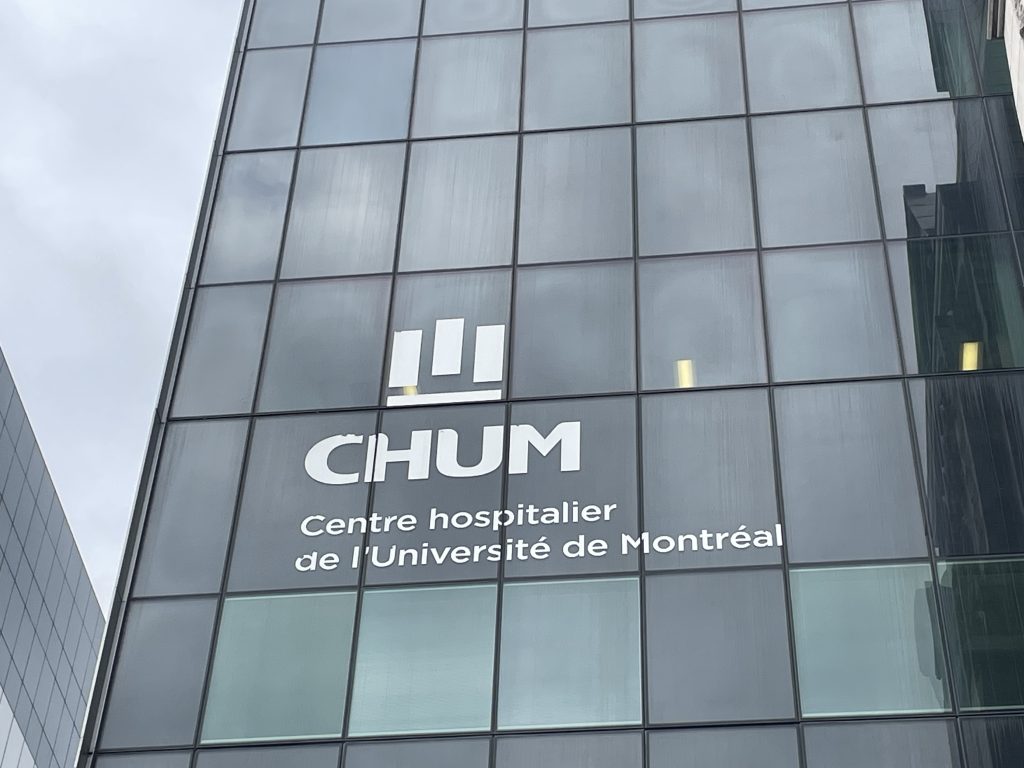
The idea behind this telehealth service for people with substance use disorders is to foster collaboration between the patient, the team at the Centre hospitalier de l’Université de Montréal (CHUM), and healthcare providers at the Indigenous community health center.
Substance use disorder treatment was not initially included in the telehealth services offered in Quebec. Initially, in-person care was the preferred approach for this type of treatment. The COVID-19 pandemic has, in a way, accelerated the expansion of services available through telehealth.
For the past two years, the CHUM addiction medicine service has been working to roll out the CATS project, which aims to improve access to addiction services, in collaboration with Indigenous partners.
The success of this project is already evident. In terms of adherence, 70 per cent of patients show up for their initial evaluation appointments, and that figure rises to 80 per cent for follow-up visits once patients are in treatment. “These are truly excellent results; it’s working,” says Sofiane Mouloud Chougar, head nurse of the CHUM’s addiction medicine department.
“I think the success stems from the fact that we’re filling a gap—the service gap that’s sometimes missing—whether it’s a medical evaluation, perhaps advice on intervention, or something else,” he says.
Stéphanie Marsan, chief physician of the CHUM’s addiction medicine department, adds that they “certainly don’t want to duplicate services”; the goal is to offer something that doesn’t yet exist in the community.
For this to work, we need to build relationships with Indigenous people. “The beauty of our program is that we work with each community’s health center. We work with the local providers who are already there and have established relationships. So when the patient comes in for an appointment, it’s not just with us—the doctor and nurse at the CHUM—but they’re accompanied by the provider they trust, or it could also be the community healer,” explains Marsan.
The challenge is that every community has its own unique characteristics. A model that works in one place won’t necessarily work elsewhere. “Every community faces different challenges, has its own specific programs, and its own culture. Even if several communities belong to the same nation, each one will be different. So we really need to develop pathways—but ones that are tailored to each individual,” explains Marsan.
Rapid services
The CATS project is growing in popularity, which is what the teams anticipated as they continued to develop more pathways. On average over the past few years, people could expect to be assessed within five to ten days. Now, when someone makes an appointment, the wait can be up to four weeks, but more urgent cases will be prioritized.
“Let me give a very concrete example: a patient who uses opioids has just overdosed; we’re not going to make them wait four weeks for an assessment. We’ll find a way to make room,” says Chougar.
He believes the project is redefining the relationship between caregiver and patient. He believes we need to change practices where healthcare staff sit down with the patient with the mindset: “We know better than they do, and we’ll tell them what to do.”
“Even with our non-Indigenous patients, we focus on this aspect,” Chougar admits. “It’s about asking, ‘What can we offer you? Take some time to think about it. You don’t have to answer today.’ This has shaped our philosophy and our approach. We’re less focused on a very rigid approach.”
The nurse emphasizes that testing new models is part of the CHUM’s mission, as it is a university hospital. He is delighted to be part of a project that ensures we don’t “stay stuck in our old ways.”
–This report by La Presse Canadienne was translated by CityNews
— La Presse Canadienne’s health coverage is supported by a partnership with the Canadian Medical Association. La Presse Canadienne is solely responsible for this journalistic content.