Montreal boosts rent assistance program ahead of July 1 moving day
Posted June 29, 2026 12:05 pm.
Last Updated June 29, 2026 5:48 pm.
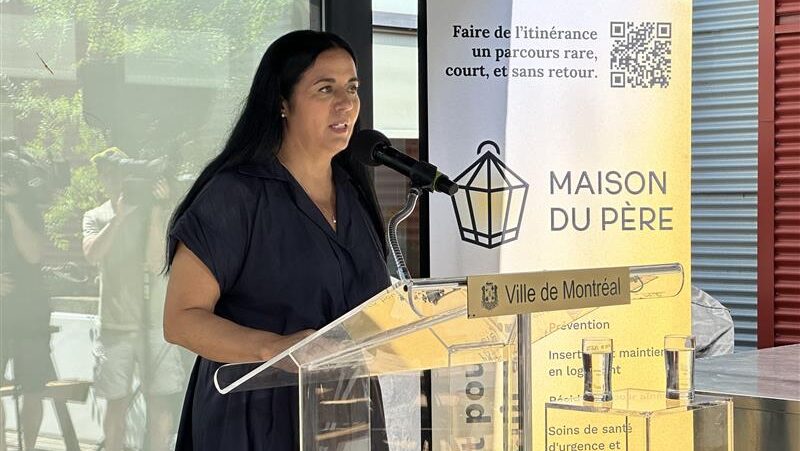
With Quebec’s annual July 1 moving day approaching, the City of Montreal is investing an additional $742,500 to expand its rent assistance bank, with the goal of helping more tenants avoid losing their homes.
The Martinez Ferrada administration says the funding will allow Maison du Père’s Rent Assistance Bank (BAL) to support an additional 150 households facing financial hardship due to rising housing costs and the increasing cost of living.
“If we want to fight homelessness at the source, we have to intervene before people lose their homes,” said Montreal Mayor Soraya Martinez Ferrada. “Behind every rent arrears, there is often an unforeseen situation: a job loss, a health problem or an increase in the cost of living.
“By supporting the rent bank, we are focusing on a concrete, humane and effective approach that allows households to get through a difficult period without falling into homelessness.”
The program offers interest-free loans of up to $5,000 to help tenants cover unpaid rent and remain in their homes. Repayments are based on a household’s financial situation and can be spread across up to five years.
“We’re putting in place a social net that we need in order to prevent people getting into the streets,” said Martinez Ferrada. “I know that this, at two days’ notice from the first of July, is not the sole solution, but it is one that we’ll put in place in the future in order to not lose anybody.”
Beyond financial assistance, the program also provides personalized support, including mediation with landlords, housing stability services and resources aimed at preventing homelessness. Maison du Père called the rent bank a comprehensive intervention approach.
“It’s been in place for the past two years and we found that it’s an amazing service to be able to keep people in their homes,” said Duane Mansveld, the group’s deputy director of continuum of clinical services.
“Already just since January to June, so just half a year, we’ve been able to help over 100 households. So having 150 more and stuff, it’s, yeah, we’re hoping at least 250, maybe even 300.”
Margarita Gerville is one of the people who has used the rental assistance bank.
“It was a relief to be able to keep my rent and be able to afford it,” she said.
“Which helps me to go back to school and reinvent myself and make something new so I can maintain this new, expensive life that we are living in because the minimum wage or the cost of life do not match with the money that we receive when we get, when we work.”
City officials say the investment is intended to help vulnerable residents stay housed before financial difficulties escalate into homelessness, a concern that often comes into sharper focus around Quebec’s traditional moving day.
Benoit Langevin, the executive committee member responsible for social development and cohabitation, says sometimes just a few hundred dollars is enough to prevent that from happening.
“Thanks to this funding, the Maison du Père will be able to quickly support a greater number of households when an unforeseen event occurs, and accompany them towards lasting stability. It’s a concrete gesture that can really change the course of a life,” Langevin said.

The most recent homeless population count in Quebec conducted in April 2025 showed that more than 5,000 people in Montreal are visibly homeless.
A recent Radio-Canada report revealed there are about 25,000 housing units in Montreal that are sitting vacant.
“These apartments can be part of a solution? Absolutely. And how can we do that? We have many things that we’re thinking about,” Montreal’s mayor said. “Can we work with the Government of Quebec to actually buy some of those, bring them to the affordable market?”
The Coalition of Housing Committees and Tenants Associations of Quebec (RCLALQ) says cities in Quebec already have the right to tax vacant housing, “and they don’t use it.”
“So that would be a first step,” said Benoit Rullier, a coordinator at RCLALQ.
“They could go farther. They could actually compel people to use empty housing and vacant apartments. You know, the sky is the limit when you want to take people out of the streets. It’s a question of political courage at some point.”