8 carfentanil-related overdose deaths confirmed in Montreal; public health authority urges caution
Posted July 16, 2026 11:10 am.
Last Updated July 16, 2026 7:14 pm.
Montreal’s regional public health authority is warning people to take extra precautions after confirming eight fatal overdoses involving carfentanil since an overdose alert was issued on April 9, 2026.
The deaths have been confirmed through laboratory testing, the Direction régionale de santé publique (DRSP) of Santé Québec Centre-Sud-de-l’Île-de-Montréal said Thursday.
Officials cautioned the number could rise because toxicology confirmation can take time.
Dr. David Kaiser, assistant medical director with the DRSP, said the alert was issued because several warning signs have emerged in recent months, including a sustained increase in non-fatal overdoses, a rise in overdose deaths, and the presence of carfentanil in the drug supply.
“It’s really, I mean, a very large increase,” he said.
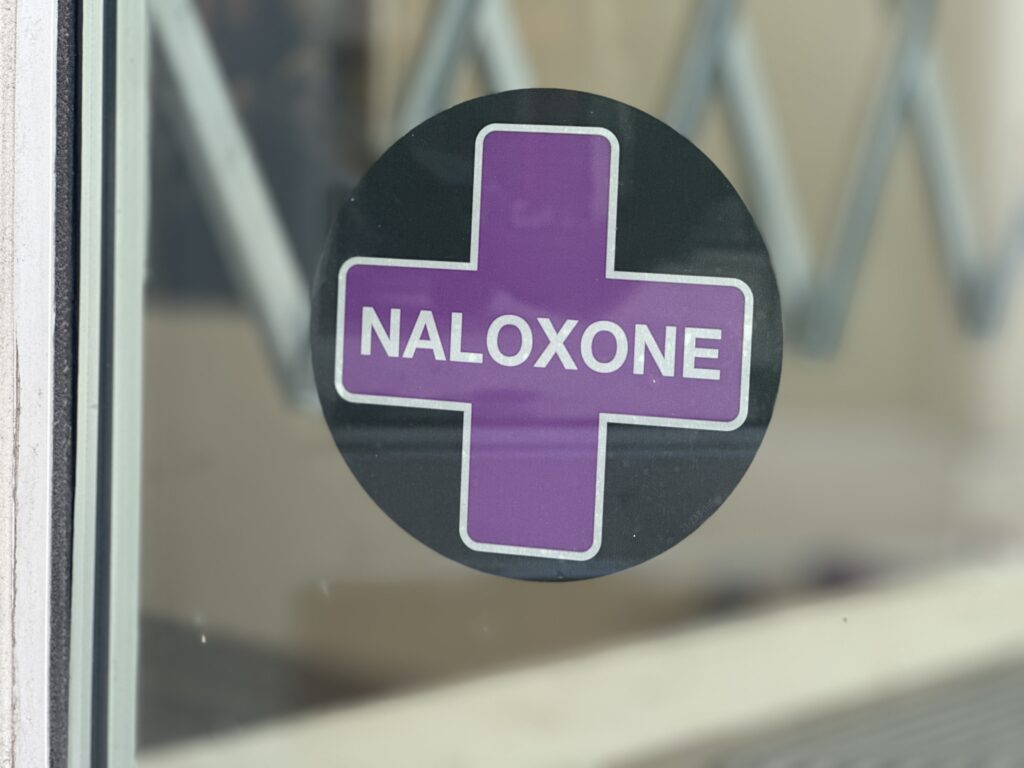
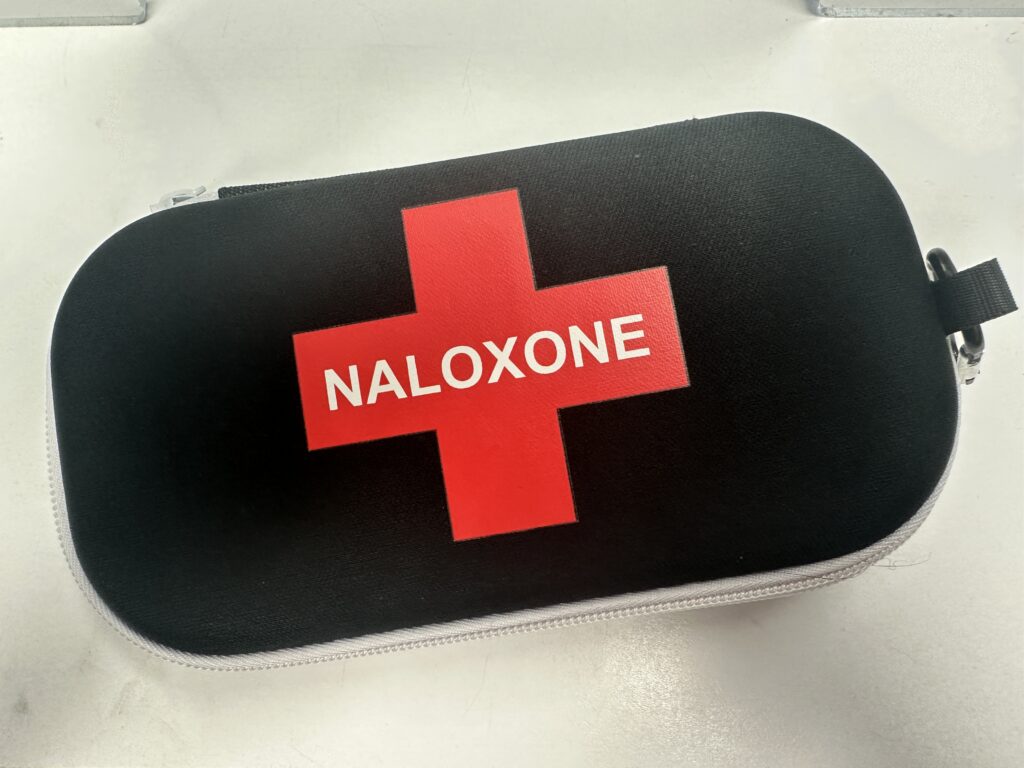
Since the beginning of the year, Urgences-santé paramedics have administered naloxone 925 times — 25 more times than during all of 2025.
“We see the same thing for other indicators with the total number of overdoses,” Kaiser said. “So that isn’t new, but it’s continuing and it’s certainly not slowing down.”
The DRSP said non-fatal overdoses linked to fentanyl remain at very high levels, leading to frequent emergency interventions and ambulance transports.
Carfentanil detected in fentanyl supply
Health officials say the biggest concern is the continued presence of carfentanil in the illicit drug supply.
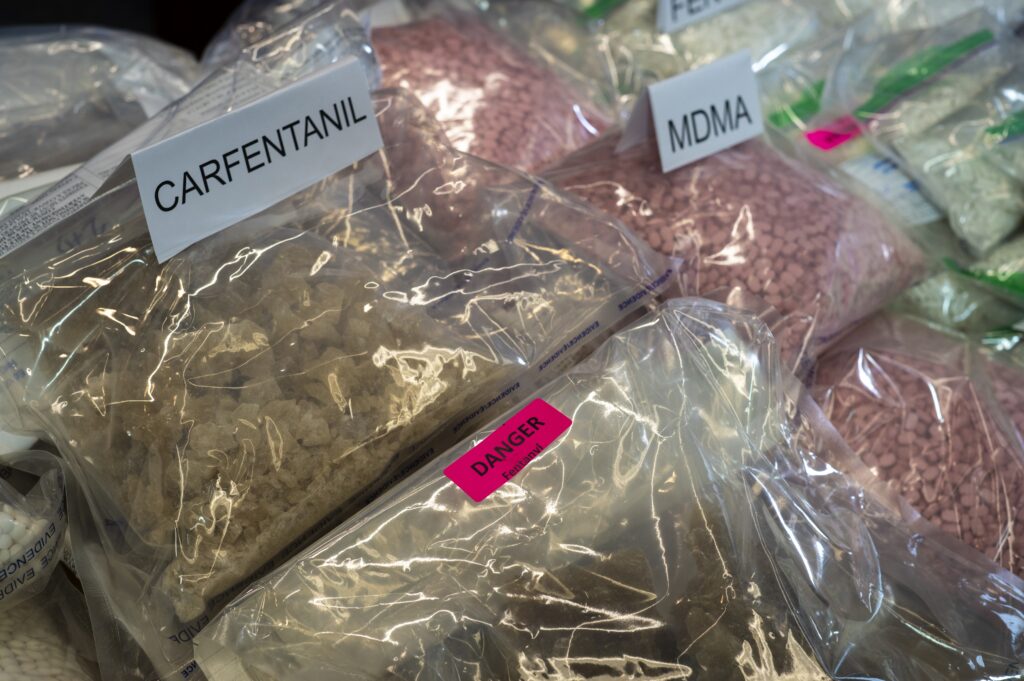
Carfentanil is a synthetic opioid similar to fentanyl, but it is 100 times more potent. Officials say an amount smaller than the weight of a grain of salt can be fatal.
The DRSP says carfentanil is being regularly detected in mixtures sold as fentanyl, typically in the form of rocks of different colours. Those mixtures also contain other fentanyl analogues, medetomidine and, in some cases, benzodiazepines.
Medetomidine is a veterinary sedative and pain medication that has been circulating in fentanyl mixtures for several months, while benzodiazepines can increase the sedative effects of opioids.
Kaiser said the presence of carfentanil is one of the reasons officials decided to issue the alert.
“Carfentanil is an extremely toxic opioid that has been in the drug supply for a little while, but that is linked to eight deaths so far since the month of April. So in the last three months,” he said.
“And that for us is really an important component for people to know specifically with regards to that substance.”
Victor DeSousa, a Montreal pharmacy owner, said the drug’s potency has changed how pharmacies prepare for overdose risks.
“Carfentanil is an extremely strong opioid. So it’s a medication often used for pain, or in this case, carfentanil is typically used for anesthesia purposes, but it can be used as an illicit substance to get it high,” DeSousa said.

DeSousa said his pharmacy has had to increase its naloxone supply because overdoses may require multiple doses.
“Lately we’ve really had to start holding larger quantities of Naloxone here at the pharmacy,” he said. “We follow a number of patients who are dealing with substance use issues. And so, unfortunately, with the potency of the substances that are on the streets at the moment, it no longer just requires one or two doses of Naloxone. It can require a lot more. And so as such, we’ve had to adjust.”
Overdose calls reaching record levels
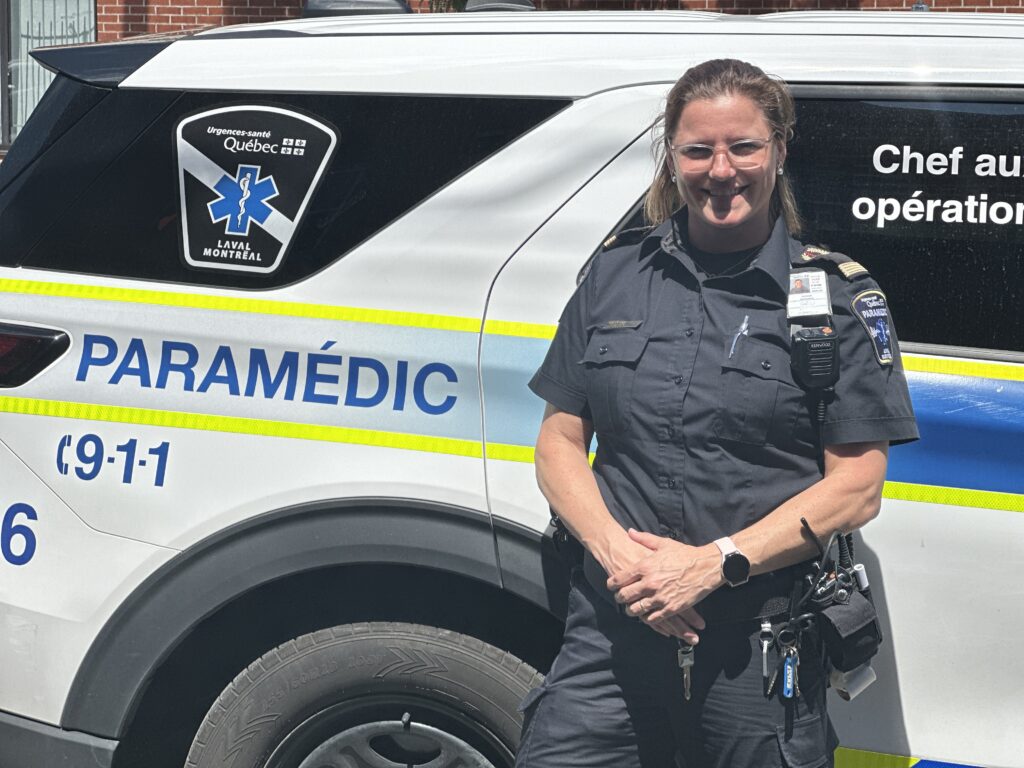
Urgences-santé spokesperson and head of operations Geneviève Poirier said ambulance interventions involving naloxone have reached record levels in recent months.
“There were increases in cases of opioid poisoning where naloxone was administered. In May, we’re talking about 47 incidents. And in April, 45. Then there’s also June 2024, when there were 42. Now in July, we’re once again heading toward record numbers, since as of July 14, we’ve already had 30 incidents. So if this continues, unfortunately, we’ll set another record.”
Poirier said paramedics continue treating these calls as they would any other emergency, but encouraged the public to take action when they believe someone may be overdosing.
“Ideally, when you think someone might be intoxicated by opioids, you should go check on the person, try to wake them up, and see if they’re just asleep or if they’re truly unconscious or drowsy,” she said.
“And if you see that the person is truly unconscious and doesn’t wake up, call 911 immediately. If you have naloxone, administer it right away.”
Officials urge bystanders to intervene
Public health officials say preventing deaths depends not only on naloxone access, but also on people being willing to intervene.
The DRSP is urging people not to use drugs alone, to carry enough naloxone, and to make sure anyone with them knows how to administer it.
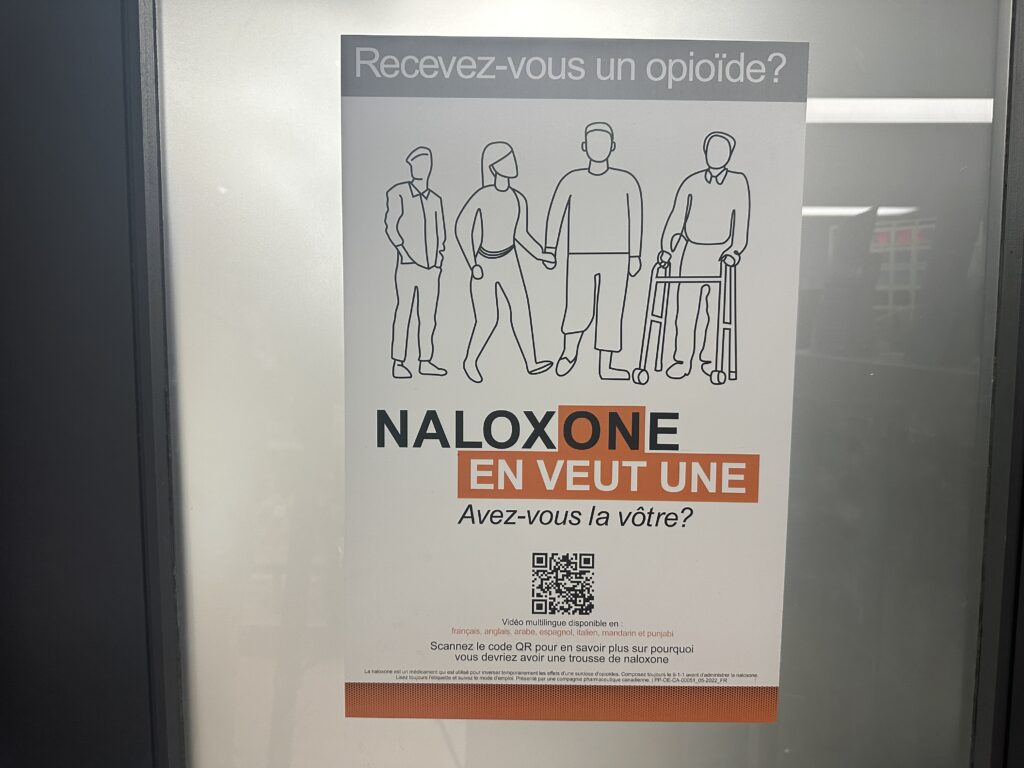
Kaiser said more overdoses are happening in public spaces, increasing the importance of bystander response.
“I would say there’s really a message for the population is important to say it’s summertime,” he said.
“What we’ve seen also with the profile of overdoses and overdose deaths is a lot more going on in the public domain. So people who are experiencing overdoses outside on the street sidewalk in parks and in public spaces.”
He said people should call 911 immediately when they suspect an overdose and stay with the person until help arrives.
“911 is the right thing to do if you’re really worried about somebody being in distress and staying with that person until you have the emergency intervention,” Kaiser said.
The DRSP says naloxone should be given when someone has difficulty breathing, makes snoring or gurgling sounds, is not breathing, or is difficult or impossible to wake.
Officials also recommend reducing the amount used to test the strength of a substance, using supervised consumption services when available, and accessing drug-checking services — while warning carfentanil may not always be detected.
Multiple factors contributing to overdose crisis
Kaiser said officials do not have one explanation for the rise in overdoses and deaths, but several factors may be contributing.
“We see that there are constantly new toxic substances coming into the drug supply. And that clearly explains part of it,” he said.
He also pointed to extreme heat as another possible risk factor.
“We had a very hot second half of June and we know from the scientific literature that the risk is increased, so the risk of severe overdoses increased when we have hot spells,” Kaiser said.
He said people experiencing homelessness can face additional risks because of limited access to shelter and cooling spaces.
“People who are going to be most at risk are people who are in the street or don’t have a place, shelter to get back to where they can get a little respite from the heat,” he said.
Kaiser said Montreal has seen an overrepresentation of people experiencing homelessness among overdose deaths for several years.
“For me it’s important to say we’re only halfway through the summer,” he said.
“Access to cool spaces, access to water. And again, just the fact of not leaving somebody alone who’s in distress on the sidewalk and hoping that somebody else intervenes. Those are things we can do for the rest of the summer and at least contribute to reducing that risk.”
Health-care workers urged to reinforce prevention
The DRSP is asking health-care workers and frontline organizations to continue educating people who use drugs about fentanyl risks and safer-use practices.
Kaiser said the current crisis shows the need for continued investment in prevention and harm reduction services.
“I think it makes a case for investing in prevention,” he said.
“And in terms of harm reduction capacity, so interventions that are really directed at reducing the risk for people who are consuming drugs.”
He said Montreal’s existing network of services has helped reduce risks but needs to adapt as drug use patterns change.
“We have a system that is very effective. We have the organizations that are running supervised and safer consumption facilities. We have organizations that are doing street work that are going, they’re reaching out with the city and boroughs, the police, the paramedics that are all doing an excellent job,” Kaiser said.
“But we know that consumption modes are changing.”
Kaiser said more people are inhaling drugs, including opioids, and services need to expand beyond traditional locations.
“We need to invest in safe and supervised consumption capacity, including specifically for inhalation. We need outreach. We need mobile services. We need to be able to have services that are in multiple neighborhoods and not necessarily only concentrated downtown where they are needed, but where the need is also in a lot of places where the services are not available easily at the time.”
The DRSP also reminded the public that Canada’s Good Samaritan Drug Overdose Act provides legal protections for people who call 911 to report an overdose.